Fighting malnutrition by promoting locally produced horlicks (multigrain nutrition balls)
Type: Approaches
Creation: 2017-01-09 12:14 Updated: 2017-10-19 11:35
Compilers: MARIA ROSELIN
Reviewers: Boris Orlowsky, Alexandra Gavilano, Deborah Niggli
Country/ region/ locations where the Approach has been applied
- Country: India
- Region/ State/ Province: BIHAR
- Further specification of location (e.g. municipality, town, etc.), if relevant: DARBHANGA
- Map: View Map
Description of the SLM Approach
Short description of the Approach
Multigrain nutritional ball to ght malnutrition and improve the health of rural
communities especially during and after disasters like floods (and droughts).
Detailed description of the Approach
Multigrain nutrient balls, or energy drinks made from the same ingredients, are
suitable for all age groups. They contain the nutritional elements of carbohydrates,
essential vitamins and minerals. The aim of supplying vulnerable groups with these
supplements is to eradicate malnutrition among children and women, who are
normally more vulnerable physically and prone to particular diseases, especially during
- and following - natural disasters like floods and droughts. Children in rural areas up
to the age of five are often malnourished due to their poor economic status, the lack of
hygiene and malnourished mothers. Women in rural communities are
commonly malnourished due to irregular meals, heavy work loads and early
marriages. People in rural area are busy throughout the day, and as well as not eating
regularly, they don't consume nutritionally balanced meals due to poverty, and
unavailability due to drought of essential vegetables and fruits. Consuming this
this local 'Deshi Horlicks' helps to provide nutritious essentials to those who need it
most. This becomes even more important during and after disasters like floods when
conventional food supply is even more restricted.
When the Community Health Education Development (CHED) programme was carried
out among the rural communities, a survey found many women and children to be
anaemic. The mortality and morbidity rate was high generally, and highest among
women and children. In this situation the local development centre 'Nirmal Mahila
Kalyan Kendre' (NMKK) realised the need to introduce a nutrition programme within
the community. At the time, women were organised into Community Based
Organisations (CBOs). This made the entry point easy. Women were consistently made
aware about the purpose of maintaining health. NMKK took over the training and
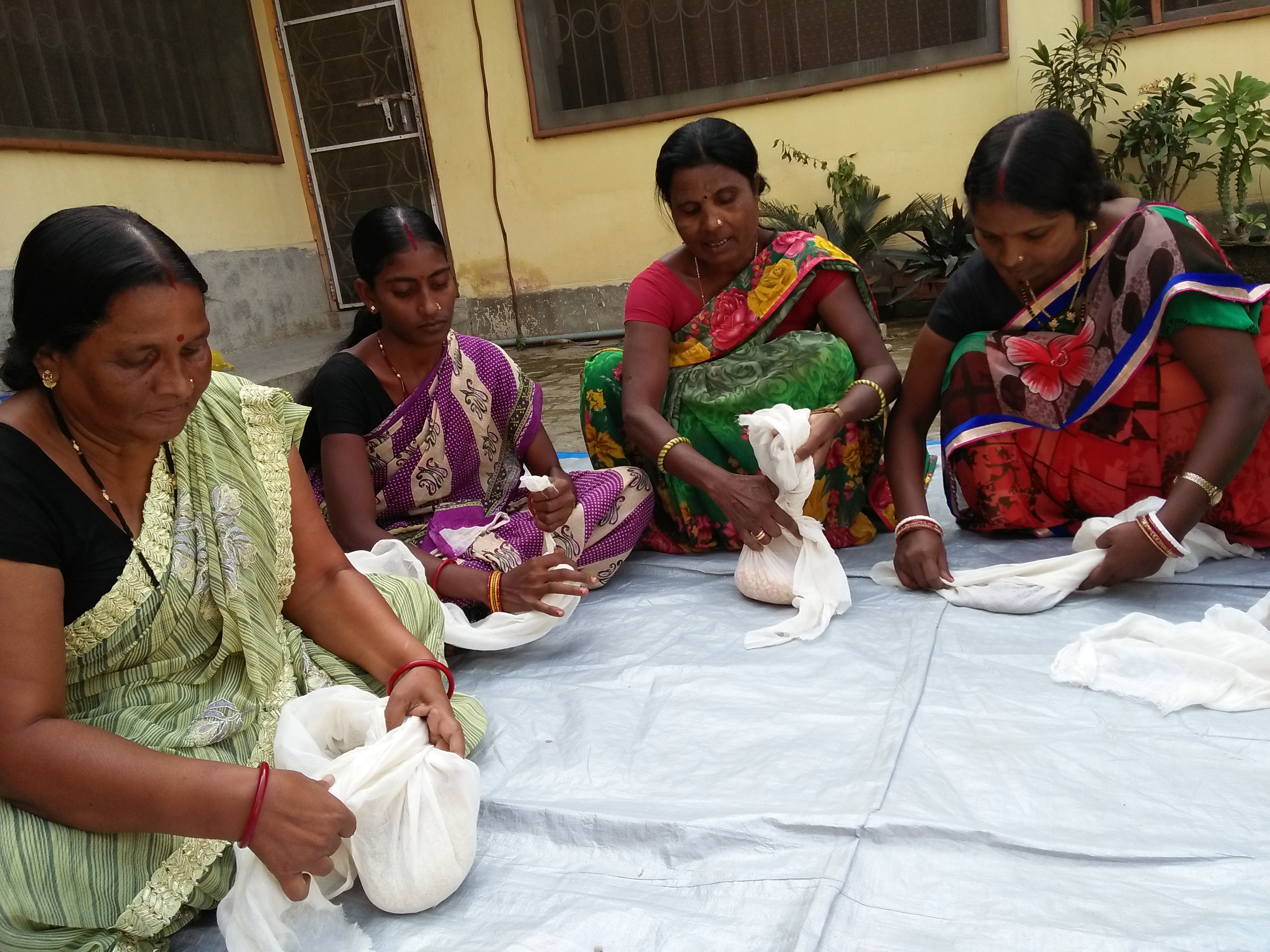
capacity building of women regarding this 'Deshi Horlicks' technology, focused in
regular training sessions of midwives and ayurvedic practitioners (vaidhyas), who are
responsible for community health. They, after being trained, implemented this
approach in the community.
This technology was practiced within the community until recently. However with the
arrival in shops of national and international energy drinks, people started dropping
good local practices like these. Women feel that it is too time consuming as they are
continuously busy from early in the morning to late at night. They can also get readymade
branded horlicks powder in the shop. However, even today some of the women
in the target region continue to make Deshi Horlicks. NMKK perseveres to push for the
re-establishment of this good practice in a sustainable manner.
Photos of the Approach
- 📍 Machowda
- 📷 Mr.Ranjan
- 📍 NMKK office
- 🗓 2016-02-12
- 📷 Mr.Ranjan