
Collection, selection, breeding and dissemination of locally adapted rice varieties at the Local Agricultural Research and Extension Centre LAREC.
Type: Approaches
Creation: 2017-02-17 16:47 Updated: 2021-03-12 10:18
Compilers: Stefan Graf
Reviewers: Judith Macchi, Alexandra Gavilano, Boris Orlowsky
Country/ region/ locations where the Approach has been applied
- Country: Cambodia
- Region/ State/ Province: Kampong Chhnang
- Further specification of location (e.g. municipality, town, etc.), if relevant: Rolea Pha-ear
- Map: View Map
Description of the SLM Approach
Short description of the Approach
Local genetic rice varieties which are better adapted to changing climatic conditions are collected on farms, tested, described, selected or bred into new varieties and again distributed to farmers with the goal to increase their food security
Detailed description of the Approach
Farmers in the central Cambodian province of Kampong Chhnang increasingly struggle with changing and unpredictable weather patterns and regular weather extremes. Lately, water supply has fluctuated annually due to alternating drought and flood extremes. Harvest yields from farmers in the region are low, amongst others, due to the use of low-quality seed, which is not adapted to local conditions, and which demands for an increase in the use of chemical fertilizers and pesticides.
Acknowledging the fact that with changing climatic conditions, local genetic resources and genetic diversity play a vital role to guarantee food security of smallholder farmers, the Local Agricultural Research and Extension Center – LAREC collects, selects, tests, breeds and disseminates rice varieties, which are better adapted to local conditions. To answer to the climate extremes of drought and flood, LAREC focusses its research on flood tolerant and drought resistant rice varieties.
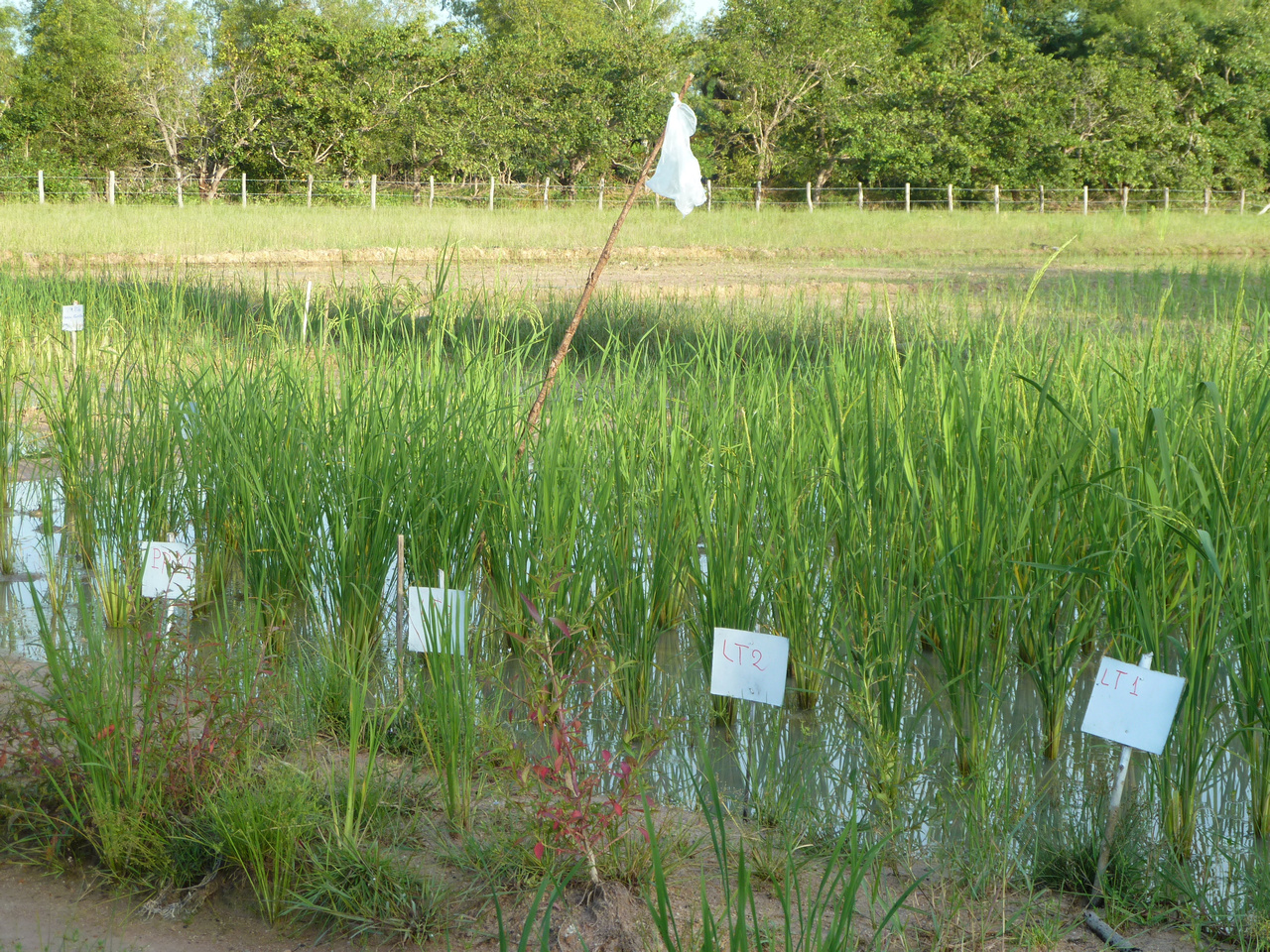
Over the past years 36 flood tolerant rice varieties have been investigated by LAREC research staff for their floating ability and submergence tolerance. 6 varieties among these are: Pork Kraham, Chung Banla-6, STR010, STR10, STR 011 and Chung Banla-2, have been defined as the most appropriated varieties in term of stem elongation, submergence tolerance and yield. These are multiplied and recommended for farmers in flood prone areas.
Regarding drought tolerance LAREC bred a new variety derived from a cross between Phka Rumduol and IRRI breeding line. This variety is tested in an on farm adaptive trial to see crop performance under farmer practice. The two lines have a short growth duration range from 75 days to 90 days and are non-photo period sensitive. Besides the short growth duration, which makes them appropriate for drought prone areas, the new variety also has a desirable aroma which is important for acceptance and marketing purposes. However, to provide scientific evidence, thorough testing in on-farm trials is needed to see yield performance under farmers’ condition, seed rate application based on cultivation method and fertilizer application.
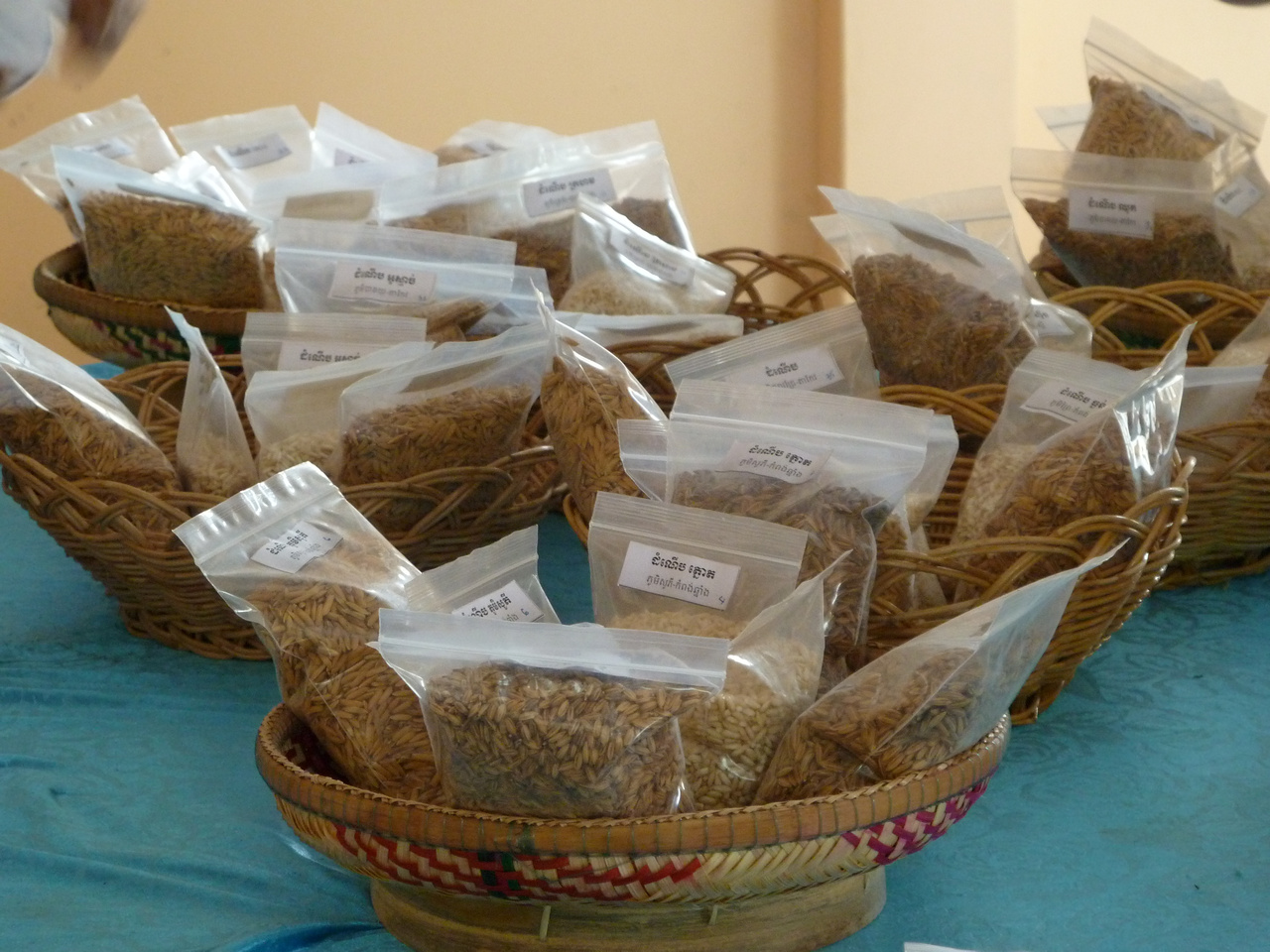
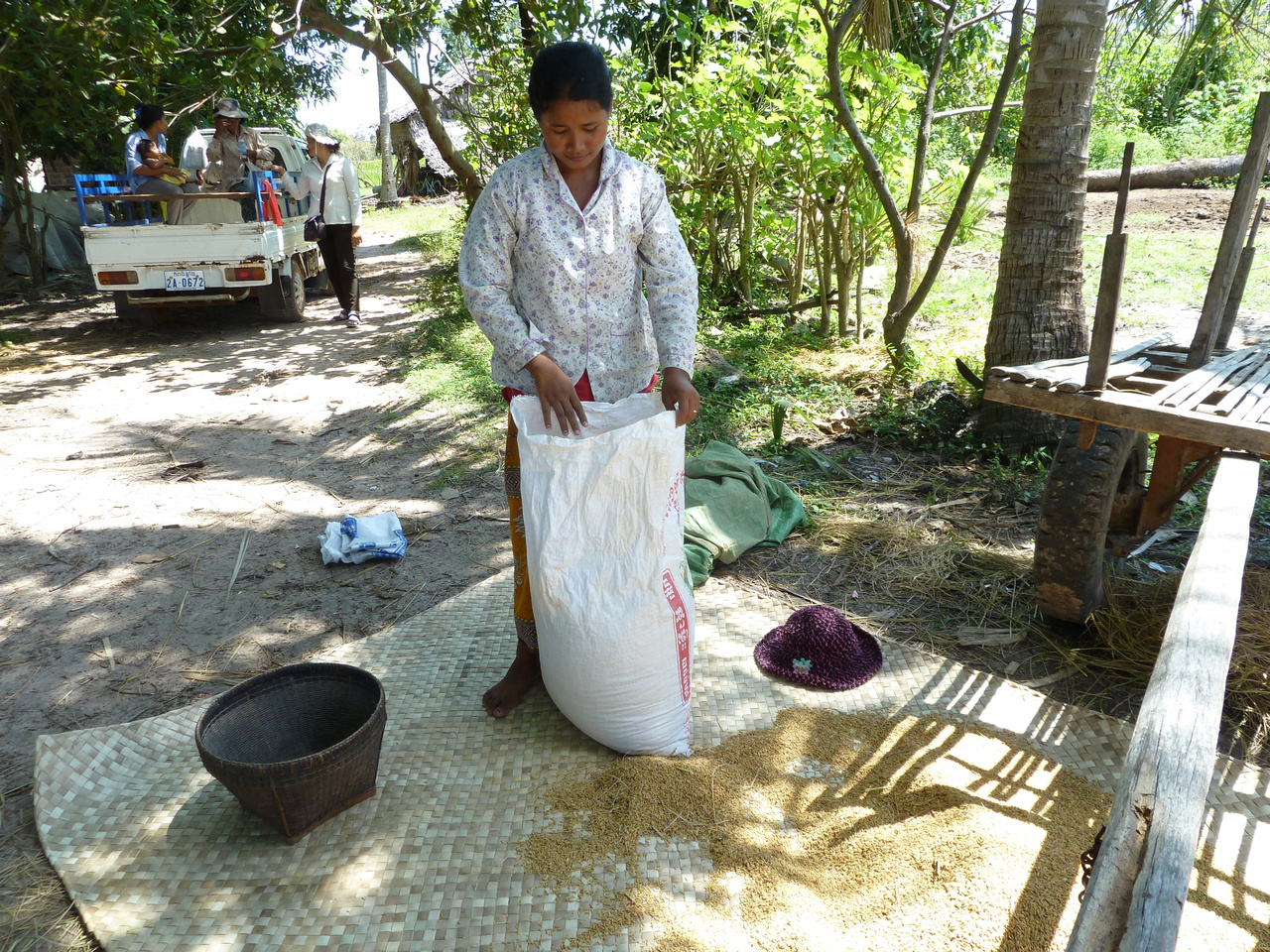
After the production of basic seed for rice LAREC distributes the seed to contract farmers for multiplication under the supervision of LAREC staff. The multiplied seed is distributed to interested buyers through LAREC and the local farmers' associations.
Photos of the Approach
- 📍 Rolea Pha-ear
- 📷 HEKS
- 📍 Rolea Pha-ear
- 📷 HEKS
- 📍 Rolea Pha-ear
- 📷 HEKS