Vegetative Approach in Controlling Wind and Water Erosion in Sand Dune Areas
Type: Approaches
Creation: 2017-03-14 14:01 Updated: 2017-03-14 16:38
Compilers: Philippine Overview of Conservation Approaches and Technologies
Reviewers: Deborah Niggli
Country/ region/ locations where the Approach has been applied
- Country: Philippines
- Region/ State/ Province: Ilocos Norte
- Map: View Map
Description of the SLM Approach
Short description of the Approach
Using vegetative approach to stabilize sand dune areas along the coast.
Detailed description of the Approach
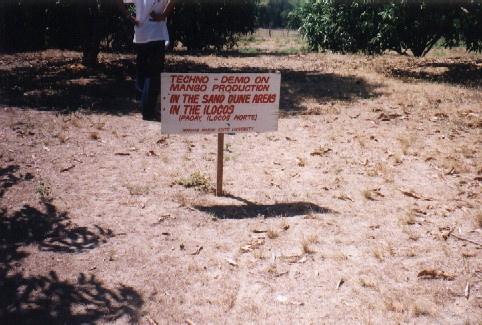
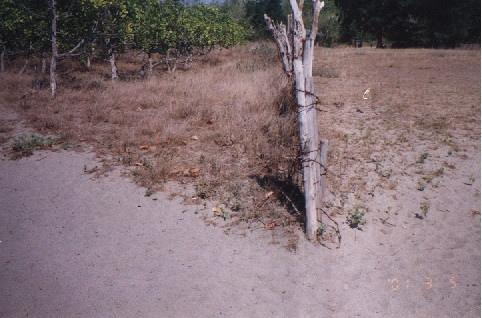
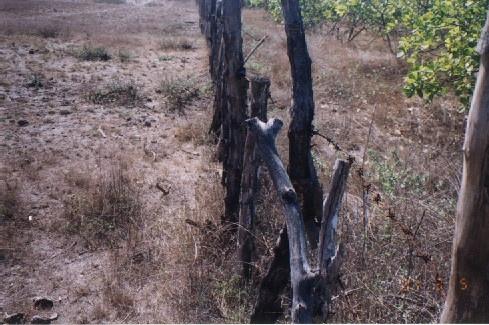
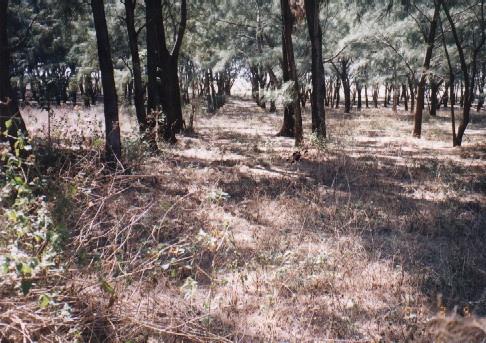
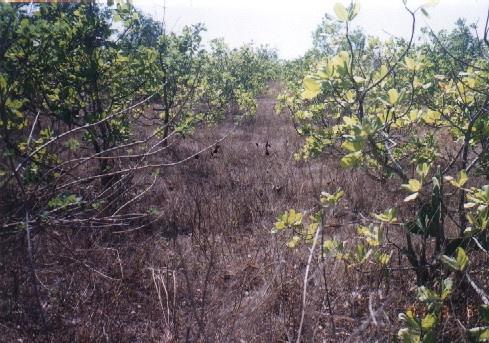
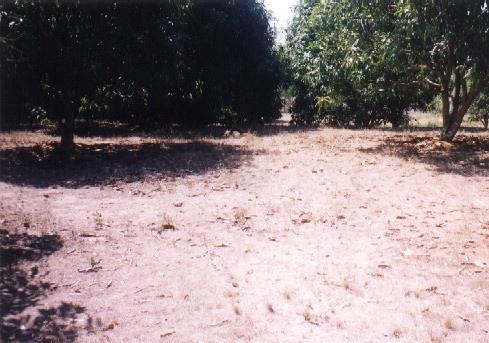
The approach uses forest species like Casuarina equisetifolia and lately Acacia auricoliformis to stabilize the sand dunes which is constantly being eroded by wind and water. Grasses are also allowed to be stabilized by fencing. Fruit trees are becoming more important component of the approach. Mango and cashew can be raised successfully by employing special soil treatment and provision of adequate water supply during the long dry season which lasts for about seven (7) months. The approach is implemented by various sectors. Afforestation is taken care by the Department of Environment and Natural Resources (DENR) and the Local Government Unit (LGU). The establishment of fruit tree plantation was pioneered by the Mariano Marcos State University (MMSU). The university established Techno-Demo Farms using mango and cashew as test crops. These species are well adopted to dry condition. Cashew is well known to strive under conditions of severe water stress and low nutrient supply. The establishment of orchard was successful using a technique called 'resoiling'. A hole of about 1 x 1 x 1 meter is dug in the sand and natural soil and organic fertilizer is put into it. This will provide better anchorage for the crop and will also supply the needed nutrients and moisture during the early stage. Because the demonstration trial was a success, farmers in the locality adopted the approach. It is capital intensive, however, which is a limitation for farmers short of financial resources. Gliricidia planting is also an important conmponent. It thrives well in droughty and fertile-poor soil. Gliricidia is used as fuelwood.
Photos of the Approach