
Participatory action research on drip irrigation
Type: Approaches
Creation: 2009-01-16 00:00 Updated: 2017-06-28 16:43
Compilers: Madhav Dhakal
Reviewers: Laura Ebneter
Country/ region/ locations where the Approach has been applied
- Country: Nepal
- Further specification of location (e.g. municipality, town, etc.), if relevant: Kavrepalanchowk/ Jhikhu Khola watershed
- Map: View Map
Description of the SLM Approach
Short description of the Approach
Conducting participatory action research with farmers and line agencies for demonstrating, disseminating and scaling up drip irrigation.
Detailed description of the Approach
Most farming in the uplands of Nepal's midhills is rainfed with many fi elds remaining fallow during the dry season due to lack of irrigation water. The People and Resource Dynamics Project (PARDYP) water demand and supply survey identified scarcity of irrigation water as a major issue in Nepal's midhills. To assess the potential of drip irrigation to address this problem, the University of British Columbia (UBC) in 2000/2001, in collaboration with PARDYP, tested a low cost irrigation drip set and a more costly set in the Jhikhu Khola watershed; and PARDYP and Tribhuvan University's Institute of Engineering (Nepal) tested the low cost set with farmers at another site at Kubinde village, Kavre.
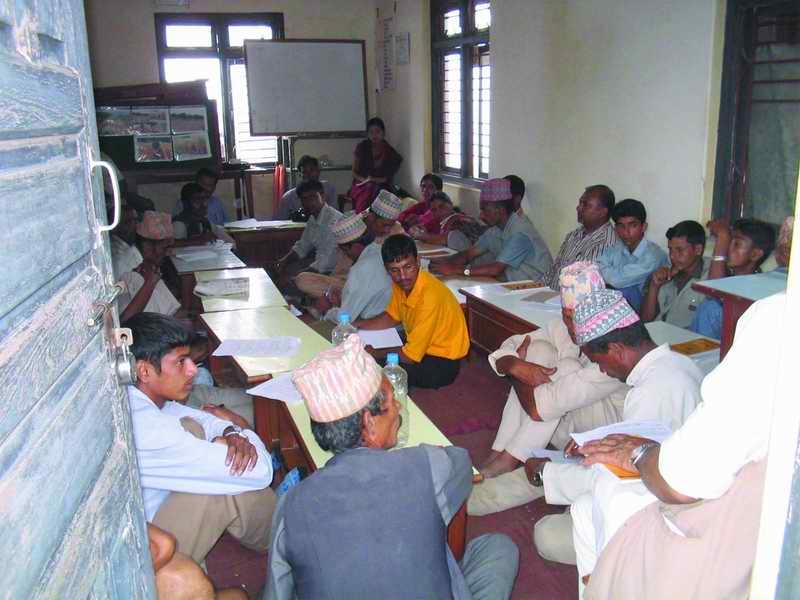
PARDYP started research on drip irrigation at an agricultural research station (the Spices Crop Development Centre at Tamaghat, Kabhrepalanchok) and brought different stakeholders, principally farmers, to the station to learn. After seeing the trials some farmers, especially those living near the research station, started testing drip irrigation on their farms. From 2001 to 2004, PARDYP subsidised 50% of the cost of the drip sets to most adopting farmers. PARDYP organised several farm visits for stakeholders to the research station and farmers’ fi elds. The number of interested farmers increased and many started testing and demonstrating the technology on their farms. PARDYP provided technical support during installation, advice about water application, and trouble shooting training to user farmers. Soon, many farmers started using drip irrigation with little or no technical support from PARDYP. Some collected quantitative and qualitative information on the performance of their systems. Results and experiences were shared regularly after cropping seasons through interaction meetings. Users’ experiences convinced many others to adopt the technology.
Interaction meetings were organised to communicate farmers’ feedback to the organisation and businesses involved in making the drip sets. Farmers from the watershed were taken to the drip set manufacturers to establish a direct link between them and to allow the project to phase out its support.
This approach emphasised on-station to on-farm research and demonstration to facilitate ongoing monitoring and evaluation of the performance of locally made drip sets.
Photos of the Approach
- 📷 Madhav Dhakal