
Community efforts for improving drinking water quality
Type: Approaches
Creation: 2009-01-19 00:00 Updated: 2017-07-09 13:17
Compilers: Madhav Dhakal
Reviewers: Fabian Ottiger
Country/ region/ locations where the Approach has been applied
- Country: Nepal
- Further specification of location (e.g. municipality, town, etc.), if relevant: Kavrepalanchowk district/ Jhikhu Kholawatershed
- Map: View Map
Description of the SLM Approach
Short description of the Approach
Working with communities to demonstrate and disseminate methods for improving drinking water quality using structural and vegetative measures
Detailed description of the Approach
Aims / objectives: The People and Resource Dynamics in Mountain Watersheds of the Hindu Kush- Himalayas Project (PARDYP) implemented this approach with 30 drinking water user households at Barbot in the Jhikhu Khola watershed, Kavre Palanchok. The aim was to improve water quality and availability from an open spring source through participatory planning and implementation. The approach first identified local concerns and observed the sanitary situation of the catchment area. Meetings were held jointly with men and women users from different caste groups (Brahmin, Chhetri, Newar and Kami) to discuss the problems and issues and to identify viable solutions. The advantages and disadvantages of the various options were discussed, after which users selected the following three measures to improve the drinking water supply: 1) building a brick-cement walled structure around the main local spring, 2) establishing check dams across nearby rills and gullies, and 3) planting grass around the spring box and tree saplings within the catchment area. The aim was to prevent direct flow of surface water into the spring and reduce contamination and turbidity of the source. Understanding and support was gained by demonstrating the technology and running an awareness campaign.
Role of stakeholders: The project helped form a users committee made up of 11 women and 1 man and encouraged them to plant grass and tree seedlings across the entire catchment. The project regularly measured the quality of the water and shared the results with the users. Rules and regulations were developed to ensure equitable access to the spring and its sustainable use and management. A notice board with do’s and don’ts was placed near the spring. The users held monthly meetings and established a revolving fund for maintaining the structures. Spring users followed the rules and regulations by washing, cleaning, and bathing at separate sources. Livestock grazing was stopped in the nearby area and the area was regularly cleaned. Furthermore, users were encouraged to treat water for drinking using simple methods like SODIS and the low cost Safa filter to avoid microbiological contamination. They were made more aware of water quality, sanitation, and health issues.
Photos of the Approach
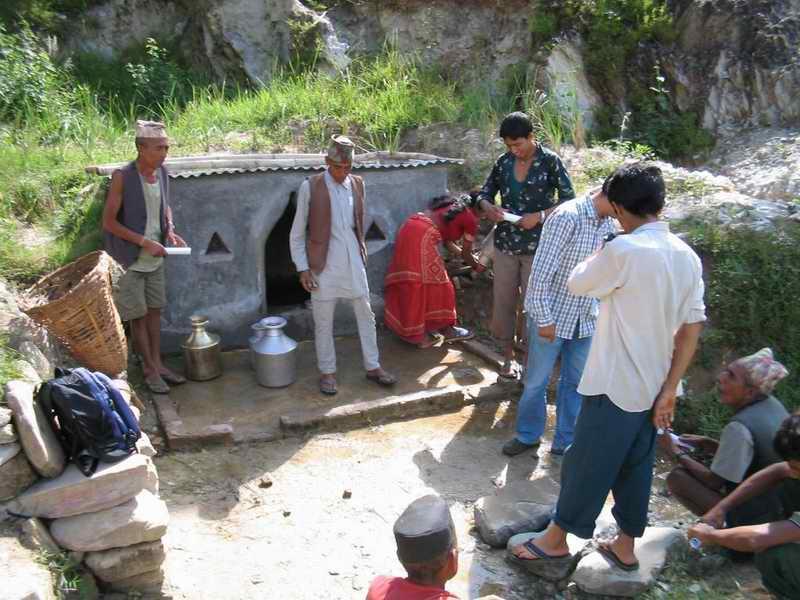
- 📷 PARDYP
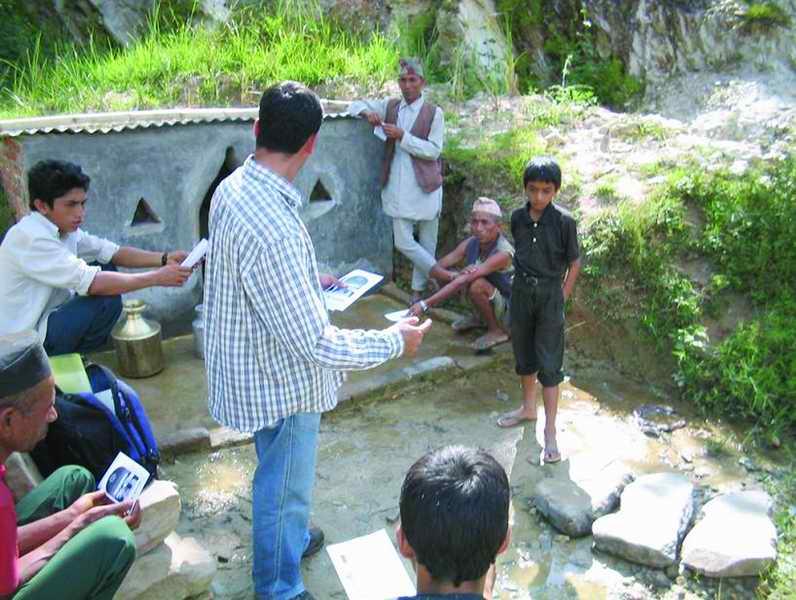
- 📷 B.S. Dongol