Local initiatives for rehabilitating degraded communal grazing land
Type: Approaches
Creation: 2009-01-19 00:00 Updated: 2017-07-09 14:05
Compilers: Madhav Dhakal
Reviewers: Fabian Ottiger
Country/ region/ locations where the Approach has been applied
- Country: Nepal
- Further specification of location (e.g. municipality, town, etc.), if relevant: Kavrepalanchowk/ Jhikhu khola watershed
- Map: View Map
Description of the SLM Approach
Short description of the Approach
Supporting local initiatives and building local capacity for the rehabilitation of degraded communal land in the middle mountains of Nepal.
Detailed description of the Approach
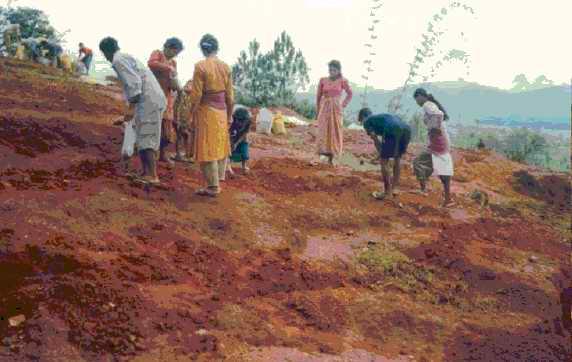
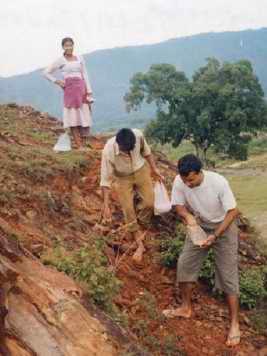
Aims / objectives: The main aim of the People and Resource Dynamics Project's (PARDYP) land rehabilitation activities were to help watershed residents, local groups, and line agencies understand the key issues and to test options for the improved management of water, land, and forests in a participatory way. In Dhotra VDC (Kavrepalanchok district) a local youth club (Ekantabasti Youth Club) had been trying to rehabilitate a 2.5 ha area of degraded communal land since May 2004. The club approached PARDYP for technical assistance. The area had been degraded by overgrazing with two big gullies formed and small landslips along the gullies affecting a trail and the adjoining agricultural land. An unsuccessful attempt had been made to plant the area eight years previously. It had failed due to the difficulty of retaining soil moisture in the area's compacted red soils. A series of meetings were organised to plan future activities, to ensure community participation, and to share responsibilities among local users and PARDYP. The community was committed to rehabilitating the area and took the responsibility for planting, protection, and overall management of the planted species. PARDYP provided planting materials and technical help. A needs assessment with the local people identified the most useful tree species. They entrusted the selection of appropriate grass and hedgerow species to the project's expertise. Project staff arrange for planting materials and logistical support, and showed villagers how to make eyebrow pits, plant hedgerows, and plug gullies. About 450 villagers participated in the rehabilitation activities with women contributing more than half of the labour. They worked four hours a day for 16 mornings.
Methods: A five-women strong user committee was formed to manage and protect the planted species and a five-man strong task force was set up to maintain regular links and coordination between the user committee, the youth club, and the villagers. The coordination committee, with guidance from the youth club, was responsible for facilitating and coordinating all the second season rehabilitation work in 2005.
Photos of the Approach
- 📷 PARDYP
- 📷 PARDYP