
Selection of SLM Technologies for Natural Disaster Risk Mitigation
Type: Approaches
Creation: 2011-04-19 00:00 Updated: 2021-11-02 15:50
Compilers: shane stevenson
Reviewers: David Streiff, Alexandra Gavilano, Joana Eichenberger
Country/ region/ locations where the Approach has been applied
- Country: Tajikistan
- Region/ State/ Province: RRS
- Further specification of location (e.g. municipality, town, etc.), if relevant: Nurabad
- Map: View Map
Description of the SLM Approach
Short description of the Approach
Community Based Natural Disaster Risk Management Workshops for identification of locations for the implementation of SLM technology to reduce the risk to the village from natural disasters.
Detailed description of the Approach
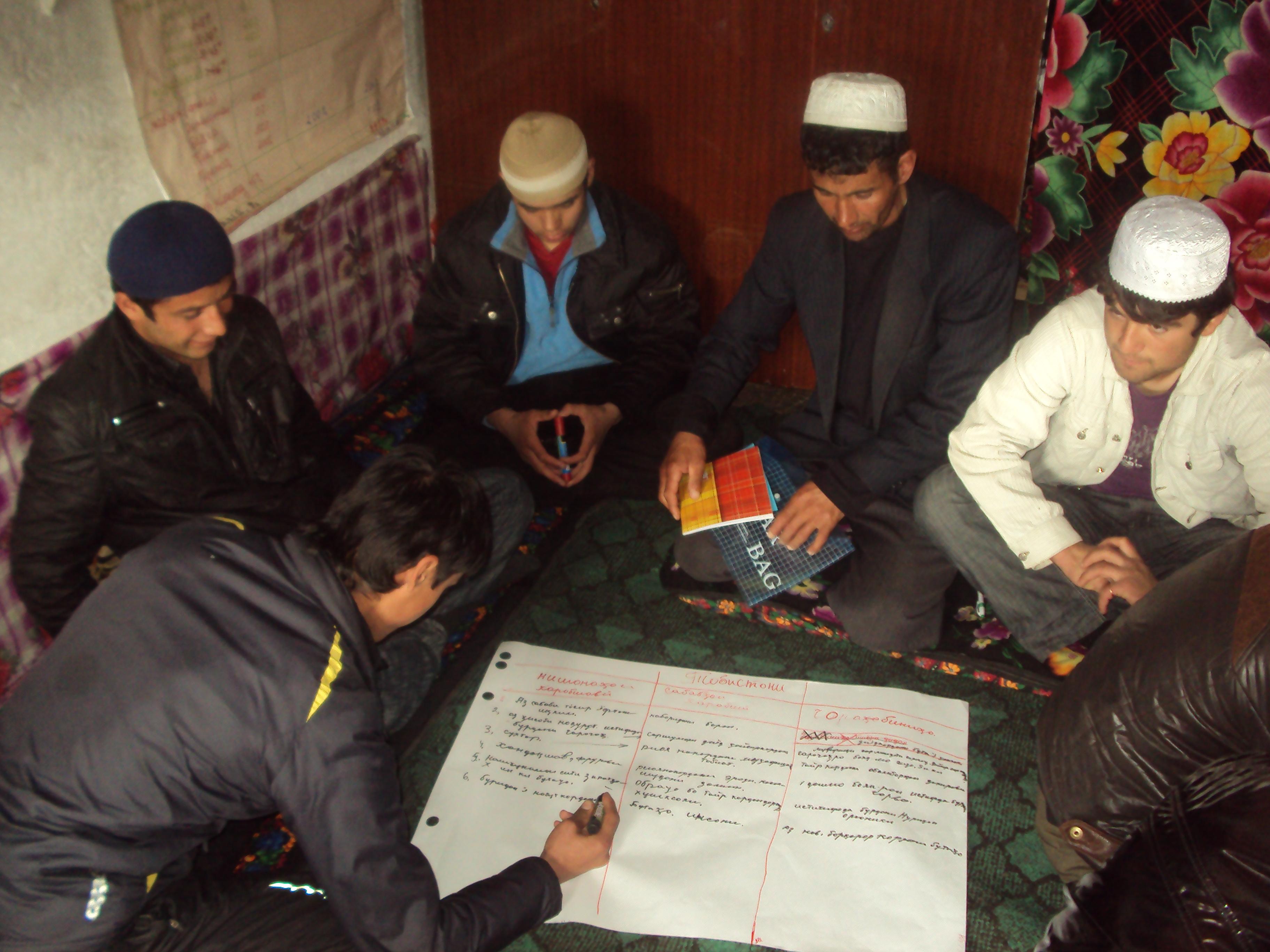
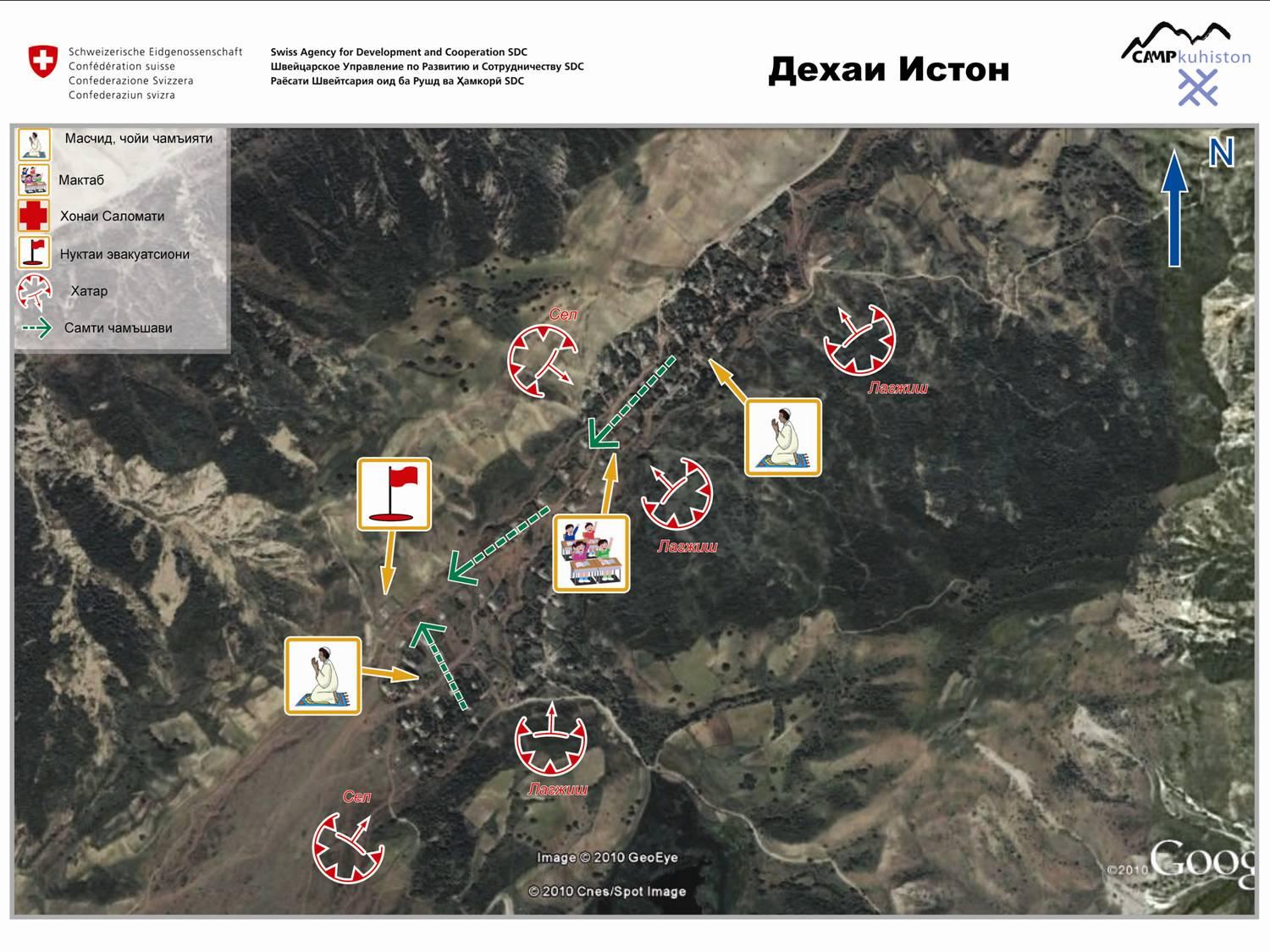
Aims / objectives: The main objective was to use a community based participatory approach to evaluate the risk from natural hazards and aid in the effective selection of location and types of SLM Technologies that could be implemented. The workshop systematically works through the natural disaster risk assessment process which includes evaluation of the natural and human triggers that can causes and contribute to specific natural disasters and subsequently rank the risk as either high/medium/low based upon a predetermined criteria. The assessment is repeated with the assumption the SLM mitigation has been implemented to evaluate whether the natural disaster risk would be reduced.
Methods: Several methodologies are used in this approach, these include the, display of posters and photos, watching documentary style DVD’s, playing awareness raising training games, and distribution of brochures to educate the communities on the causes and impacts of natural disasters so that they can then complete a systematic risk assessment process. This is undertaken within the community using interactive participatory training modules and experienced teachers. Once the technologies are decided upon a proposal form is completed and copies submitted to funding agencies and the local government. A Memorandum of Understanding is signed with the local government to endorse the approach and any subsequent implementation activities. The proposal is vetted by experts for modification and approval to ensure best practice and sustainable results.
Stages of implementation: The communities are selected based upon natural disaster statistics and a natural disaster workshop conducted for up to twenty members of the community. At the completion of the workshop the community produce several proposals for the implementation of SLM technologies that will reduce the risk from specific natural disasters. The proposals are reviewed by experts from the soil institute and horticulture institute to ensure they are practical, viable and effective before final submission to the donor for funding. The local government remains informed of the activities throughout the process and is provided with copies of the proposals.
Role of stakeholders: NGO CAMP Kuhiston were the overall project managers. CAMP designed and conducted training on Disaster Risk Reduction and developed the natural hazard risk assessment process that leads to the formulation of the SLM mitigation proposals. CAMP are also responsible for engaging the experts and providing information to the local government who are asked to support the process. The community has to actively be involved and design their own proposal and decide how they will contribute to the implementation process.
Other important information: Although this could potentially be a lengthy process it is important that the communities understand why they have chosen a specific SLM technology and the desired impact that will help secure their livelihoods.
Photos of the Approach
- 📍 Mujiharf, Nurabad
- 📷 Mirzo Pochoev (CAMP Kuhiston, Dushanbe)
- 📍 Iston Village, Nurobod
- 🗓 2011-10-06
- 📷 CAMP Kuhiston (CAMP Kuhiston, Dushanbe)