
Tugai forest management through village committees
Type: Approaches
Creation: 2011-04-27 00:00 Updated: 2021-11-02 16:01
Compilers: Firdavs Faizulloev
Reviewers: David Streiff, Alexandra Gavilano, Joana Eichenberger
Country/ region/ locations where the Approach has been applied
- Country: Tajikistan
- Region/ State/ Province: Khatlon
- Further specification of location (e.g. municipality, town, etc.), if relevant: Nuri Vakhsh Jamoat
- Map: View Map
Description of the SLM Approach
Short description of the Approach
The described approach facilitates the establishment of contracts between village committees and local authorities for decentralised management of Tugai forest areas on State Reserve Land.
Detailed description of the Approach
Aims / objectives: Tugai forests are riparian forest ecosystems situated in the continental, winter-cold deserts of Central Asia. These flood plain forests are severely threatened by overexploitation for fire wood and by overgrazing. The 253 ha of Tugai forest in Nuri Vakhsh Jamoat along the Vakhsh river in southern Tajikstan were suffering due to their de facto status as open access resources. The district environmental department that was supposed to monitor the forest was unable to effectively carry out this work. Therefore the UNDP project on “Demonstrating Local Responses to Combating Land Degradation and Improving Sustainable Land Management in SW Tajikistan” saw the protection of this Tugai forest as a priority and engaged with local land users to help protect the forest.
Methods: UNDP project representatives held discussions with forest users living in villages next to to the Tugai forests, regarding the establishment of community-based forest management institutions. UNDP proposed that these institutions enter into agreement with the Hukumat (local district-level government) to protect and exclusively use well defined forest areas on nearby State Reserve Land.
Stages of implementation: As a first step, UNDP obtained permission from the Hukumat to conduct sanitary felling of dry and infected trees, to help improve the forest structure under supervision of the Jamoat (local municipality-level government). The removed tree material was distributed to schools and hospitals as fire wood. Next, a leasehold agreement was formed between a representative of each of the three village committees and the Hukumat. These leasehold agreements covered a total of 126 ha out of 253 ha of Tugai forest existing in the area and they are valid for five years. The remaining forest area, which is not under an agreement, is not threatened as it is situated on an island in the middle of a strong stream that cannot be crossed. The committee has to pay about or 1.73 USD / ha of leased forest land as a tax to the district. The tax paid is collected from contributions by members of the villages who pay for each head of cattle that they send for grazing at a cost of 1 USD / head of cattle.
Role of stakeholders: The village committees are headed by one representative who is responsible for regulating access to the forest plots. The local Jamoat supervises the activities carried out by the village committees on their respective plots. UNDP provides consulting services for the process of establishing contracts between village committees and the local authorities and is carrying out regular monitoring of the forest management activities.
Photos of the Approach
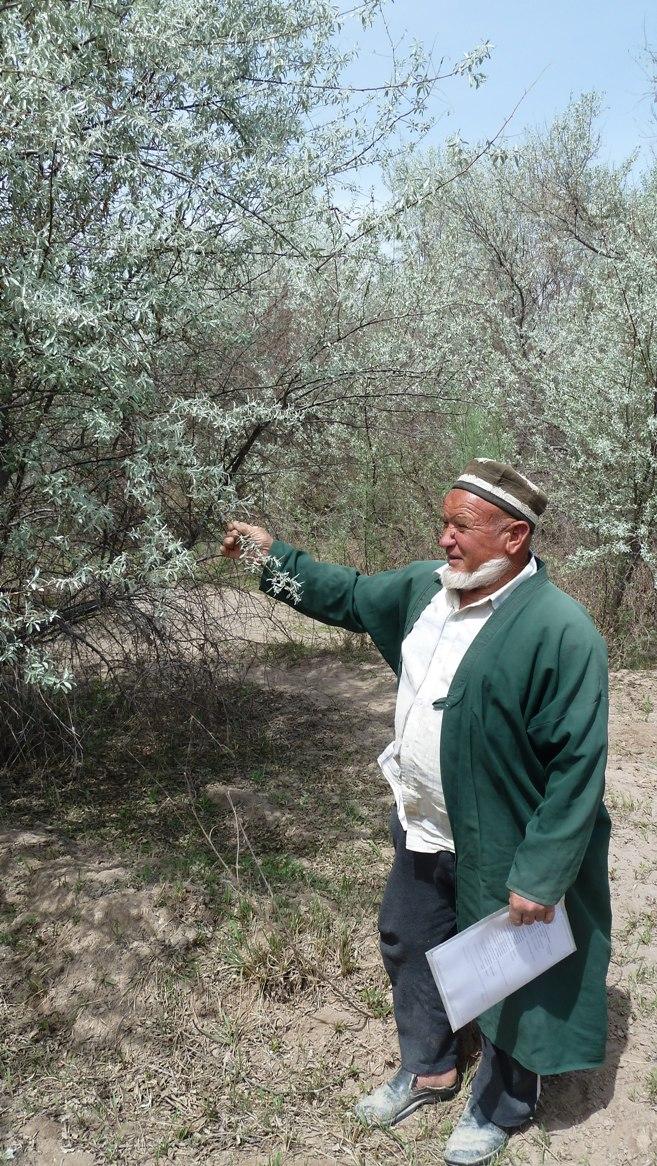
- 📍 Nuri Vakhsh Jamoat, Khatlon
- 📷 Julie Zähringer (PPCR Component A5, 131 Rudaki Avenue, Dushanbe)
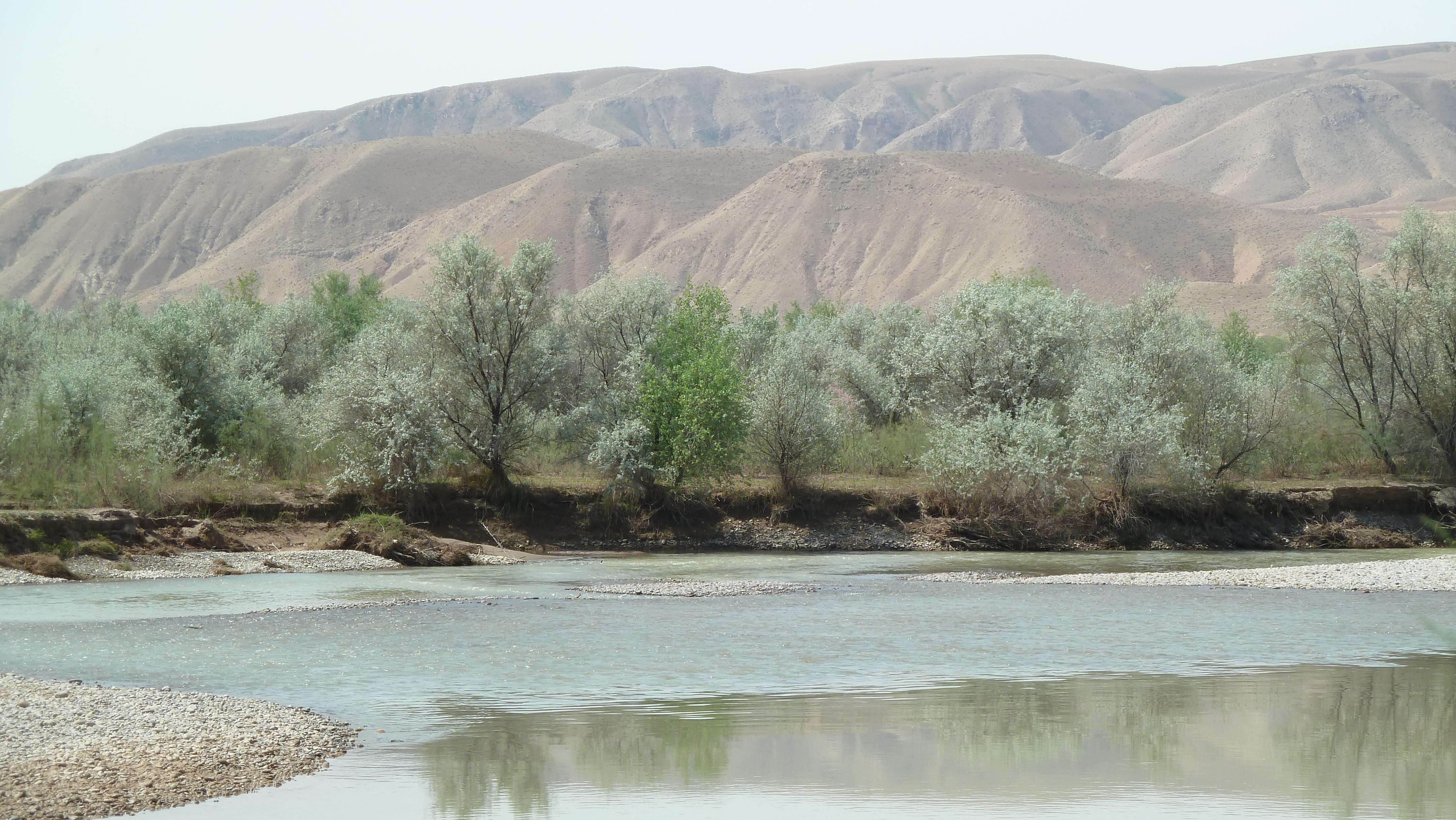
- 📍 Nuri Vakhsh Jamoat, Khatlon
- 📷 Julie Zähringer (PPCR Component A5, 131 Rudaki Avenue, Dushanbe)