
Participatory Cost Benefit Analysis for Energy Efficiency Measures
Type: Approaches
Creation: 2011-04-27 00:00 Updated: 2021-11-02 15:50
Compilers: shane stevenson
Reviewers: David Streiff, Alexandra Gavilano, Joana Eichenberger
Country/ region/ locations where the Approach has been applied
- Country: Tajikistan
- Region/ State/ Province: RRS
- Further specification of location (e.g. municipality, town, etc.), if relevant: Nurobod, Shaftuti Bolo
- Map: View Map
Description of the SLM Approach
Short description of the Approach
The use of a cost benefit analysis approach to assess the financial and natural resource needs for energy consumption at community level, and further attribute costs to SLM practices to meet this need, and subsequently improve rural livelihoods.
Detailed description of the Approach
Aims / objectives: To collate quantitative data on the amount of energy used within the community in terms of financial expenditure and natural resource use. Through the use of a participatory workshop the attendees determine which natural resources are being utilised, in the form of wood, bush and organic materials. The objective is to use this quantitative data to encourage through cost benefit demonstrations, the implementation of Sustainable Land Management technologies to reduce the amount of natural resources exploited, and the expenditure on energy consumption.
Methods: An energy specialist organises a community based workshop with up to 15 participants. In the 2-3hr workshop the participants complete, under guidance, a pre prepared flip chart on energy use (electric, tapak, wood, coal, brush). The information is collected in financial expenditure and weight. Once the energy assessment is completed a subsequent discussion is encouraged on how to more effectively meet this need at a community level. The moderator also takes this oppoprtunity to demonstrate several technologies including solar lights, improved stove design, thermal insulation, and the development of energy forests. The information is collated and used as a baseline assessment for evaluation of implemented technologies.
Stages of implementation: The stages of implementation are relatively straight forward. First you must select the community that you wish to work in, and inform a community mobiliser, in this case the head of the village that you wish to conduct a 2-3 hr workshop for up to 15 participants, and that the participants must be the person in the households who is responsible (or has knowledge of) the energy use within the household. The moderator prepares a flip chart with a table of fuel types used in the village and uses this as the basis of the workshop to extract information on energy use within the community. Once the information is collated, a discussion is encouraged to review the information and devise means by which this amount can be reduced. The moderator then takes this opportunity to demonstrate several low cost energy efficiency measures that may appeal to the community.
Role of stakeholders: The community are expected to attend the workshop, engage in active discussions on their energy use and ways in which it can be reduced. The workshop needs to be supported by the local government, this provides gravitas, and a platform to launch the approach in other communities. The final stakeholder is the implementer, in this case a local NGO who organises the workshop, demonstrates the technologies and provides ongoing support during the implementation of the technologies.
Other important information: It is important to understand the spending habits of the participants, if they are used to spending on a day to day basis and not used to financial planning, it is important to recognise this fact in the implementation of the technology.
Photos of the Approach
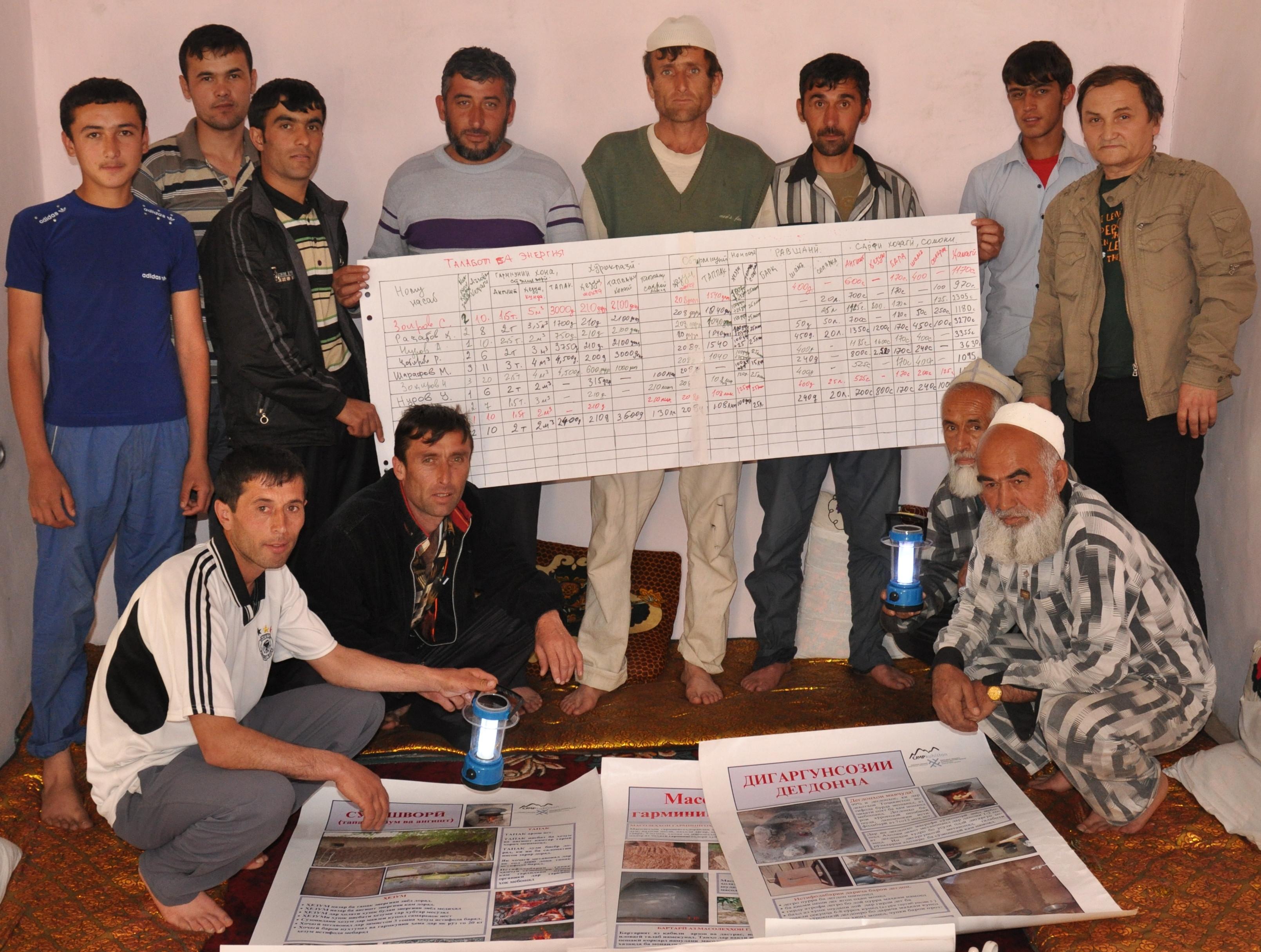
- 📍 Shaftuti Bolo, Nurobod
- 📷 Shane Stevenson (Camp Kuhiston, Dushanbe)
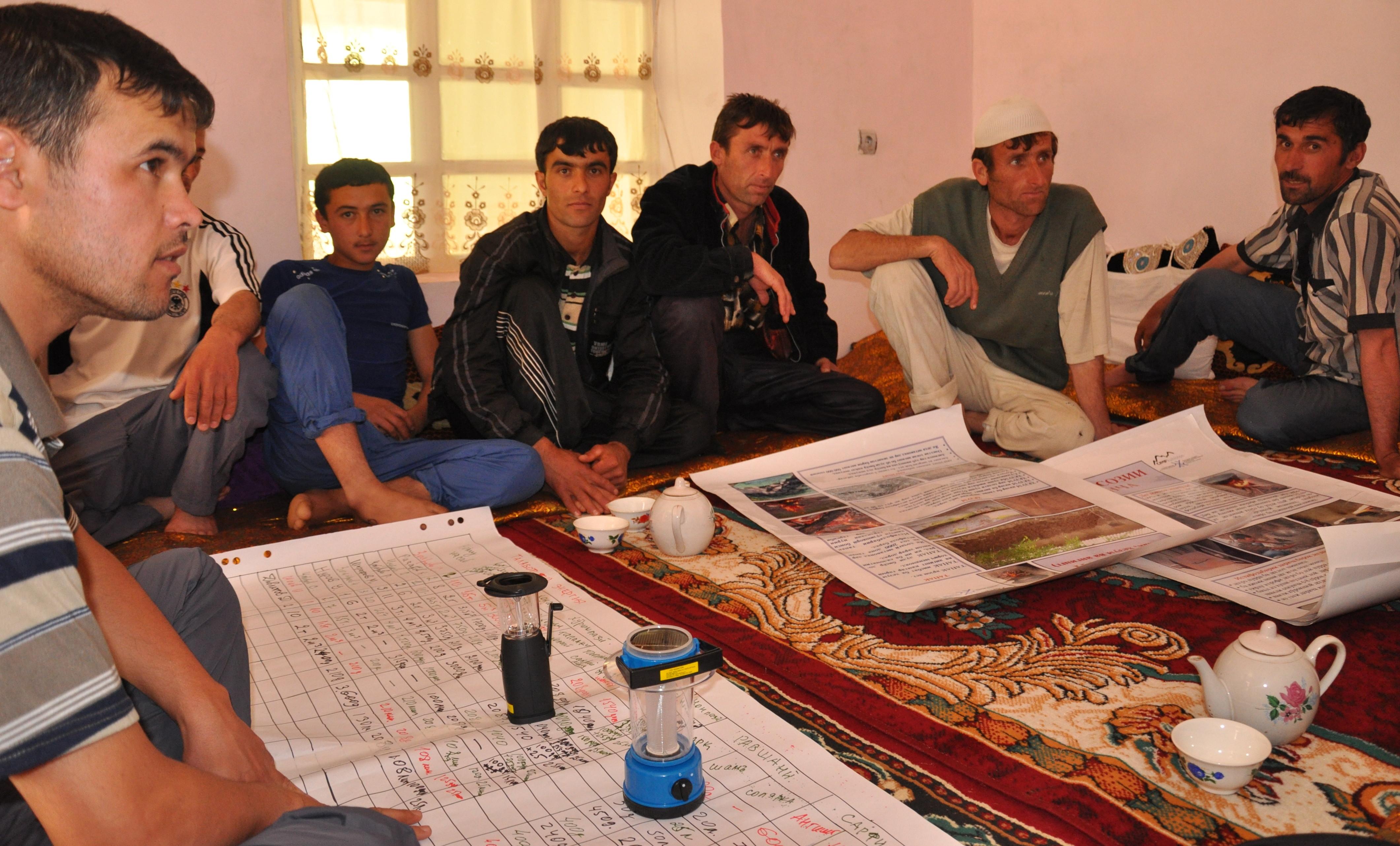
- 📍 Shaftuti bolo, Nurobod
- 📷 Shane Stevenson (CAMP Kuhiston)