
Facilitation of micro-watershed management for farmers
Type: Approaches
Creation: 2011-04-30 00:00 Updated: 2021-11-02 15:56
Compilers: Manuchehr Rakhmatdzhonov
Reviewers: David Streiff, Alexandra Gavilano, Joana Eichenberger
Country/ region/ locations where the Approach has been applied
- Country: Tajikistan
- Region/ State/ Province: Tajikistan, Khatlon
- Further specification of location (e.g. municipality, town, etc.), if relevant: Baljuvon / Khirob
- Map: View Map
Description of the SLM Approach
Short description of the Approach
Relying on integrated watershed management principles, farmers were assisted by the project to implement soil and water conservation measures in a microwatershed.
Detailed description of the Approach
Aims / objectives: To strengthen the capacity of the community to plan and implement integrated natural resource management approaches, at micro watershed level in sustainable ways. These include; conserving soil by introducing actions to rehabilitate the eroded land, stop gully formation resulting from water run-off; enable water retention to secure soil moisture for a longer time period; mitigate effects of overstocking resulting in overgrazing; hoof erosion and soil compaction; reverse inappropriate agriculture practices towards more efficient and environmentally friendly management types; enable better employment and higher income generation to improve the livelihood standards and food security.
Methods: The project facilitated the following activities: Farmer participation, and using their initiative, community involvement in the planning, fundraising and implementation. Farmers increased their own contribution for material inputs, and a greater than 50% rate of adoption of the innovation was seen. The project also funded 'on the job' training, technical support, consultancy, and mediation of communication between parties.
Stages of implementation: 1. Awareness raising, 2. On the job training, 3. Watershed management activity planning, 4. Implementation, 5. Monitoring, 6. Evaluation, 7. Readjustment based on results, 8. Further replication in new area
Role of stakeholders: The DWHH Project had a leading role in initiation, orientation, awareness raising, mobilisation, training, consultancy, input provision and mediation of communication to land committee. Farmers have been actively participating, have provided labour input / financial contribution, provided indigenous knowledge and skills. Local authorities - providing land titles, participation in planning and decision making process Village Development Committee (VDC) - community mobilisation, information dissemination, input / finance documentation, fund raising.
Other important information: There are 5 households in the microwatershed. Almost 40 people live in all HH, all are Tajiks. Members of all households took part in discussion rounds and training. Non of HHs were strong enough to implement measures on own funds. One HH has rejected implementation of measures, due lack of capacity and lack of trust of the project's success. Women: farmers came to the discussions together with their wives, women took part in training, in implementing almost all of the adoption measures, and equally benefited from the project. However, they were not involved in decision making.
Photos of the Approach
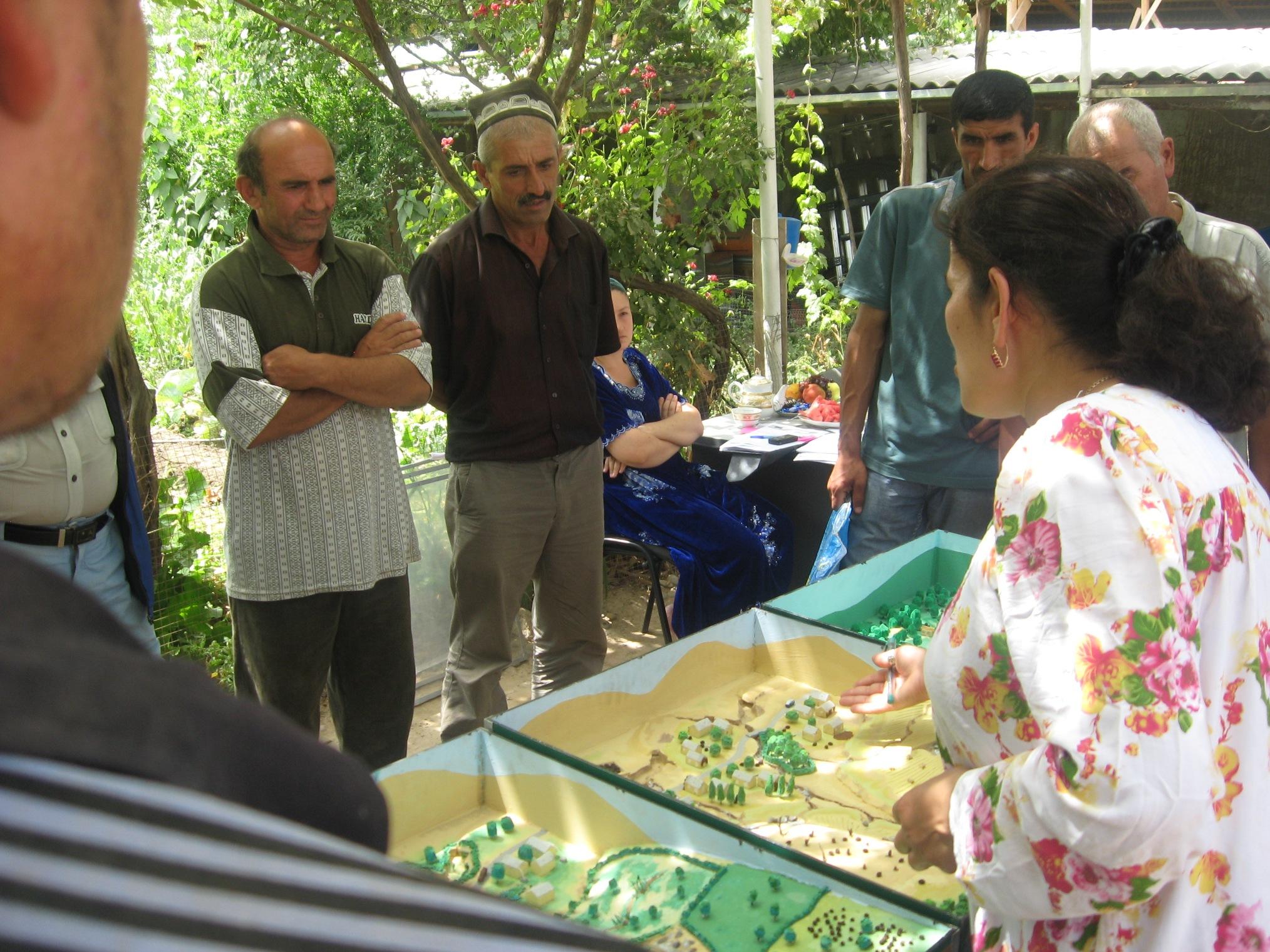
- 📍 DWHH Project Office in Baljuvon, Baljuvan/Khatlon/Tajikistan
- 📷 Manuchehr Rakhmatdzhonov (16, Firdavsi Street 734003, Dushanbe)
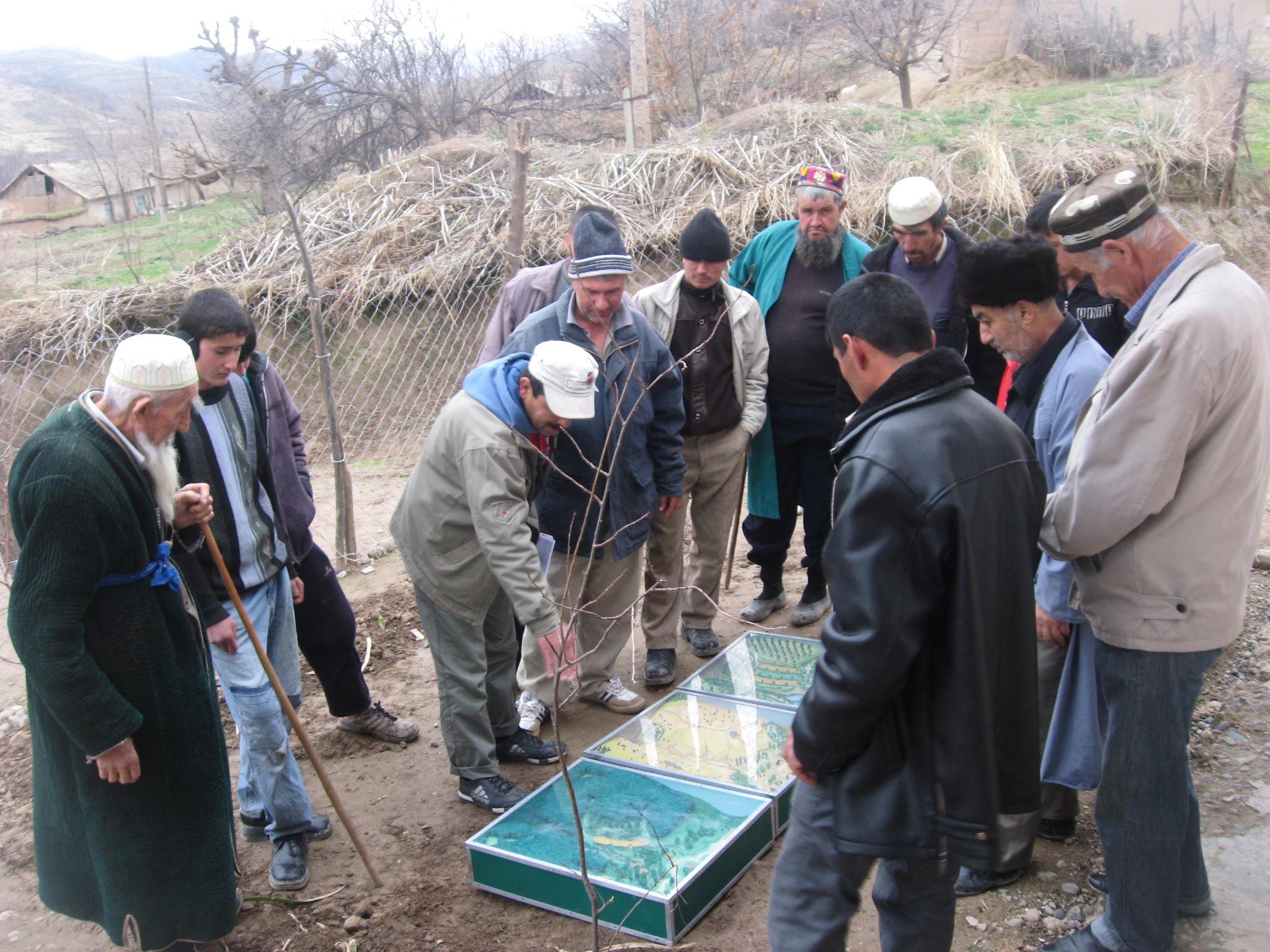
- 📍 DWHH Project Office in Baljuvon , Baljuvan/Khatlon/Tajikistan
- 📷 Manuchehr Rakhmatdzhonov (16, Firdavsi Street 734003, Dushanbe)