
Facilitation of community-based pasture management initiatives
Type: Approaches
Creation: 2011-05-12 00:00 Updated: 2021-11-02 16:04
Compilers: Mizrob Amirbekov
Reviewers: David Streiff, Alexandra Gavilano, Joana Eichenberger
Country/ region/ locations where the Approach has been applied
- Country: Tajikistan
- Further specification of location (e.g. municipality, town, etc.), if relevant: Jirgatol
- Map: View Map
Description of the SLM Approach
Short description of the Approach
Initiation of community-based solutions to slow down pasture degradation, and to improve pasture use and management in three pilot Jamoats of upland Tajikistan.
Detailed description of the Approach
Aims / objectives: During the Soviet times land users in Tajikistan were allowed to keep very little livestock individually and this was mainly in the vicinity of rural settlements. The majority of the livestock were managed by collective agricultural farms, which utilised different seasonal pastures. After the collapse of the Soviet Union, the previously state-owned livestock was distributed among individual farmers, most of whom had limited knowledge and experience with pasture management (PM), and capacities to access the distant pastures used by the collective farms. As a consequence, the amount of livestock kept in the vicinity of rural settlements increased, leading to overgrazing and severe degradation of nearby pastures. In the framework of a project on sustainable land management in the Pamir-Alai region (PALM), funded by the Global Environment Facility (GEF), MSDSP facilitated the initiation of community-based solutions to the problem of pasture degradation at three pilot jamoats in Jirgital, and three in Gorno-Badakhshan Autonomous Oblast (GBAO).
Methods: 1. Awareness raising and capacity building of PM issues. 2. Integration of PM issues in village development plans. 3. Grant support and community co-financing for implementation of targeted measures. 4. Monitoring of the impacts of the implemented measures as a basis for up-scaling.
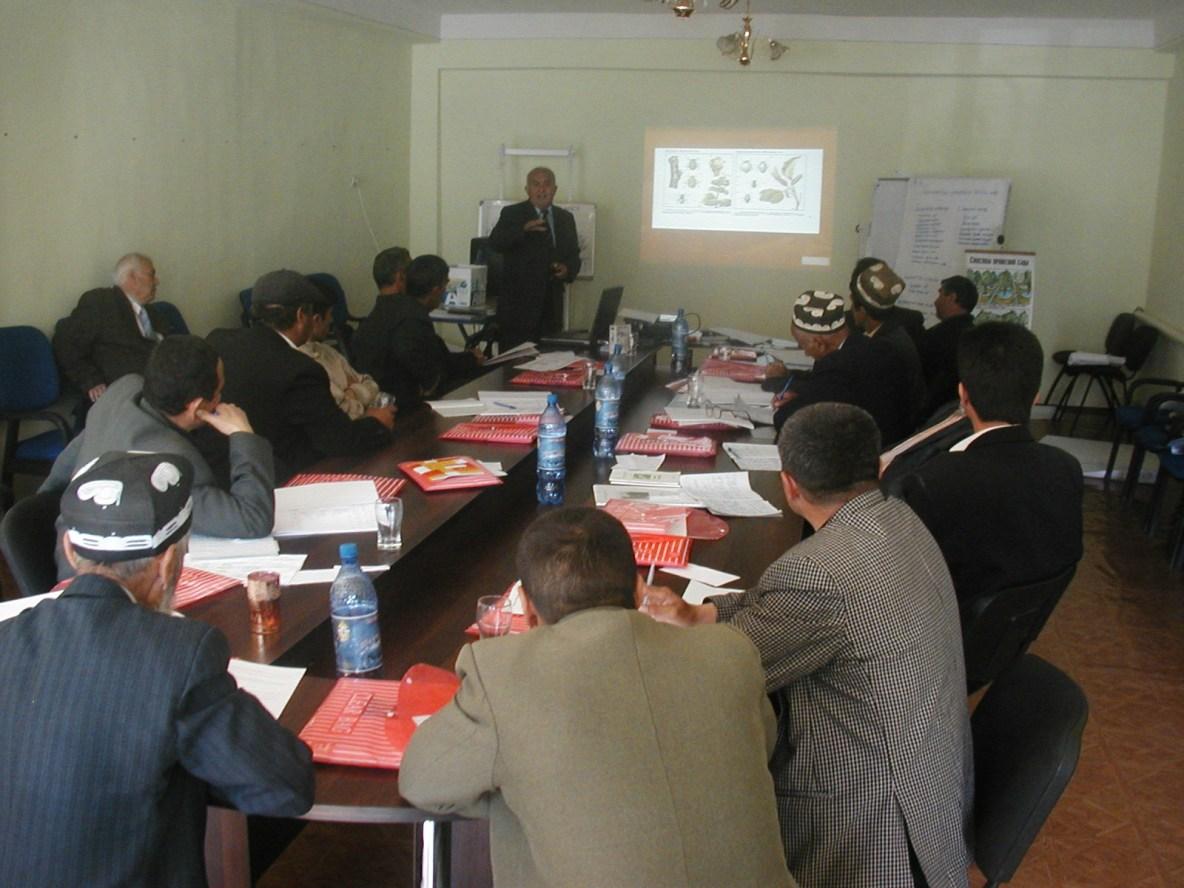
Stages of implementation: 1. National pasture management experts from the Pamir Biological Institute held a training of trainers (ToT) session for MSDSP facilitators and district specialists, who conducted follow-up training on PM at the pilot communities in 2009. 2. Pilot communities identified key problems related to PM in the process of Village Development Planning facilitated by MSDSP, and prioritised targeted measures for improved PM. 3. A set of micro-project proposals were developed based on the prioritised measures, which focused on (re-) construction of roads and bridges for improved access to pastures, and construction of stables during spring/autumn, as well as summer pastures. 4. Monitoring of the impacts of the implemented measures as a basis for up-scaling.
Role of stakeholders: Community members were engaged in identifying and implementing targeted measures for addressing pasture use and management issues. Jamoat level non-governmental organisations called Social Unions for Development of Village Organizations (SUDVOs), coordinated and supported the identification and implementation of the selected projects in several village organisations. Governmental agricultural extension agents were engaged in training, and consulted in the review process. MSDSP staff facilitated the overall process and engaged in monitoring progress with implementation. PALM project staff engaged in the review, monitoring and assessment of the impacts of the supported measures.
Photos of the Approach
- 📍 Vanj
- 📷 MSDSP Khorog