
SLM Labour-Sharing Group
Type: Approaches
Creation: 2014-07-07 00:00 Updated: 2017-08-03 12:01
Compilers: Karma Dorji
Reviewers: Fabian Ottiger
Country/ region/ locations where the Approach has been applied
- Country: Bhutan
- Region/ State/ Province: Chhukha Dzongkhag
- Further specification of location (e.g. municipality, town, etc.), if relevant: Logchina geog, Amallay chiog
Description of the SLM Approach
Short description of the Approach
Labour-sharing group at village and sub-village level to ease the labour constraint faced by many households.
Detailed description of the Approach
Aims / objectives: A labour-sharing group is a pool of land-users, who work on rotation basis on the plots of the different group members and replaces the conventional approach of an individual land user carrying out a specific SLM intervention. An important constraint for effective implementation of SLM interventions is the lack of sufficient labour force at household level. To tackle this key issue, groups are formed at village and sub-village level to enable these households to take up the relatively labour-intensive SLM activities, such as stone bunding, bench terracing, stone check dam construction, water source protection works or grass hedgerow development.
Methods: The labour-sharing group is given an initial practical training on the basics of the SLM intervention, which start with hands-on work on the land of a group member, preferably that of a vulnerable household, which otherwise would have difficulty to provide sufficient labour to take up the activity. Labour-sharing groups therefore facilitate the inclusion of vulnerable households, especially female-headed and small families, in the implementation of labour-intensive SLM inter-ventions. In addition to the technical guidance provided by the extension staff, support is given to the group formation process, such as drafting of informal by-laws and group management.
Stages of implementation: Labour-sharing groups enable households to carry out key SLM interventions more effectively and efficiently enabling them to cover as compared to individual household approach. Other co-benefits reported are the improved community sense and enhanced social cohesion, because the exchange of experiences and collaboration builds mutual trust. Working in a group eases hard physical work, such as carrying and breaking large boulders and is perceived to be much more enjoyable than working alone or in a small household setting.
Role of stakeholders: Groups that were formed for the implementation of a specific SLM activity often continue carrying our other planned SLM interventions in a group. In some villages communities reported that they had lost the former practice of labour-sharing, but that with reintroduction by the project their community sense has been rejuvenated. Sustainability of the labour-sharing approach has to be proven post-project. Additional costs are very limited and are restricted to group formation guidance and some additional group support, such as tool sets and more incentives as more land will be converted by the group approach.
Photos of the Approach
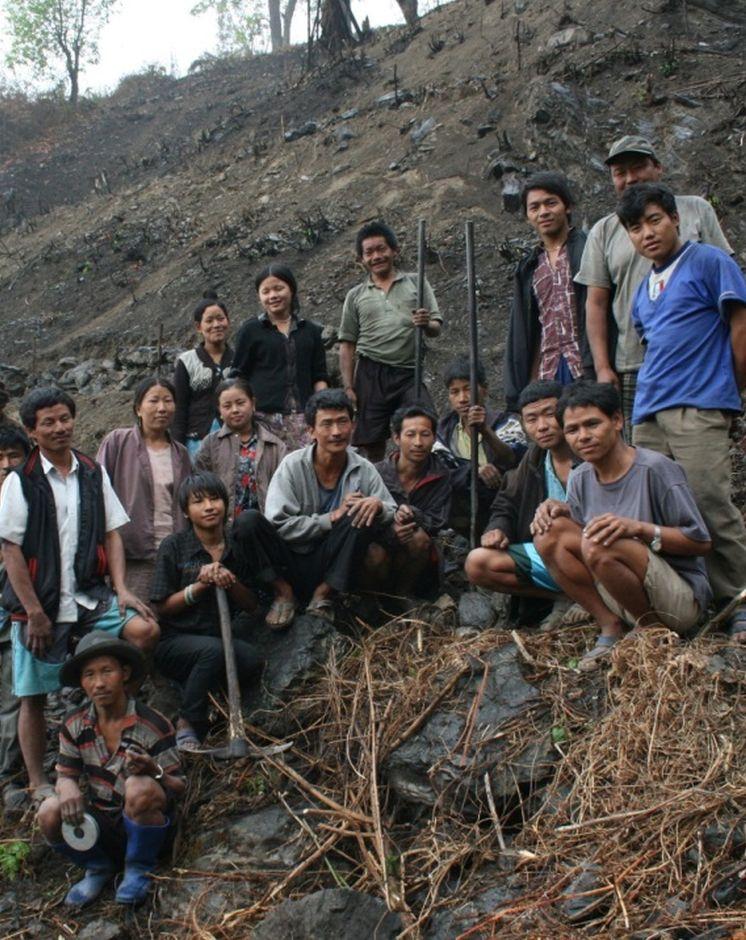
- 📍 Bosokha chiog, Phuentsholing geog, Chhukha Dzongkhag
- 📷 Hans van Noord (Schoutenkamp 43 Heteren The Netherlands)
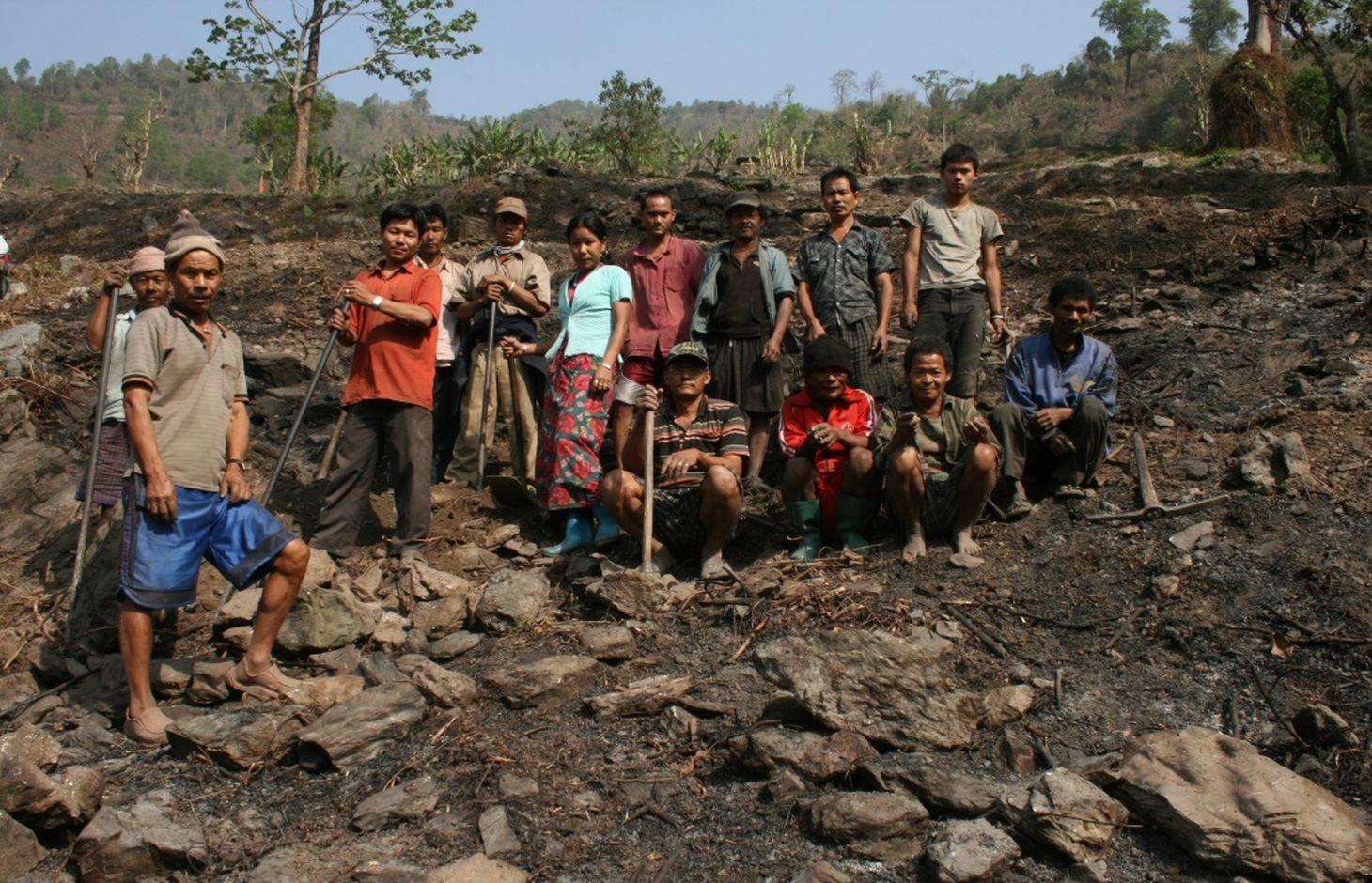
- 📍 Lower Amallay chiog, Logchina geog, Chhukha Dzongkhag
- 📷 Hans van Noord (Schoutenkamp 43 Heteren The Netherlands)