
Land Management Group
Type: Approaches
Creation: 2014-07-15 00:00 Updated: 2017-08-03 15:05
Compilers: Karma Dorji
Reviewers: Fabian Ottiger
Country/ region/ locations where the Approach has been applied
- Country: Bhutan
- Further specification of location (e.g. municipality, town, etc.), if relevant: Trashigang Dzongkhag, Radhi geog, Drung Goempa Chiog
Description of the SLM Approach
Short description of the Approach
Land Management Group uniting all households in a community to plan and implement SLM and cash-generating activities
Detailed description of the Approach
Aims / objectives: A Land Management Group (LMG) unites all households of a village and aims to advocate, plan and implement SLM activities, based on the land-based issues of that particular community. The LMG has formal by-laws, drafted interactively with the community, and has its own group saving account, as access to credit and proper savings is still a real constraint in remote areas. A first LMG was started in 2008 in Drunggoenpa chiog in Radhi geog, Trashigang Dzongkhag, East-Bhutan. The idea for the LMG was based on pioneering work of the Renewable Natural Resource Research Centre Bajo, Wangdue Dzongkhag, in Salamji chiog, Dagana Dzongkhag.
Methods: In an effort to reinforce the social cohesion of communities and to improve the efficiency of planning for implementing SLM interventions, SLMP has initiated Land Management Groups. A LMG is considered very useful to overcome one of the main constraints of SLM implementation in Bhutan: labour-shortage. Many individual households have a growing lack of labour and therefore difficulties to implement labour-intensive SLM activities such as terracing, stone bunding or afforestation work.
Stages of implementation: LMGs are especially suitable for smaller communities, where households live relatively close to each other and have a good community bond. Instead of inter-acting with many individual households separately, the extension staff can also target their services, such as training programmes and technical guidance, to the group. The Drunggoenpa LMG was supported in their group formation process with regular meetings and took part in the annual participatory SLM action plan-ning for the chiog, identifying key land-based problems, their causes and possi-ble SLM interventions. Implementation of these SLM activities, such as grass strip establishment, stone check dam construction, group private forest establishment, vegetable production and tree and bamboo plantation, was carried out in a labour-sharing approach. Pooling labour in the group, all the land of the group members is converted or treated.
Role of stakeholders: This enables vulnerable families including single-headed households and the poorest-of-poor, to participate and get access to more labour-intensive SLM interventions. Apart from the pure SLM interventions, attention is given to cash-generating activities such as vegetable production and potato cultivation, to enhance the livelihoods of the farmers.
Other important information: Costs of forming a LMG including implementation of a series of SLM activities at the village level are limited(less than US$2,000 annually).
Photos of the Approach
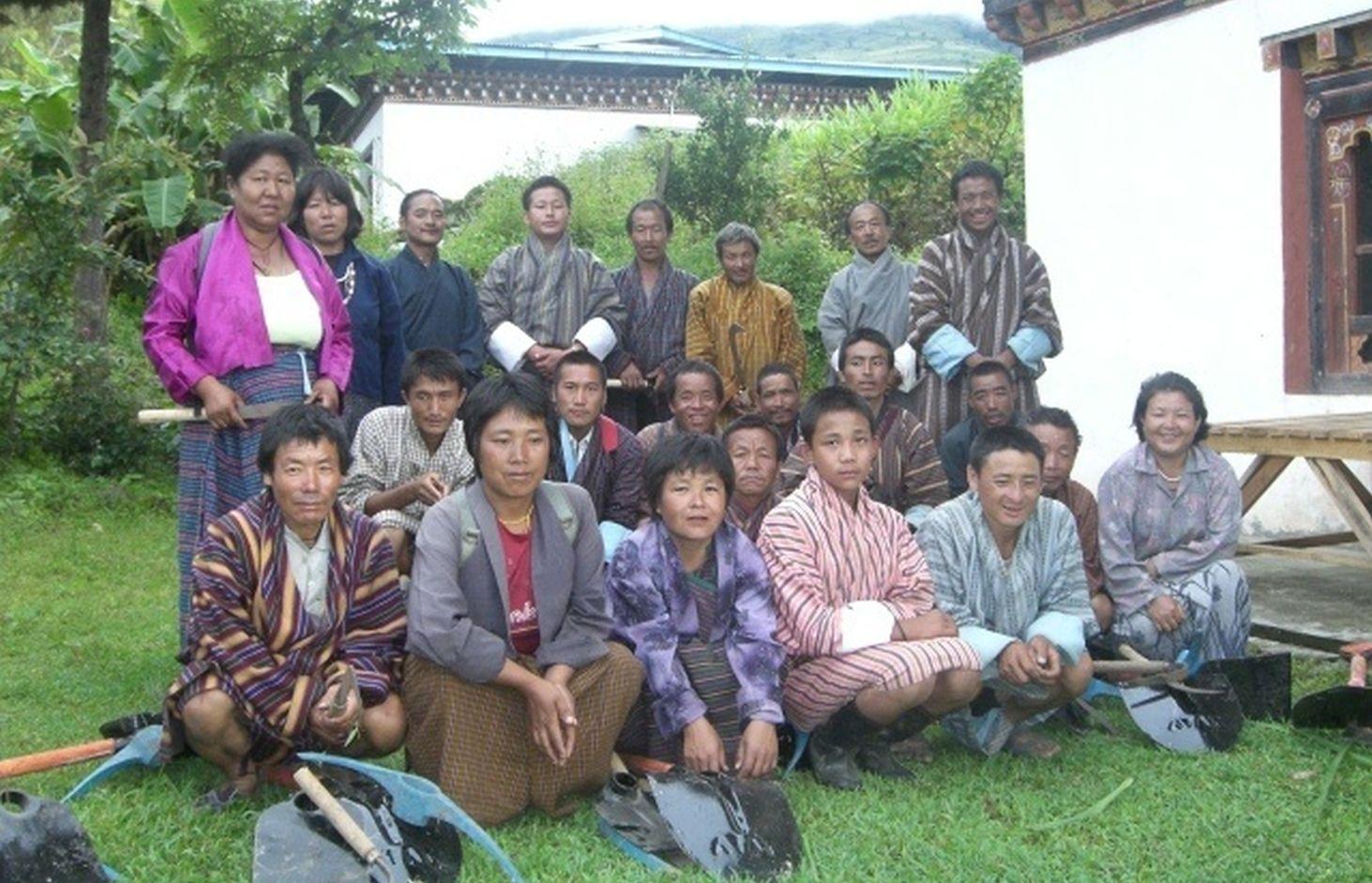
- 📍 Drung Goempa chiog, Radhi Geog, Trashigang Dzongkhag, Trashigang Dzongkhag
- 📷 Hans van Noord (Schoutenkamp 43 Heteren The Netherlands)
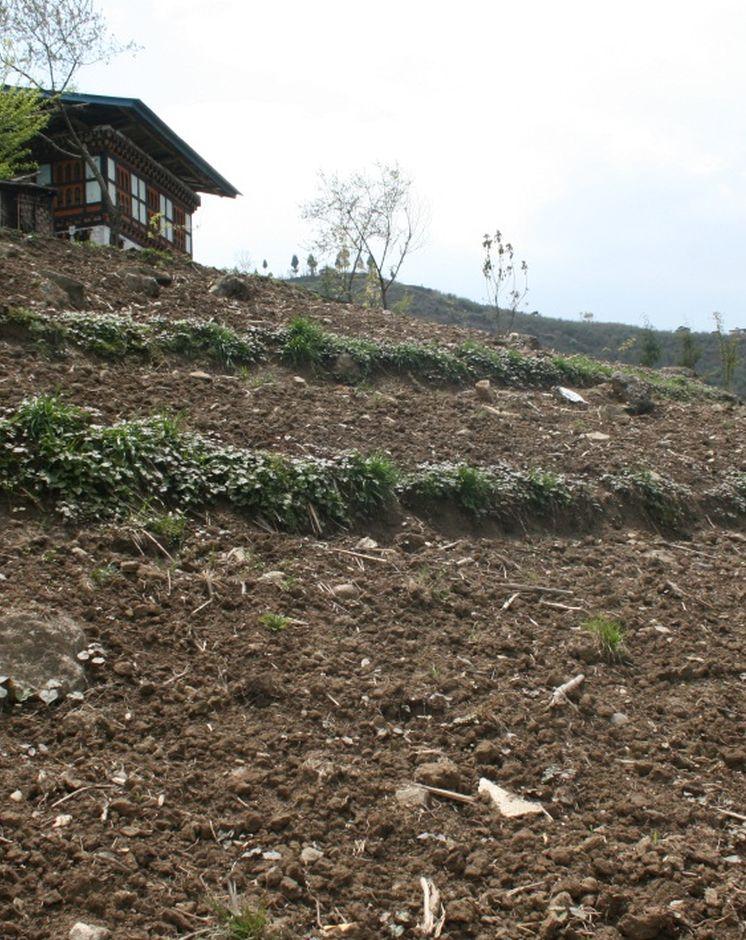
- 📍 Drung Goempa, Radhi Geog, Trashi
- 📷 Hans van Noord (Schoutenkamp 43 Heteren The Netherlands)