
Participatory hedgerow management
Type: Approaches
Creation: 2015-08-20 00:00 Updated: 2017-07-08 19:04
Compilers: Shreedip Sigdel
Reviewers: Fabian Ottiger
Country/ region/ locations where the Approach has been applied
- Country: Nepal
- Further specification of location (e.g. municipality, town, etc.), if relevant: Gorkha, Tanahu District
Description of the SLM Approach
Short description of the Approach
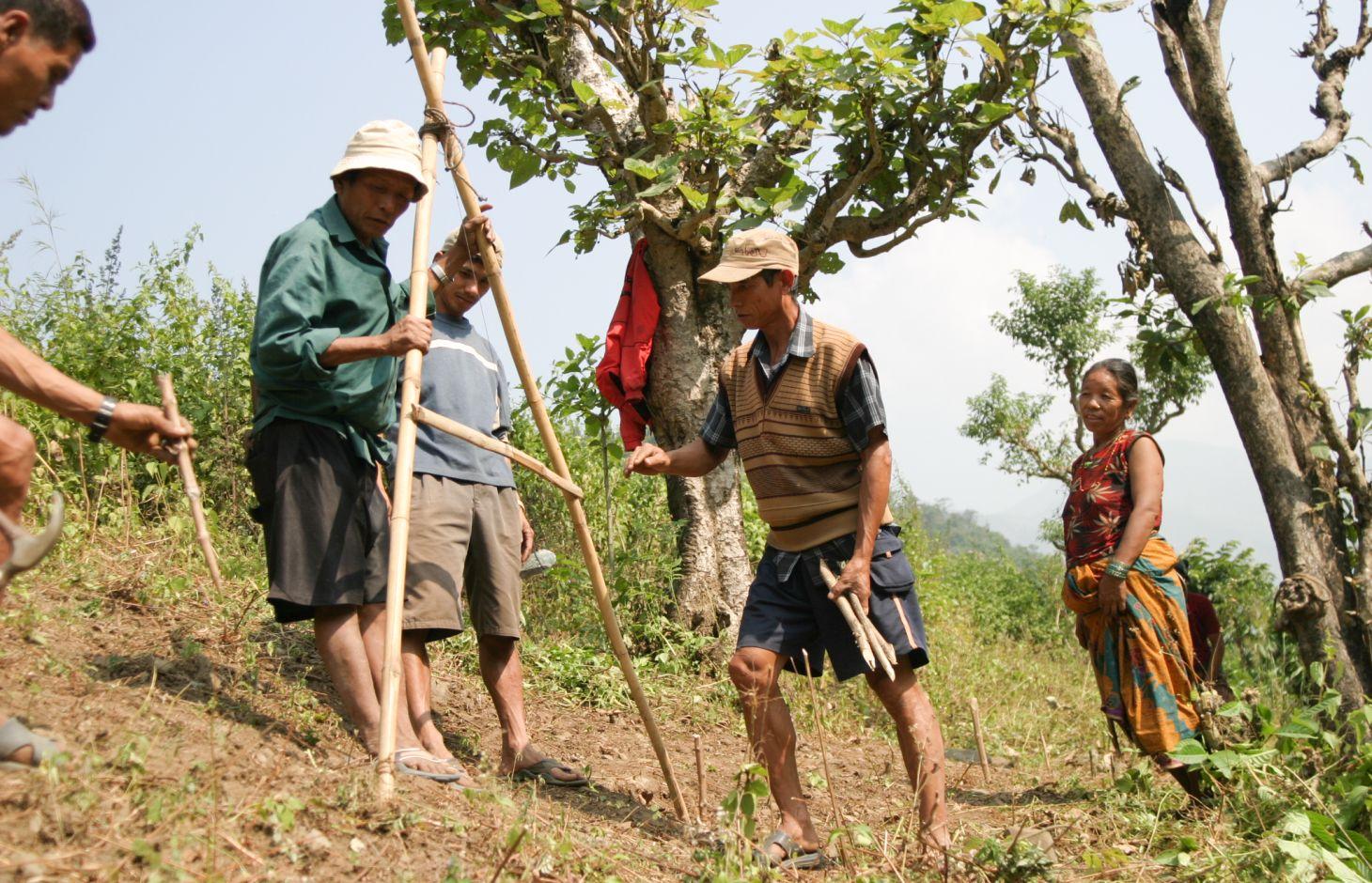
Hedgerow technology can be introduced through the joint participation of farmers, scientists, and related stakeholders. The whole community works together at all stages, including designing, planning, implementation, monitoring and evaluation, and scaling up.
Detailed description of the Approach
Aims / objectives: Communities can establish better hedgerows by supplementing the traditional knowledge that they have employed for generations with scientific knowledge through a participatory process where both groups are involved in every step of planning, designing, and implementation. This approach recognizes the validity of the local knowledge that farmers have about their land and supplements it with scientific techniques to facilitate the implementation of methods which will yield better results sooner.
Methods: Hedgerow technology can be implemented by forming farmers' groups and using a participatory approach. This technology has the potential to be scaled up and applied on a broader scale. The steps for sharing labour and know-how to establish hedgerows can be summarized as follows:
• Capacity is strengthened through discussions with technical persons.
• Farmers, technical persons, and related stakeholders work together to come up with plans that make the best use of both the farmers’ indigenous knowledge on how to form hedgerows and their understanding of the landscape, and scientific knowledge, for designing and planning.
• The hedgerows are established by the farmers as per the consensual plan.
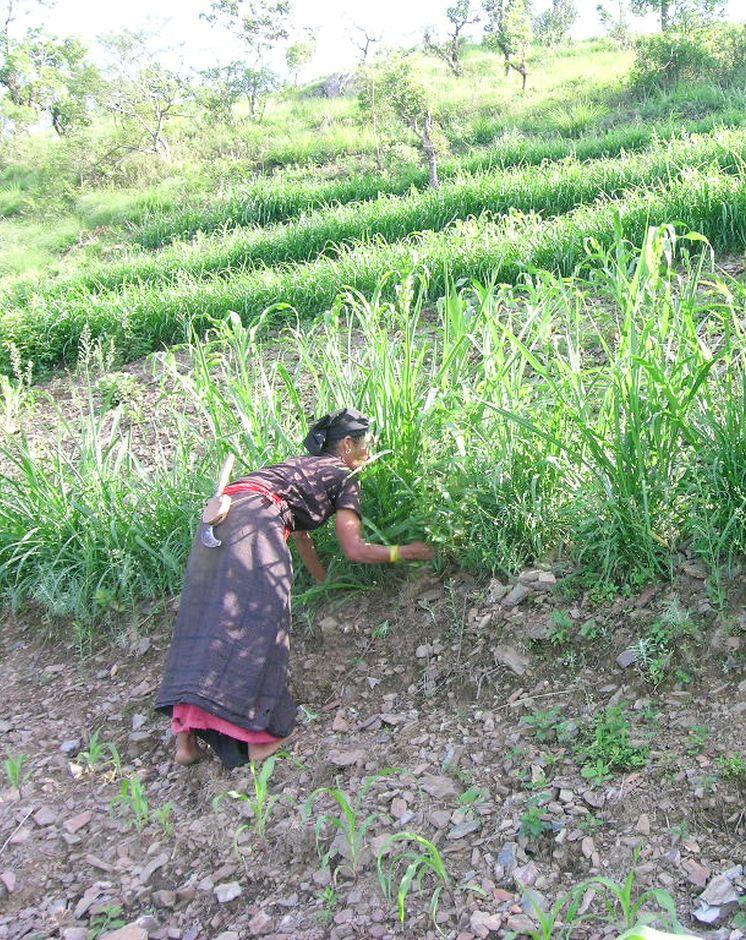
• Some farmers are designated to periodically inspect the hedgerows and to perform maintenance as needed.
• The technology is scaled up by farmers who disseminate the learning to other farmers through extension and knowledge sharing at different fora.
Stages of implementation: Farmers, technical persons, and related stakeholders were all involved at every stage. In addition, LI-BIRD, local community-based organizations, and other related stakeholders such as the district forest office and the district agriculture office were on hand to support the farmers' group by offering technical and financial resources. The farmers' groups had a vested interest in this approach and demonstrated their commitment by: generating funds from a savings and credit scheme and conducting income generating activities. They also worked to establish effective linkages and to coordinate with related stakeholders to obtain resources which would ensure that the group would be self-reliant in the long run. The involvement of a wide range of participants will ensure that the technology is not only effective but that it is also sustainable. Moreover, when neighbouring communities see how successful this approach can be, it is hoped that they also will adopt the technology.
Photos of the Approach
- 📷 Gyanbandhu Sharma
- 📷 Gyanbandhu Sharma