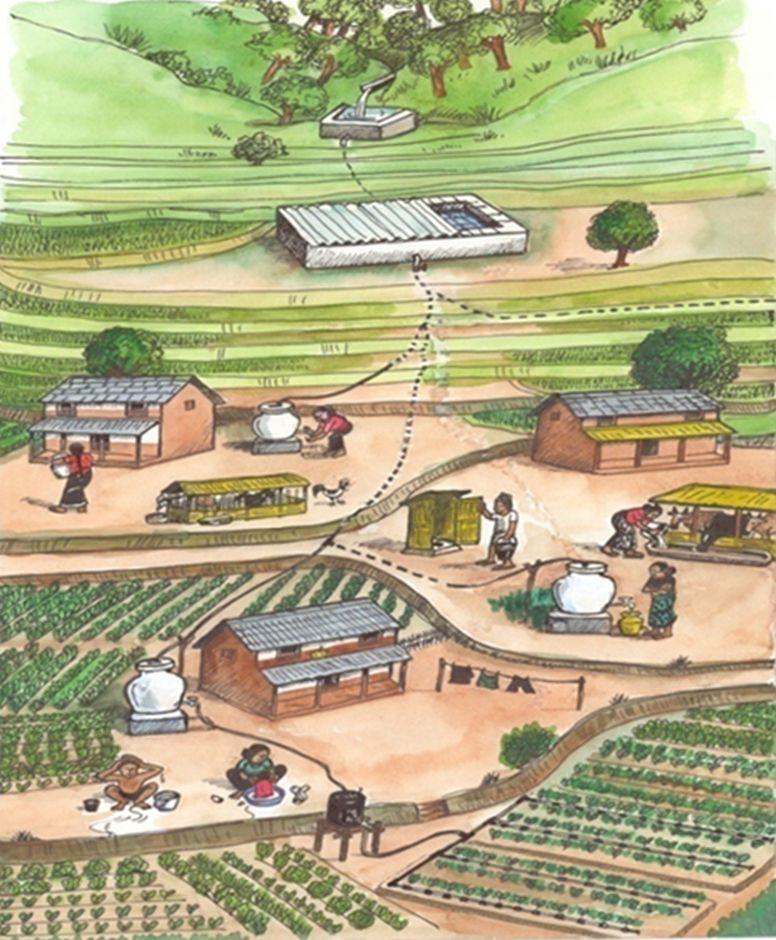
A multiple-use water system
Type: Approaches
Creation: 2015-08-21 00:00 Updated: 2017-07-09 18:20
Compilers: Shreedip Sigdel
Reviewers: Fabian Ottiger
Country/ region/ locations where the Approach has been applied
- Country: Nepal
- Further specification of location (e.g. municipality, town, etc.), if relevant: Kaski, Lamjunj, Tanahun, Dhading, Sangjya, Gulmi, Arghakhanchi, Palpa, Udayapur, Pyuthan, Rolpa, Ruk
Description of the SLM Approach
Short description of the Approach
A multiple-use water system gives a community access to water for domestic use and water for crop irrigation.
Detailed description of the Approach
Aims / objectives: A multiple-use water system (MUS) is a combined water facility that has proven useful as a means of providing drinking water and water for irrigation for smallholder farmers in the hilly areas of Nepal. Water is collected by gravity from a highland source into a holding tank and is shared by means of distribution lines, domestic tap stands, and irrigation off-take lines. It can also support application of micro-irrigation technologies (MIT) such as drip and micro sprinkler irrigation systems.
Methods: MUS is a community-managed system that caters mainly to smallholder landowners and marginal households in rural hilly areas. When properly implemented, it can help to alleviate poverty and increase food security for poor and marginalized groups. The first priority is to provide drinking water and water for domestic use to the community; any excess water is used for agriculture and irrigation.
Stages of implementation: The following points should be taken into consideration before a community establishes a MUS:
• The source of water should be clear of water-rights issues
• The water should be plentiful and of good quality
• There needs to be a sufficient drop in gradient between the source and the tank if the water is to be collected by gravity. If the drop is not sufficient, users should be prepared to consider lifting the water.
• The distance between the source and the village should be less than 3 km.
• The community should be ready to contribute unskilled labour as part of their contribution to the project.
• The community should be ready to put aside some funds for operational and maintenance costs; these funds can, in part, also be collected in the form of monthly users' fees.
• At least 70% of the water users should be ready to adopt micro-irrigation technologies (MIT) such as drip and sprinkler irrigation.
Photos of the Approach
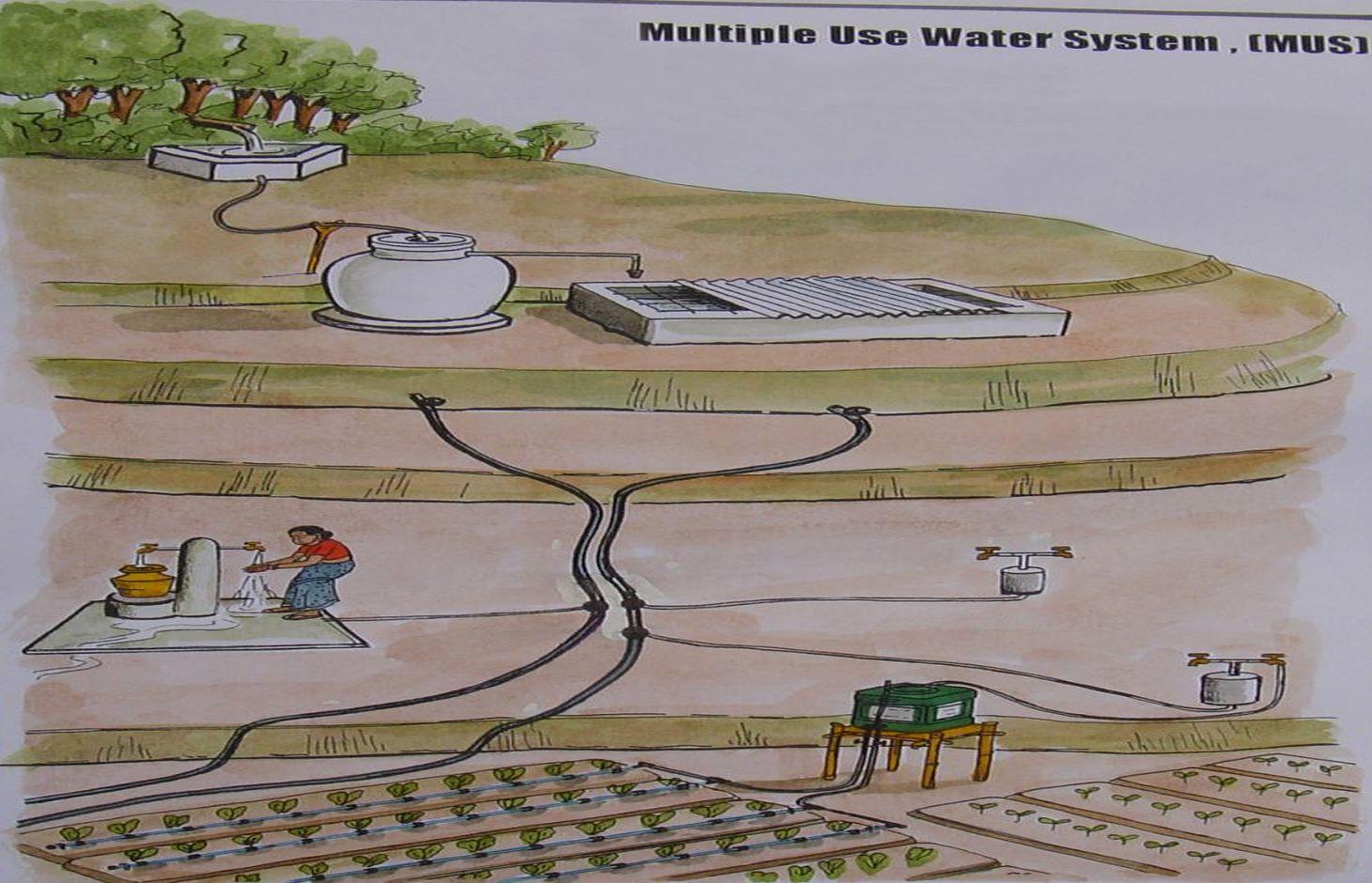
- 📷 (IDE/Nepal)