Water use master plan
Type: Approaches
Creation: 2015-08-25 00:00 Updated: 2017-07-07 09:59
Compilers: Shreedip Sigdel
Reviewers: Fabian Ottiger
Country/ region/ locations where the Approach has been applied
- Country: Nepal
- Further specification of location (e.g. municipality, town, etc.), if relevant: 15 districts in the Western, Mid-Western, and Far-Western Development Regions of Nepal
Description of the SLM Approach
Short description of the Approach
A water use master plan supports the development of integrated water resources at the local level; all stakeholders, including disadvantaged groups, take part in the plan.
Detailed description of the Approach
Aims / objectives: A water use master plan (WUMP) is a holistic, participatory, and inclusive planning process that takes an integrated approach to the management of water resources and uses at the village level. The WUMP specifies the total water budget for its planning unit, the village development committee (VDC), and explores potential uses for it. It empowers marginalized groups to claim their rights to an equitable share of water within and between communities. The WUMP also helps local bodies with annual and periodic planning and project prioritization.
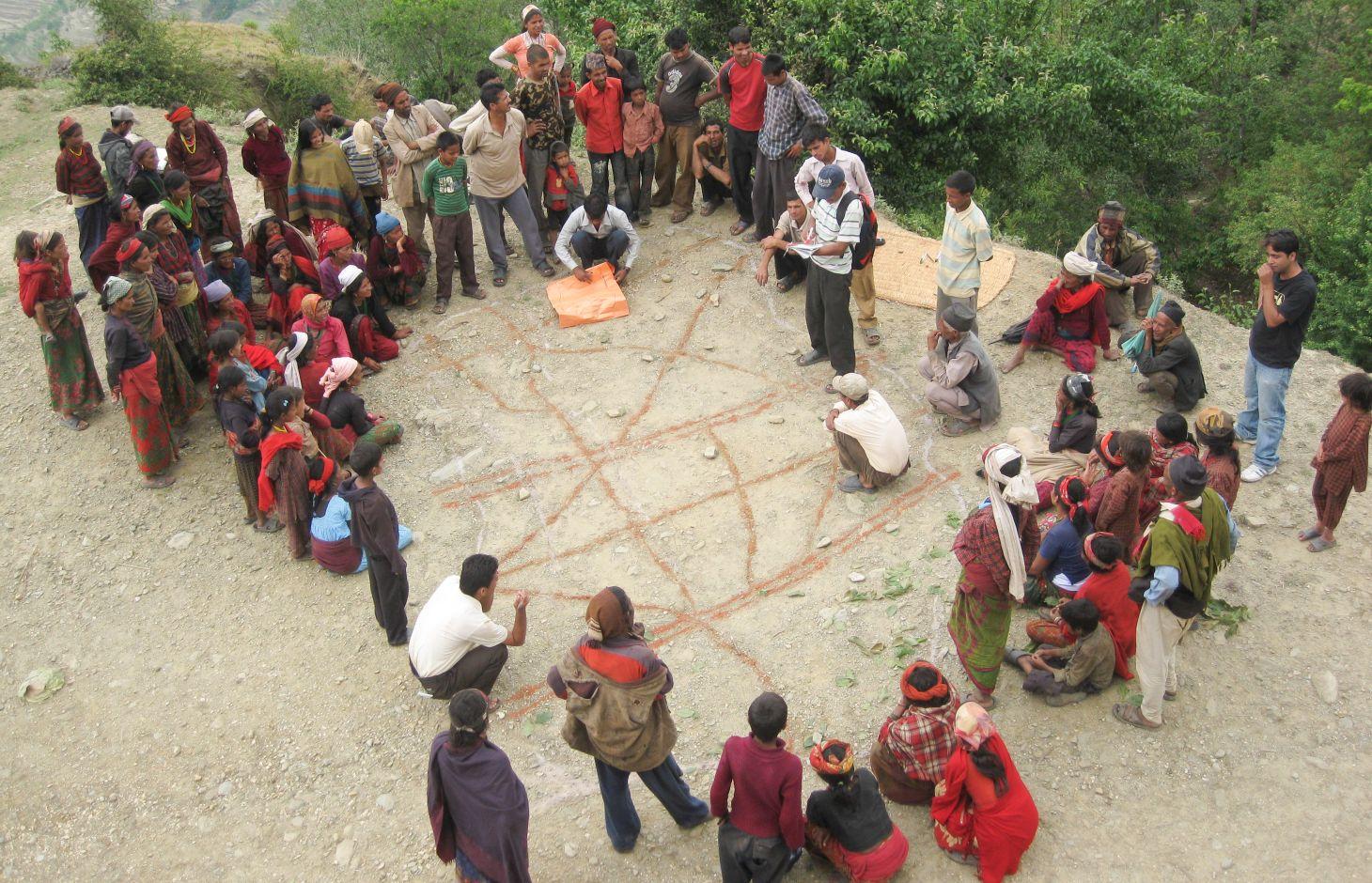
Methods: The WUMP is a 17-step process that includes social mobilization, the formation of inclusive management committees, capacity building for everyone involved in the process, and, as a final step, social assessment using various participatory rural appraisal (PRA) tools. Simultaneously, the technical part of the process evaluates the capacity of all water resources and their potential uses. In a workshop facilitated by NGO staff, the community discusses suggestions formulated by the two participatory assessments, prioritizes possible projects, and formulates plans. The VDC representatives decide which plans can be implemented using their own resources and which need external support. The WUMP then organizes a workshop to present these plans to various organizations in order to get their commitment and support. The prioritized projects are implemented according to the WUMP.
The plan also contains a series of long-term activities and during the course of its implementation, there is sufficient latitude to allow the community to rectify its original plans in order to put into practise lessons learned during earlier phases and to continue to review and modify the plan as needed.
Photos of the Approach