Farmer-to-farmer diffusion
Type: Approaches
Creation: 2009-01-19 00:00 Updated: 2017-06-26 15:36
Compilers: Richard Allen
Reviewers: Laura Ebneter
Country/ region/ locations where the Approach has been applied
- Country: Nepal
- Region/ State/ Province: Midhills
- Map: View Map
Description of the SLM Approach
Short description of the Approach
Wider diffusion of sustainable soil management technologies through a demand responsive farmer-to-farmer diffusion approach
Detailed description of the Approach
The Sustainable Soil Management Programme (SSMP) is spreading knowledge about sustainable soil management technologies through farmer organisations and government and non-government partners. These collaborating institutions are working closely with lead farmers in training and technology testing. These farmers in turn work in close collaboration with their local groups. Although this approach is successfully diffusing new technologies from lead to group farmers, and on to nearby farmers, it remains a big challenge to diffuse the technologies further to the wider community.
To increase the spread of the technologies, SSMP pilot tested farmer-to-farmer (FtF) diffusion in eight midhills districts in 2002, later expanding to an additional five districts. Firstly, district based FtF extension committees were formed. Their major function is to select and train experienced lead farmers (ELF); to identify demand farmer groups; to facilitate contact and agreements between ELFs and demand farmer groups; to assess these agreements; to approve and channel funds to accepted proposals, and to monitor and evaluate the services provided. The demand farmer groups both propose the training events and select which of the currently 500 ELFs they want to lead their training. Demand farmer groups may be any group of farmers. Their proposals need to be recommended by a ‘demand actor’ such as a non-government or government organisation, a local authority, or a development project. Once a demand proposal is approved, the FtF extension committee provides funds to the demand group to pay the ELF and the other costs of the training.
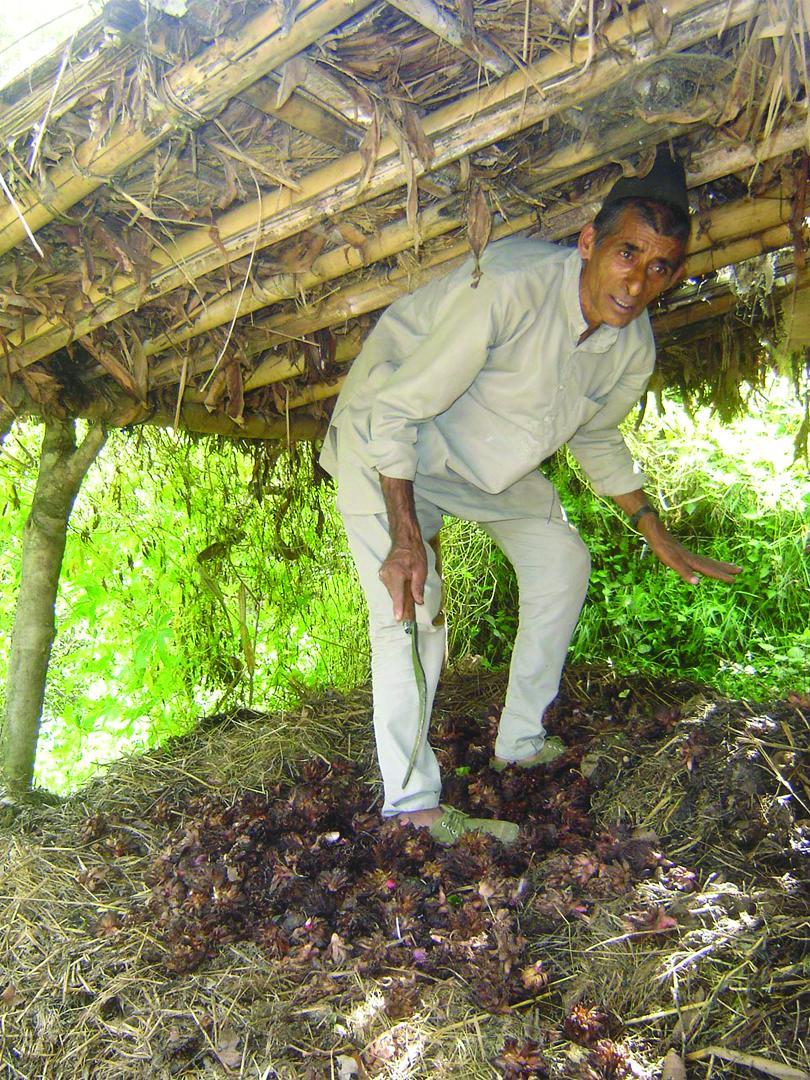
Experienced lead farmers play a pivotal role in this process. They are generally progressive farmers with long farming experience who have good leadership and communication skills, are motivated to bring about change, and are interested in serving disadvantaged groups. They are trained on sustainable soil management technologies to enable them to provide training and follow-up to farmers groups outside the areas of collaborating institutions and to disseminate technologies which have proven to be appropriate and successful under local conditions.
Photos of the Approach
- 📷 Juerg Merz