
Eligibility Criteria and Environmental Planning Tools for SLM
Type: Approaches
Creation: 2011-05-24 00:00 Updated: 2021-11-02 15:50
Compilers: Nandita Jain
Reviewers: David Streiff, Alexandra Gavilano, Joana Eichenberger
Country/ region/ locations where the Approach has been applied
- Country: Tajikistan
- Region/ State/ Province: Sughd, RRS, Khatlon, GBAO
- Further specification of location (e.g. municipality, town, etc.), if relevant: Jirgital, Tajikibad, Vanj, Aini, Matcha, Penjikent, Danghara
- Map: View Map
Description of the SLM Approach
Short description of the Approach
Using eligibility criteria and participatory environmental analyses for selecting and assessing SLM investments.
Detailed description of the Approach
Aims / objectives: As part of the Community Agriculture and Watershed Management Project (CAWMP), tools were developed to ensure farmers chose appropriate SLM technologies while preparing Community Action Plans (CAPs) and to improve environmental assessments during CAP preparation and in rural investment activities.
Methods: Eligibility Criteria: CAWMP financed small grants for three types of rural production investments: farm productivity, rural infrastructure, and land resource management (the largest type). The eligibility criteria for these grants included meeting at least one of the following impacts on fragile lands: • Prevent/reduce soil erosion • Increase vegetative cover through perennial crops and pasture • Provide soil and moisture conservation • Improve soil quality • Improve water use efficiency • Increase sustainable fodder/wood supply • Increase sustainable renewable energy supply • Increase integrated pest management These criteria ensured an environmental focus, and kept the grant proposals consistent with a list of eligible activities which is critical for a large-scale, community-driven project such as CAWMP. The criteria helped avoid diversion of grant funds to investments not directly related to land sustainability. Combining income-generating investments with environmental criteria encouraged sustainable land use by addressing vital interests of local people. The criteria were used to monitor local environmental impacts. Project arrangements provided for land use right certificates to beneficiaries with Project-financed investments on sloping lands, giving them a stake in the sustained productivity of their land. Traditionally such land use right certificates were issued only for irrigated and other valley areas. The Project financed a total of almost US$ 5.3 million in grants for land resource management, through almost 2,300 subprojects, benefitting over 43,000 households.
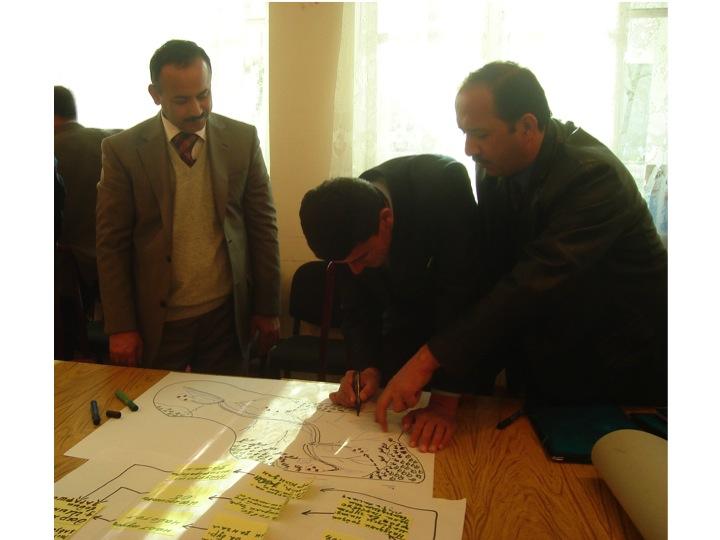
Stages of implementation: Participatory environmental analyses. A review of investment proposals and field activities in 2007 revealed that farmers were not capable of properly assessing their local land management problems, identifying the most environmentally appropriate investments or actions, nor monitoring their effectiveness. Tools were developed for project partners and officials to address these concerns including: 1) Developing Conceptual Models of Local Environments/Watersheds; 2) Mapping Local Environments/Watersheds and Associated Threats; 3) Identifying and Ranking Environmental Threats; and 4) Community Environmental Assessment. More than 50 persons attended the two-day interactive training course on the use of the tools. Detailed guidelines for facilitators and trainers to use the tools were prepared in Tajik and Russian. While the training could not influence many of the SLM-related investments already submitted for funding, participants urged that similar training be conducted at the inception of SLM-related projects and that the tools be requirements of SLM planning.
Photos of the Approach
- 📍 Dushanbe, Tajikistan
- 📷 Nandita Jain