
Scientist-practitioner communication for sustainable rubber cultivation in China
Type: Approaches
Creation: 2016-01-27 00:00 Updated: 2018-04-04 14:27
Compilers: Thomas Aenis
Reviewers: David Streiff, Deborah Niggli
Country/ region/ locations where the Approach has been applied
- Country: China
- Region/ State/ Province: Yunnan
- Further specification of location (e.g. municipality, town, etc.), if relevant: Xishuangbanna
- Map: View Map
Description of the SLM Approach
Short description of the Approach
Establishing communication between scientists and practitioners to improve sustainable rubber cultivation in Yunnan, China
Detailed description of the Approach
Aims / objectives: The Sino-German project “SURUMER: Sustainable rubber cultivation in the Mekong Region” is identifying appropriate, stakeholder-validated concepts for sustainable rubber cultivation in Xishuangbanna prefecture, South-west China. In order to at least begin to implement solutions for problems arising from monoculture, project partners from five German and seven Chinese research institutes and practitioner partners are testing a holistic approach. This combines communication activities (bilateral, as well as groups, mainly through workshops) with scientific analysis to enhance interaction and collaborative learning between practitioners and researchers.
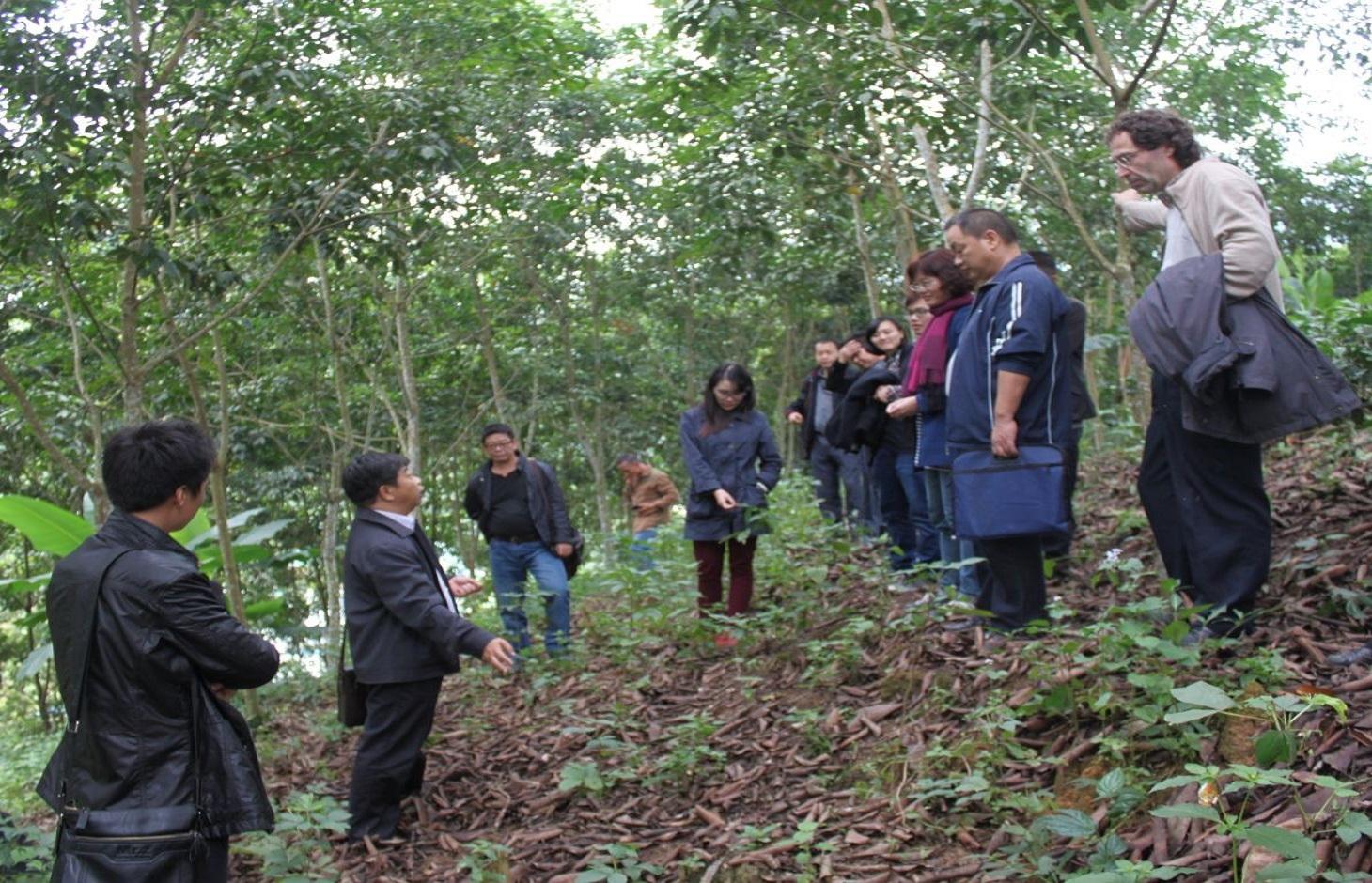
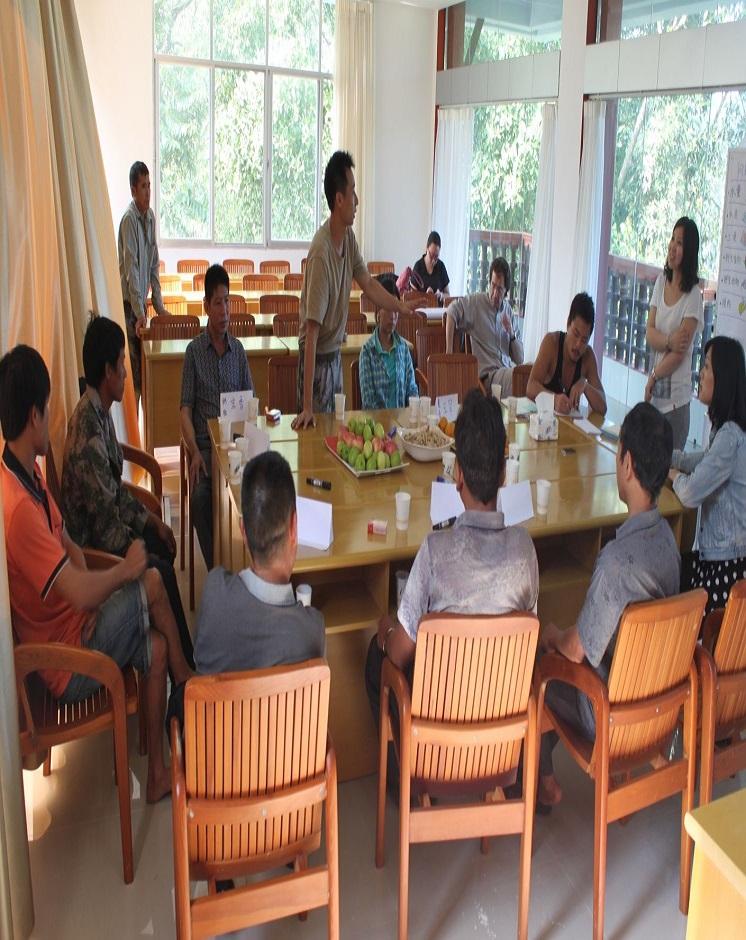
Methods: The approach comprises a pragmatic combination of discourse instruments such as direct communication amongst partners, bilingual information material, newsletters, focus groups, and a series of workshops with key stakeholders. One of its main elements is participatory scenario development - including discussions on problem situations, priorities regarding ecosystem services, and trade-offs in different land use strategies.
Stages of implementation: During the first three-year phase of research, ecosystem functions and services were assessed and quantified. This phase of situation analysis had a clear multidisciplinary focus amongst researchers (topics as widely varied as carbon sequestration, pollination, and household economy). The next phase attempted to integrate findings from on-site measurements, household surveys, policy analyses and joint problem solving into identifying new land management options. A modelling approach which uses assessment indicators to define impacts of land management was chosen. The model also identifies trade-offs and synergies in different land management options. During this phase, demonstration trials were established at the plot level. In the last phase, the focus has shifted more and more towards implementation activities, for example policy briefings and training for farmers, village heads and administrative staff. Discussions with key actors amongst the practitioners, who can influence implementation, have started as early as possible. This follows the assumption that the more “realistic” the concepts are, and the better they are communicated to, and discussed with, the stakeholders, the greater the likelihood of implementation.
Role of stakeholders: Apart from the scientists, three key stakeholder groups have been identified, namely rubber farmers (often the village heads), regional decision-makers (prefecture administration and rubber companies), and provincial politicians. The main initiative, as well as the process of moderation, came from the group of scientists. Practitioners participate regularly at workshops and meetings. They express their interests regarding future rubber cultivation, and the information they would like to get from the researchers, and how this should be communicated.
Other important information: Experience shows that communication processes initiated by research play a key role and must be managed carefully. It is clear that significant resources and long-term commitment are needed, and that even “long” research projects of five years are not sufficient to reach full implementation or create impact.
Photos of the Approach
- 📷 Wang, Jue
- 📷 Wang, Jue