Participatory technology development
Type: Approaches
Creation: 2009-01-13 00:00 Updated: 2018-04-04 11:43
Compilers: Francis Turkelboom
Reviewers: David Streiff, Deborah Niggli
Country/ region/ locations where the Approach has been applied
- Country: Syrian Arab Republic
- Region/ State/ Province: Khanasser Valley
- Further specification of location (e.g. municipality, town, etc.), if relevant: NW Syria
- Map: View Map
Description of the SLM Approach
Short description of the Approach
Participatory technology development, through close researcher-farmer interaction, for sustainable land management of olive orchards in dry marginal areas.
Detailed description of the Approach
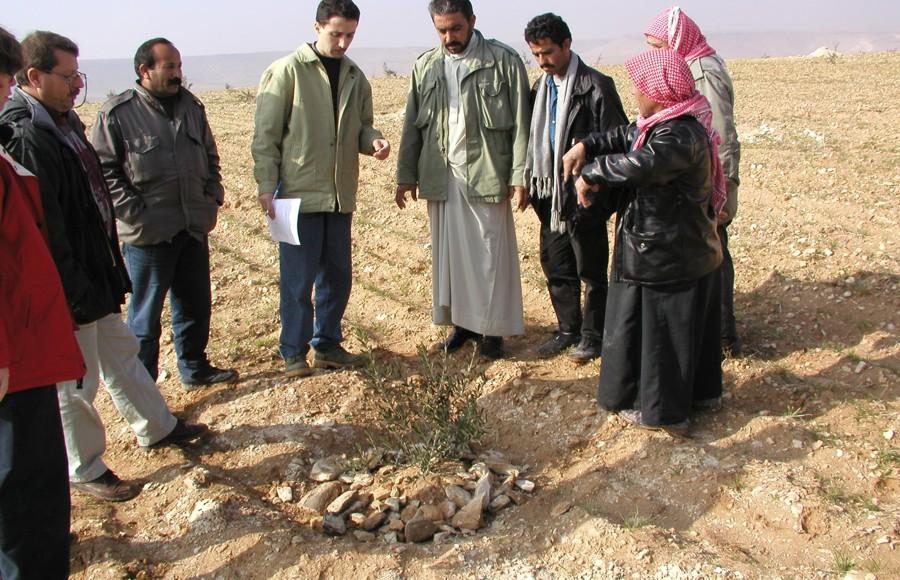
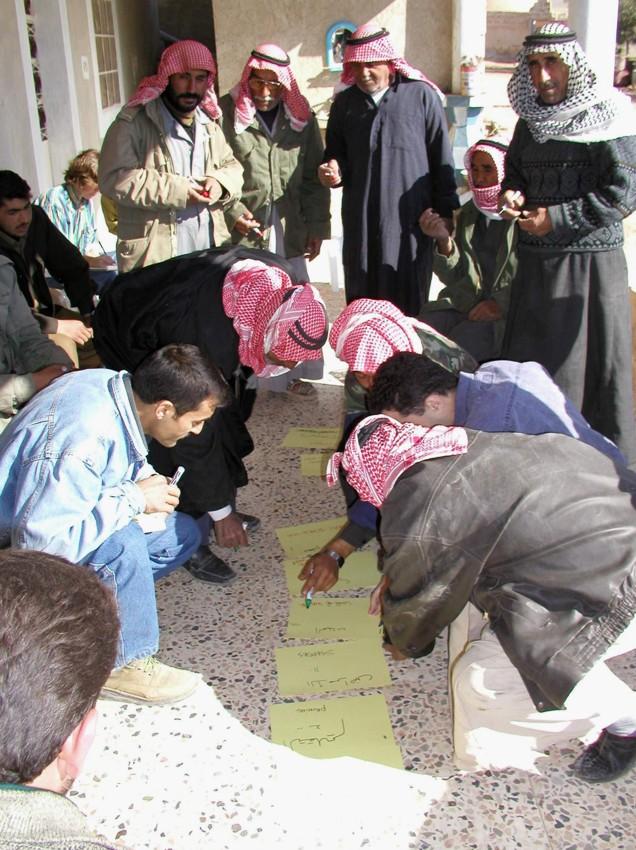
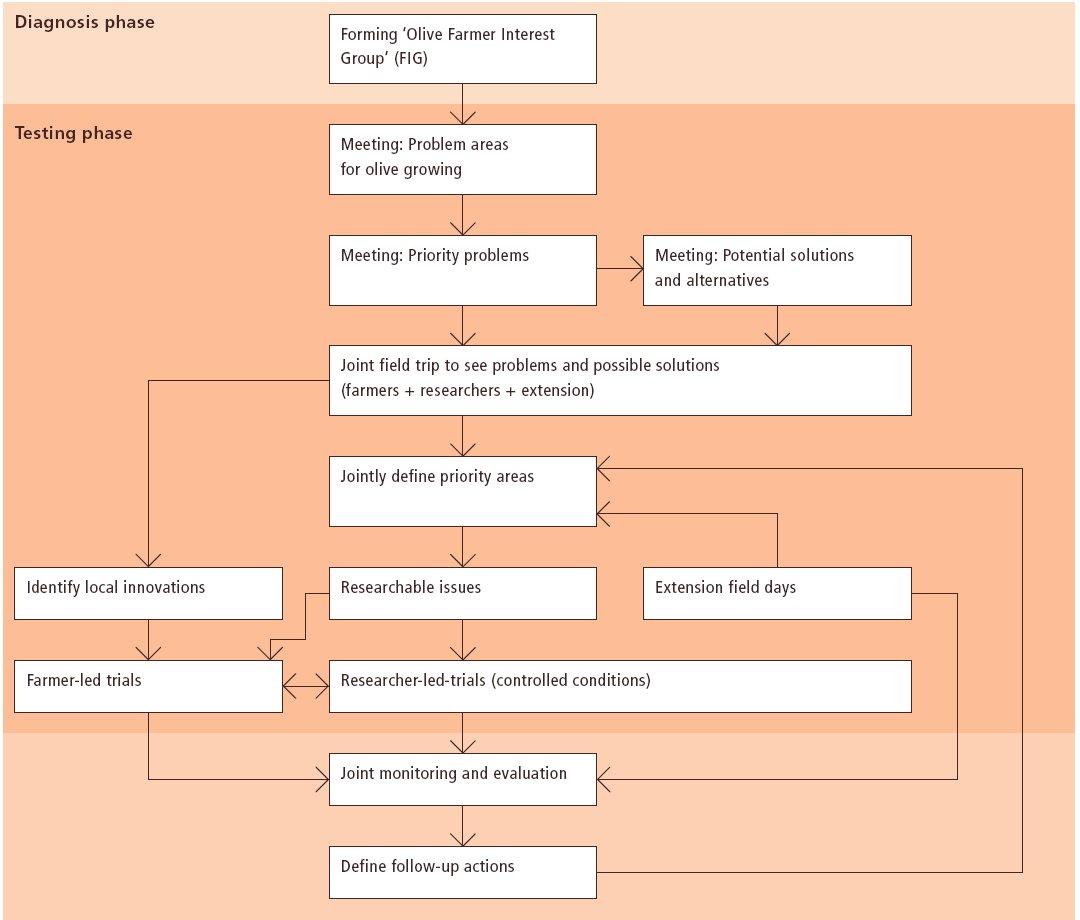
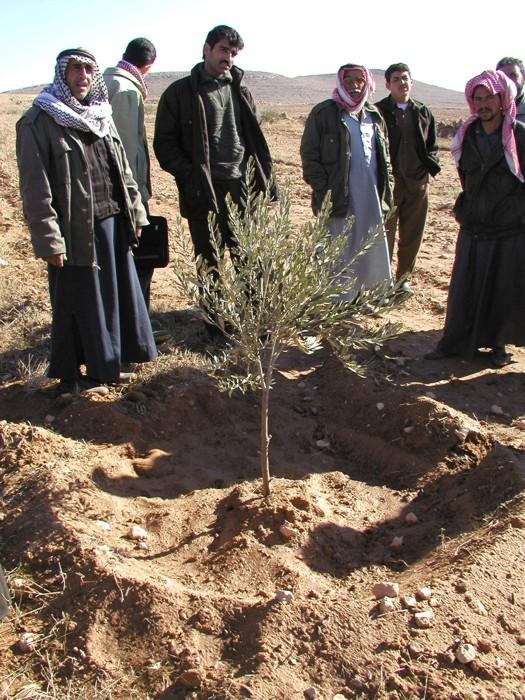
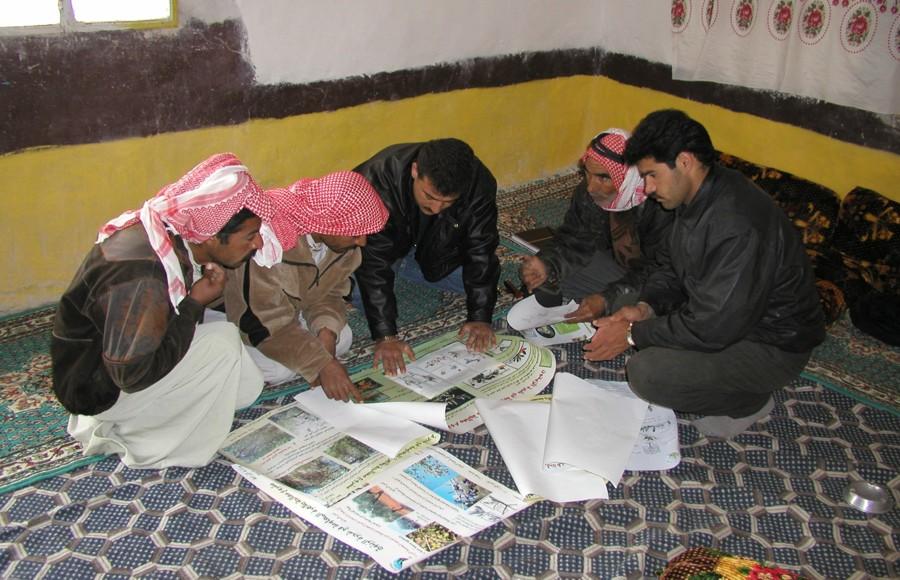
Aims / objectives: The purpose of participatory technology development is to gain from the synergy between indigenous knowledge and scientific expertise. The specific objective in this case was to develop and test water and land management techniques in order to sustainably improve olive production in a semi-arid area, while ensuring that the techniques were well adapted to local farming practices. The approach consists of group meetings, joint field trips, identification of local innovations, extension days, monitoring of farmer practices, and researcher-controlled experiments. The approach consists of a cycle with three major stages: a diagnostic phase, a testing phase, followed by monitoring and evaluation. In this case study, farmers were invited based on their interest in growing olives. Participation throughout the learning cycle was completely voluntary: no material or financial incentives were used (although they expected them in the beginning of the process). The role of farmers was to identify priority problems and potential solutions, to test new technologies on their farms, and to evaluate their suitability. Farmers observed the research experiment with water harvesting, and then adapted the technology to their needs. As shown, they built V-shaped bunds around their olive trees to capture rainwater runoff, but - contrary to the researchers??? suggestion - they continued to plough the olive orchards, as this is their standard weed control practice. Weeds attract sheep, lead to fires and compete for water with the olives. This simple runoff harvesting system is well adapted to farmers??? objectives, and their modification -the up-and-down slope furrows created through ploughing - actually serves to increase the efficiency of the water harvesting. The system is now being monitored by researchers to assess its technical and economic efficiency.
Methods: Improved farmer-researcher interaction helps farmers learn about a useful basic technique from researchers, while researchers learn in turn about potential improvements to the technology from local innovators. A community facilitator of ICARDA (International Centre for Agricultural Research in Dry Areas) facilitated the group discussions, and the researchers were asked to be open-minded to new approaches while conducting and monitoring field trials. The approach was tested by an interdisciplinary team of ICARDA as part of the ???Khanasser Valley Integrated Research Site???. This project aimed to develop local-adapted options for agriculture in dry marginal areas alongside a generally applicable integrated approach for sustainable land management in these zones.
Photos of the Approach