Transition from a centralised regime to a local initiative
Type: Approaches
Creation: 2009-01-13 00:00 Updated: 2021-11-02 15:56
Compilers: Sanginboy Sanginov
Reviewers: Alexandra Gavilano, David Streiff, Deborah Niggli, Joana Eichenberger
Country/ region/ locations where the Approach has been applied
- Country: Tajikistan
- Region/ State/ Province: Faizabad
- Map: View Map
Description of the SLM Approach
Short description of the Approach
A land use system established during the previous authoritarian regime of the Soviet Union is now being adapted to the farmers' needs via their own initiative.
Detailed description of the Approach
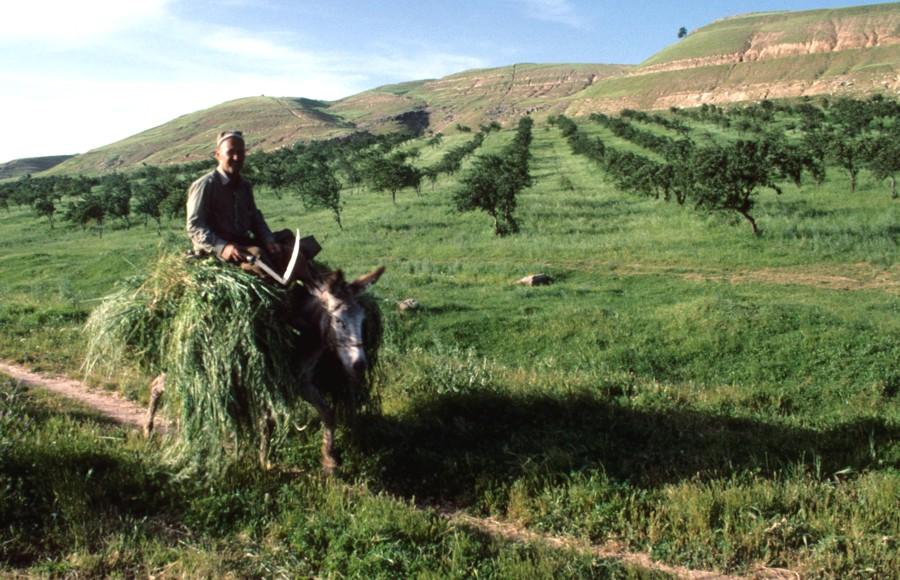
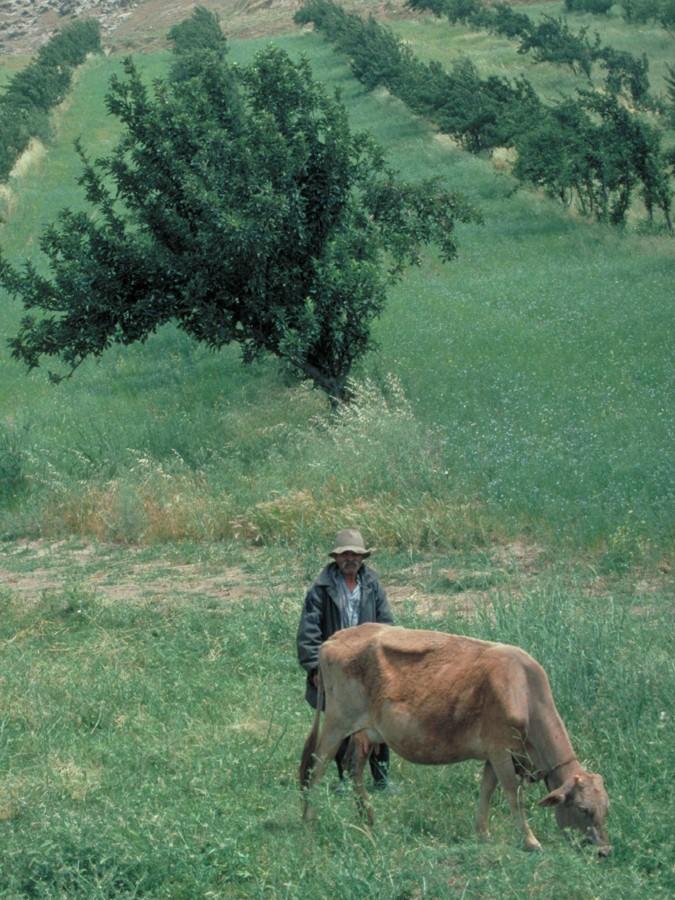
Aims / objectives: This case study compares two approaches which both contributed to the development of the current orchard-based agroforestry system: (1) Soviet approach: the previous state-run dictatorial system of the soviet times and (2) Farmers initiative: the current bottom-up approach. Farmers from the hilly Faizabad region with its deep and highly erodible loess soils had traditionally combined the cultivation of beans and wheat with fruit trees. During the 1980s the Soviet administration decided to intensify apple production in this area and to establish orchards on a large scale, making use of the well suited environmental conditions. The system introduced, comprised of densely planted purestand orchards, mechanically constructed terraces (where the slopes required this), and an irrigation system. Establishment was conducted through a top-down/authoritarian approach, and all inputs for implementation and maintenance were provided by the state. Farmers worked as employees on the state farms and received cash wages.
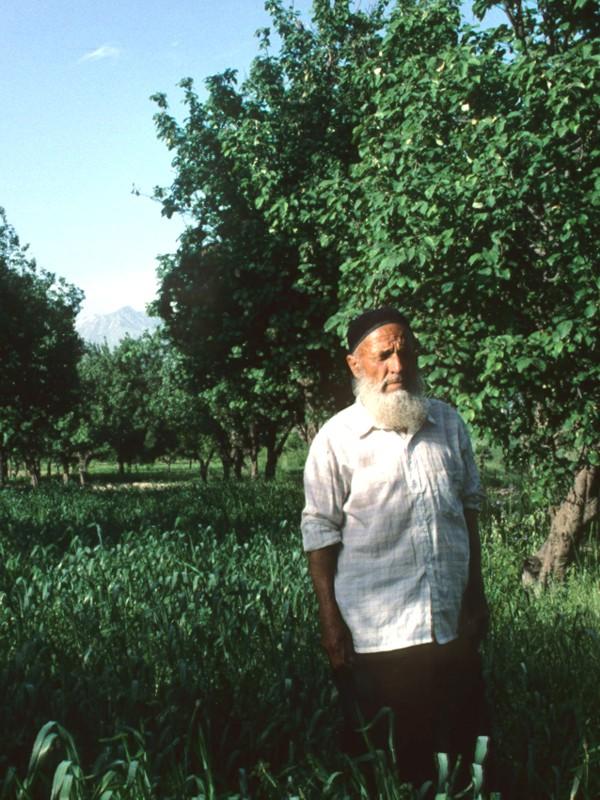
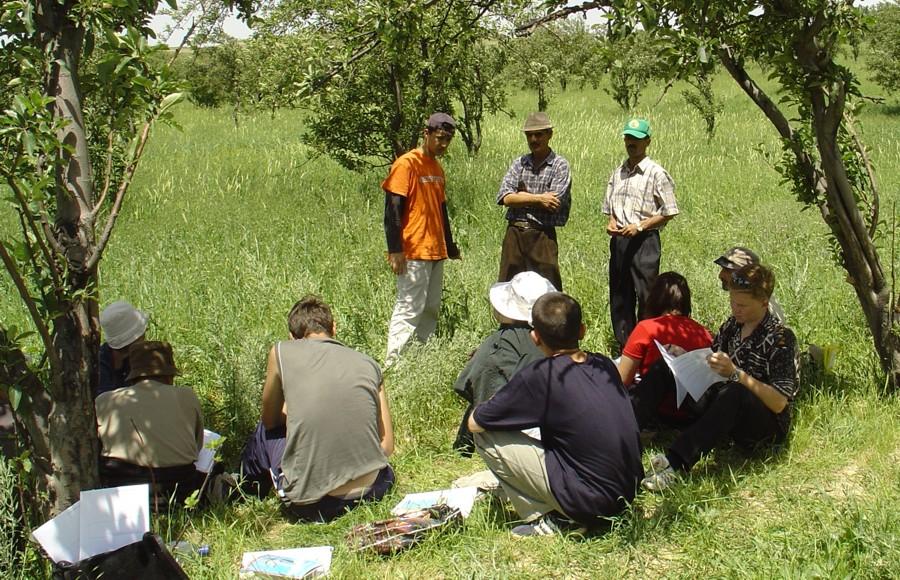
Methods: After the collapse of the Soviet Union and the start of the civil war, Tajikistan suffered from acute food shortages. In 1993, the Tajik government lifted the prohibition on planting wheat in rainfed areas. Farmers renting the land of the former state farms began to revert to intercropping annual crops, mainly wheat and beans, between thinned rows of apple trees. This was for both household use and for sale at the market. The initiative came from the farmers, and reflected the traditional system of production. However the pumping station and irrigation system have not been working for the last 10 years and therefore supplementary irrigation has not been available. In contrast to former times, decision-making, management activities, and provision of inputs/finance are all carried out by the land users themselves. In some cases, marginal farmers received incentive support from NGOs or from the World Food Programme. Systematic assistance from extension services, financial support to purchase pesticides or fertilisers, and investment to restore the irrigation system would all help to improve the agroforestry system and thus increase yields.
Photos of the Approach