
Social Enterprise (SE)
Type: Approaches
Creation: 2017-08-16 05:04 Updated: 2018-02-26 14:46
Compilers: Keeshia Lynn Marie Austria
Reviewers: Alexandra Gavilano
Country/ region/ locations where the Approach has been applied
- Country: Philippines
- Region/ State/ Province: Province of Bohol
- Map: View Map
Description of the SLM Approach
Short description of the Approach
Social Enterprise (SE) aimed to provide social protection among its members and generate additional family income. Above all, this approach will encourage the conservation, preservation and protection of the resources available in the community.
Detailed description of the Approach
Social Enterprise (SE) materialized because of the experiential processes conducted by the Sustainable Livelihood Officer. According to him, livelihood intervention should achieve the advocacy of the project, at the same time, relevant and suitable to the people living in the island and coastal communities. SE Approach was a result of the focus group discussions conducted in the community and livelihood consultations of the different stakeholders in the barangay level. According to the Local Government Code of the Philippines, Book III, Section 386 (a), A Barangay maybe created out of a contiguous territory which has a population of at least two thousand (2,000) inhabitants as certified by the National Statistics Office. Furthermore, Section 386 states that barangay is the basic political unit. It serves as the primary planning and implementing unit of government policies, plans, programs, projects, and
activities in the community, and as a forum wherein the collective views of the people may be expressed, crystallized and considered, and where disputes may be amicably settled.
Social Enterprise Project was determined using the following methods: resource mapping, identification of social enterprise project, planning and preparation which includes community equity fund, implementation, maintenance and monitoring, lastly, expansion and/or diversification of the implemented project. Once the enterprise is established, the organization will elect the members of their business management team. This is different from the set of officers typically present in every organization because business management team will focus on the business engagements only. The business management team is headed by the business manger, who will report directly to the president of the organization. The members of the team includes the following: treasurer, bookkeeper, purchaser and marketing team (if needed by the enterprise project).
The management team will receive 20% of the net income. Afterwards, the remaining net income will be divided according to the following percentage: 10% for disaster fund allocation, 10-20% for additional capital, and the remaining amount is allocated for individual member share. SE does not only focus on net profit but also the welfare of the community, its resources and social protection among its members. Social protection specifically means having disaster fund allocation per organization which is derived from the net income of the enterprise. This fund can be utilized by the organization before or after the onset of a disaster, depending on their agreed utilization guidelines. The sustainability components are the following: allocation for additional capital, depreciation cost for every equipment and experiential mentoring of the Livelihood Officer.
Based from the baseline study of DCW Project, Human Trafficking cases increased after a disaster. DCW project aimed to build resilient communities in order to combat Human Trafficking, however, conducting awareness sessions, coordination meetings with the local government unit and establishing HT referral system is not enough to prevent Human Trafficking. On the second year of the project, the project management team realized that livelihood component is the missing link in fighting against Human Trafficking. The body agreed that sustainable livelihood project means being adaptable and resilient to climate change. For the livelihood officer, group enterprise is an important mechanism in promoting adaptable and resilient livelihood project. This approach was granted to the People's Organization (PO) in the barangays who were organized or adopted by DCW project.
Due to the awareness sessions conducted, the organizations were motivated to join the advocacy activities like coastal clean-up and mangrove planting. They were also invited to join forums on the Solid Waste Management (SWM), referral pathway on Human Trafficking (HT) and awareness training on the causes and effects of Climate Change and sea level rise, since they are living in the island and coastal barangays. PO organizations serve as community partners of DCW project in facilitating learning sessions in the different barangays. Furthermore, DCW project provided inputs how to make their enterprise resilient and sustainable by being adaptive to the changing weather especially those organizations living in the island barangays.
Photos of the Approach
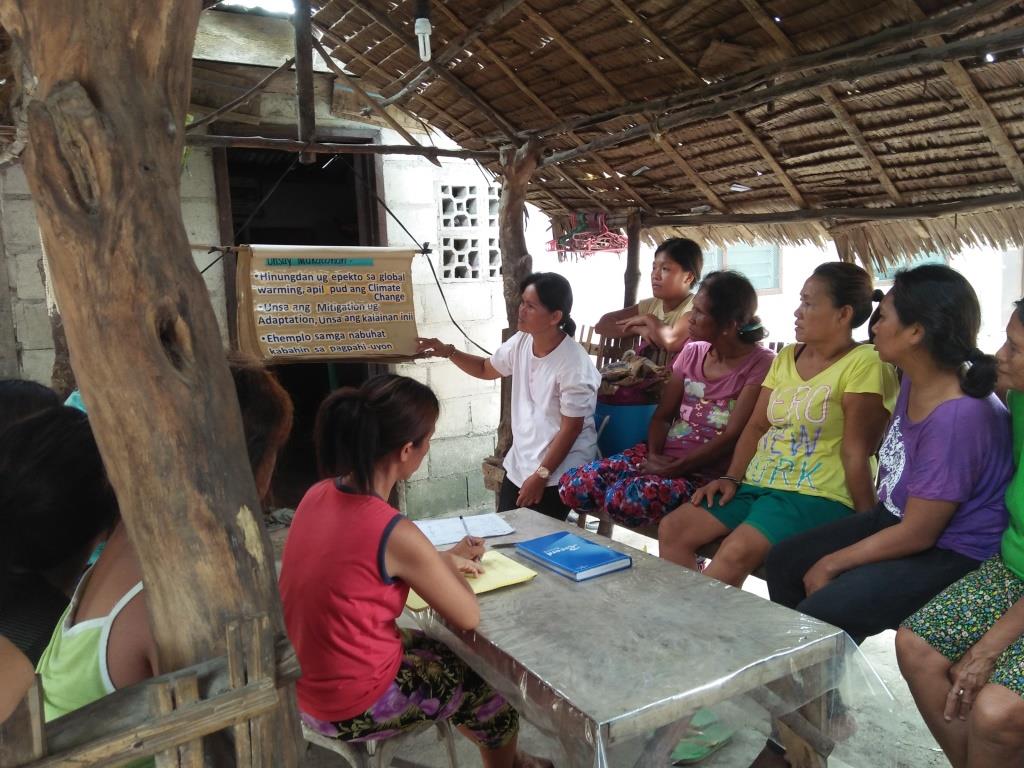
- 📍 Brgy. Sabang, Olanggo Island, Lapu-lapu CIty
- 🗓 2016-10-03
- 📷 Ma. Venidez Gamale
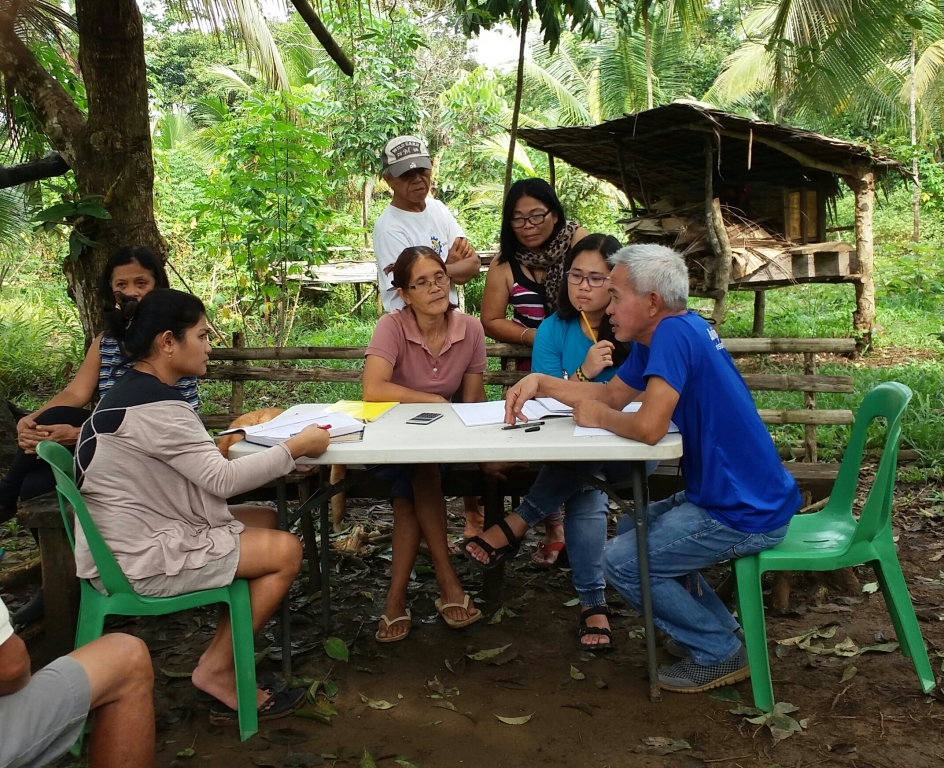
- 📍 Brgy. Bilibol, Maasin CIty, Southern Leyte
- 📷 Yunos V. Polo
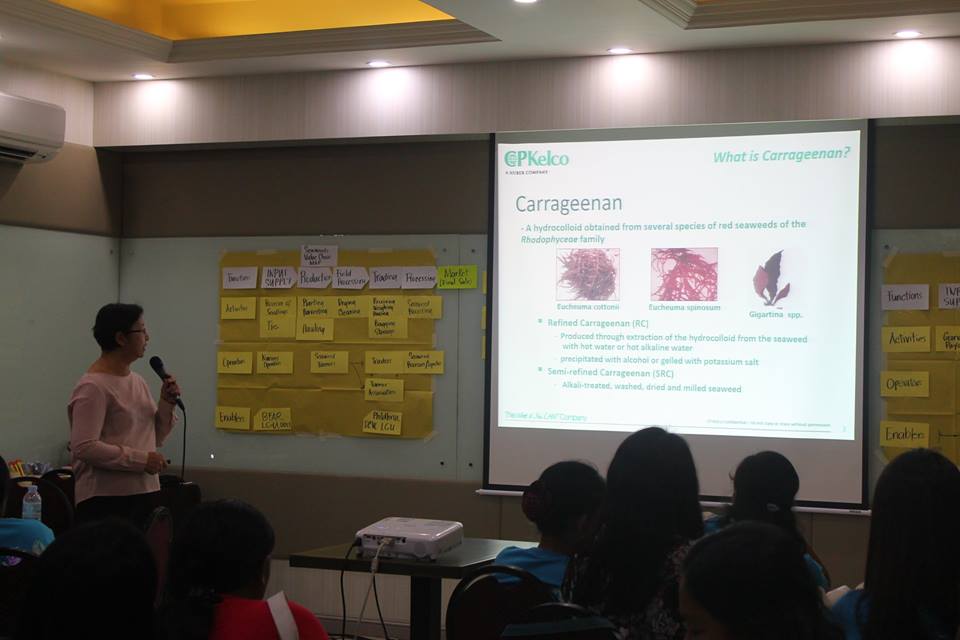
- 📍 Golden Valley Hotel, Cebu City
- 🗓 2017-02-06
- 📷 Karl Hegel Damayo