
The Upland Community Disaster Risk Reduction Project
Type: Approaches
Creation: 2017-10-17 17:38 Updated: 2021-01-11 12:58
Compilers: Pasalath Khounsy
Reviewers: Nicole Harari, William Critchley
Country/ region/ locations where the Approach has been applied
- Country: Lao People's Democratic Republic
- Region/ State/ Province: Saravan province
- Further specification of location (e.g. municipality, town, etc.), if relevant: Taouy district
- Map: View Map
Description of the SLM Approach
Short description of the Approach
The disaster risk reduction project in upland communities aims to increase understanding about disaster management, disaster risk reduction, and community resilience. The main activities include emergency response during floods/droughts, reduction of impacts from disease outbreaks, livestock revolving funds, and village rice banks.
Detailed description of the Approach
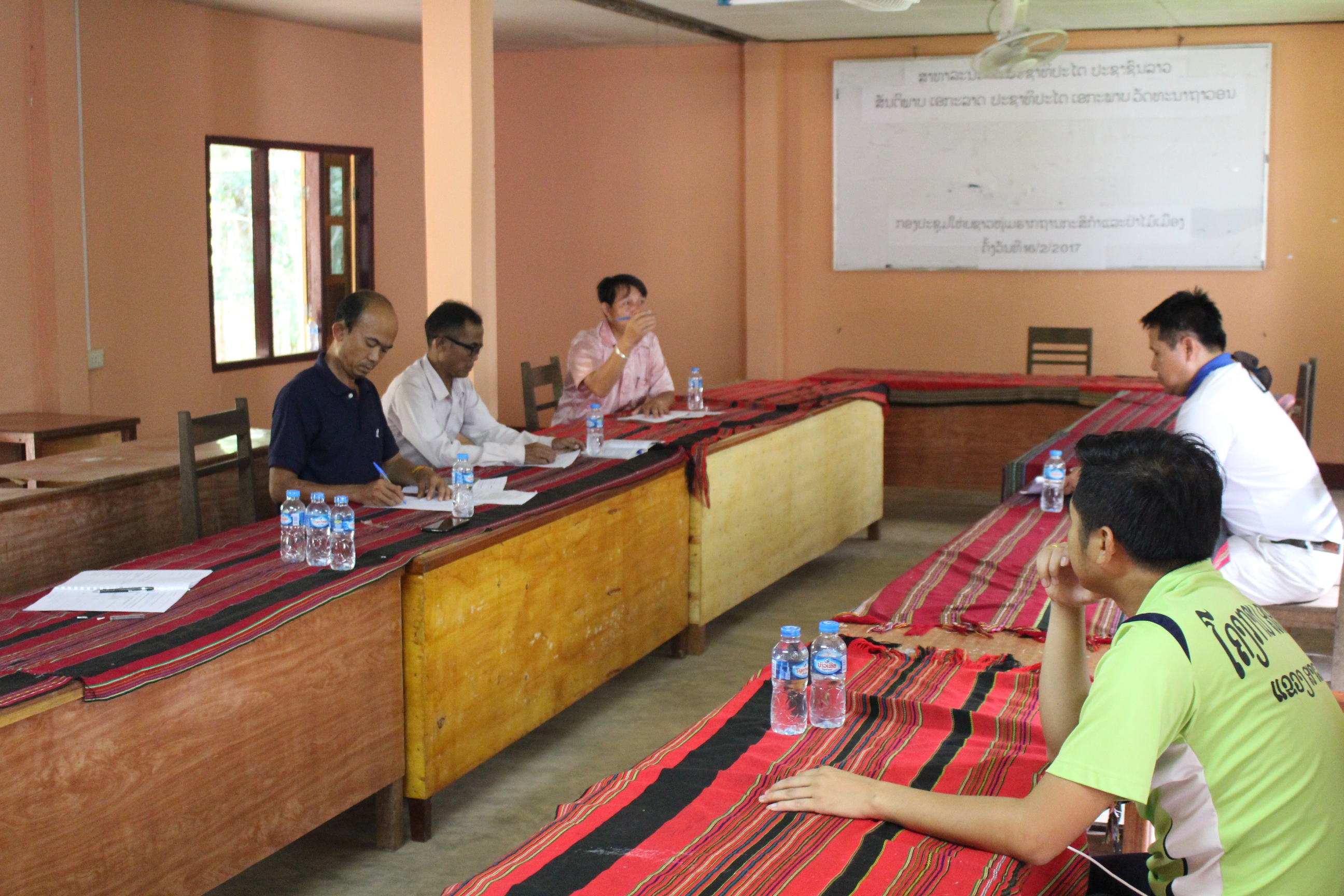
The disaster risk reduction project in upland communities was established after the Ketsana typhoon hit the southern region of Lao PDR in 2008, causing significant losses to assets, infrastructure, and agricultural land. The project was approved by the Ministry of Labour and Social Welfare, and Ministry of Planning and Investment to be implemented at community level through a project steering committee which included the deputy provincial governor. The district governor was the project director at the local level based on an action plan developed by the ministries concerned with assistance from Oxfam Australia. This action plan was aimed at disaster prevention and control. The project coordinators came from the relevant government agencies including the District Labour and Social Welfare Office, the District Agriculture and Forestry Office, the District Administration Office, the District Health Office, the District of Natural Resources and Environment Office, and mass organizations (Women’s Union, Youth Union, Trades Union, and Lao Front for National Construction). The key project aims are to increase understanding about disaster management, disaster risk reduction, and community resilience. The main activities to be implemented include emergency response during floods/droughts, reduction of impacts from disease outbreaks, livestock revolving funds, and village rice banks. In the agriculture sector, the project promotes integrated crop cultivation (maize, beans, lemons, etc), a particular rice planting method termed SRI (System of Rice Intensification), and household gardens. In addition, Oxfam Australia and the local government of Lao PDR in cooperation with Care International (Xekong Province), and the World Food Programme provided emergency response and relief, and sanitation. Although there are a number of organizations which have contributed to disaster risk reduction and emergency response, constraints remain such as the implementation of limited life projects, inadequate funding, and a lack of coordination in the province and districts.. Village Committees for Disaster Prevention and Control have been established with regular meetings and disaster awareness campaign activities implemented. The project outcomes demonstrated that the communities are satisfied with their active participation.
Photos of the Approach
- 📍 Saravan Province
- 📷 Anousit Namsena