
Cluster Level Pasture User Union
Type: Approaches
Creation: 2018-03-13 12:31 Updated: 2018-06-08 14:13
Compilers: Askarsho Zevarshoev
Reviewers: Yacime Khadraoui, Maximilian Knoll
Country/ region/ locations where the Approach has been applied
- Country: Tajikistan
- Region/ State/ Province: Central Asia/Tajikistan/Rasht Valley
- Further specification of location (e.g. municipality, town, etc.), if relevant: Faizobod, Roghun, Lakhsh and sub-ordinate districts
- Map: View Map
Description of the SLM Approach
Short description of the Approach
Pasture User Unions (PUUs) at cluster level is consolidating several communities to jointly plan and implement pasture and livestock management related interventions. This approach is supporting to cover big area of pasture lands, which is used by several communities and do not have physical boundaries to define. Therefore joint planning of several communities at cluster level will help communities to meet the need of sustainable pasture and livestock management planning to improve their livelihoods.
Detailed description of the Approach
Pasture User Unions (PUUs) are legally recognized institutional structures under the Law on Pasture of the Republic of Tajikistan (Law of the Republic of Tajikistan on March 19, 2013, #951). Communities and individuals started the establishment of PUUs after the law passed on to organize themselves for better management of their pasture resources. Establishment of PUUs started with introducing development projects immediately after the law passed. The PUU approach had been tested at different levels starting from small units of pasture area, on village level and up to the sub-district level. Under ELMARL project for the purpose for the bigger environmental effects and coverage PUU was tested at cluster level, combining several community level pasture user groups (PUGs) with their representation at cluster level.
The main goal of this approach is to bring several communities under one legal structure for better management of pasture resources, which are interlinked in terms of physical boundaries and social aspects.
The project used participatory methods to bring several villages/communities under one umbrella in the framework of Governmental law on pastures. The planning process for the PUU starts with the first sector on stakeholder analysis, where the main actors are identified. The main stakeholders are community based organizations or village organizations, which also include livestock owners who become members of the PUU, land users of dehkan farms (peasant farms), which are the owners of the pasture/land resources, local governments and their related departments (e.g. land committee, agricultural department, environmental department).
Community based organizations/village organizations are community level structures, which come together to form their legal structure at higher levels for better management of pasture resources. Land/pasture users are the main actors which are responsible for day to day use of the pasture and implementation of technologies and local governments, that takes a leading role in distribution of land and facilitating the process of land use in the area. The majority of community members did like the approach when it was introduced and the purpose was explained, because it contributes to a more sustainable use of their resources. Only those livestock owners that own a big number of livestock are not willing to become part of the PUUs and to participate in the sustainable management of pasture resource. This is because they own big areas of pasture by themselves and are not interested to collaborate with the community.
Photos of the Approach
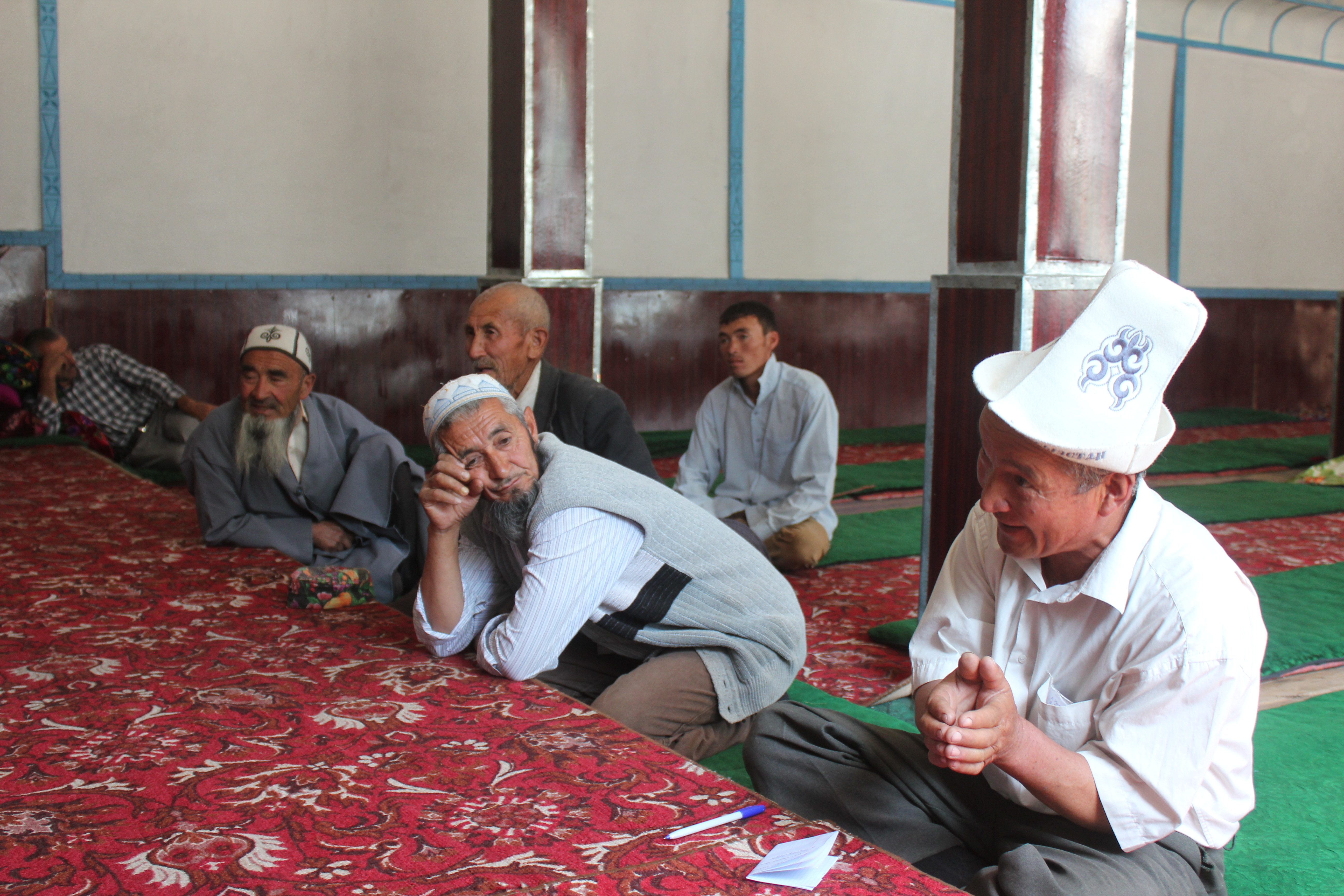
- 📍 Rasht Valley, Lakhsh District
- 🗓 2014-12-09
- 📷 Hukumatsho