
Advisory system for planting Eucalyptus camaldulensis on rice bunds in salt-affected areas.
Type: Approaches
Creation: 2018-10-04 11:32 Updated: 2021-01-18 13:12
Compilers: Areerat Wangkaew
Reviewers: Rima Mekdaschi Studer, Samran Sombatpanit, Pitayakon Limtong, William Critchley
Country/ region/ locations where the Approach has been applied
- Country: Thailand
- Region/ State/ Province: Khon Kaen
- Further specification of location (e.g. municipality, town, etc.), if relevant: Ban Phai
- Map: View Map
Description of the SLM Approach
Short description of the Approach
The Thai government promotes planting of Eucalyptus camaldulensis on rice bunds to lower the saline groundwater level and prevent the spread of salt in soils - through cooperation of farmers, land owners, Siam Forestry Co., Ltd., Subdistrict Administration Organization, Land Development Department, and with specialists/ technical advisors.
Detailed description of the Approach
The Ministry of Agriculture and Cooperatives through the Land Development Department (LDD) has initiated a project on planting salt-tolerant perennial trees on salt-affected land in the Northeast of Thailand. Thus, this project, which began in 1996 facilitated planting Eucalyptus camaldulensis on rice bunds. The main objective of the approach is to encourage and support the land users to plant Eucalyptus camaldulensis on rice bunds in salt-affected land with shallow saline groundwater. The target of planting is 1,000 rai/yr (1 ha = 6.25 rai).
The activities started with public meetings under the local administration, identifying salt-affected areas by SLM specialists and preparing soil salinity maps; establishing demonstration plots by SLM specialists and farmers, on farmers' land, as learning centers and communicating. The local administration called farmers’ meetings to prepare detailed work plans and discussion of strengths, weaknesses, opportunities, and threats of planting eucalyptus. The methods used were questionnaires and interviewing the stakeholders for their willingness to take part and cooperate with LDD SLM specialists, researchers, and experts. The LDD has provided funding for land preparation and planting cost while corporates such as Siam Forestry Co., Ltd. purchase eucalyptus poles through a contract. The Bank for Agriculture and Agricultural Cooperatives provides loans to land users.
There are three phases: the preparation phase which was seedling preparation, site selection for establishment of a demonstration plot, rice bund preparation, and establishing a demonstration plot of 200 rai at Ban Kham Riang, Muang Pia Sub-district, Banphai District, Khon Kaen Province. The coordination phase included joint meetings between farmers and researchers, joint monitoring, evaluation and follow-up with land users, and site visits to the demonstration plot. Then planting and tree establishment on farmers’ land in the salt-affected area – those farmers who were convinced by the results of the demonstration plots, Those farmers were then supported by the project on Planting Salt-Tolerant Perennial Trees on Saline Soils in the Northeast of Thailand. A market was established for the purchase of logs. There was joint monitoring & evaluation and follow up.
Results from interviews show that land users favor this project and the spread of eucalyptus planting by themselves - due to the perceived decrease in salination as well as higher income from better rice production, plus additional income from selling poles. However, there are some negative effects of fallen eucalyptus leaves (some farmers believe eucalyptus produces organic compounds detrimental to rice yield through “allelopathy”) and there was shading of the rice crop. But in some site visits there were no effects found. Furthermore, the favorable microclimate is cooler, local earth worms which used to be absent now returning, resulting in better soil properties. However, more birds and rats dwelling in this better environment became a disadvantage because they damaged the rice yield. Nevertheless, as there are more advantages than disadvantages, farmers still adopt this technology. It has been found that more than 10,000 rai (1,600 ha) with shallow saline groundwater of the salt-affected land were planted with eucalyptus trees on rice bunds in the low-lying salt-affected discharge area.
Photos of the Approach
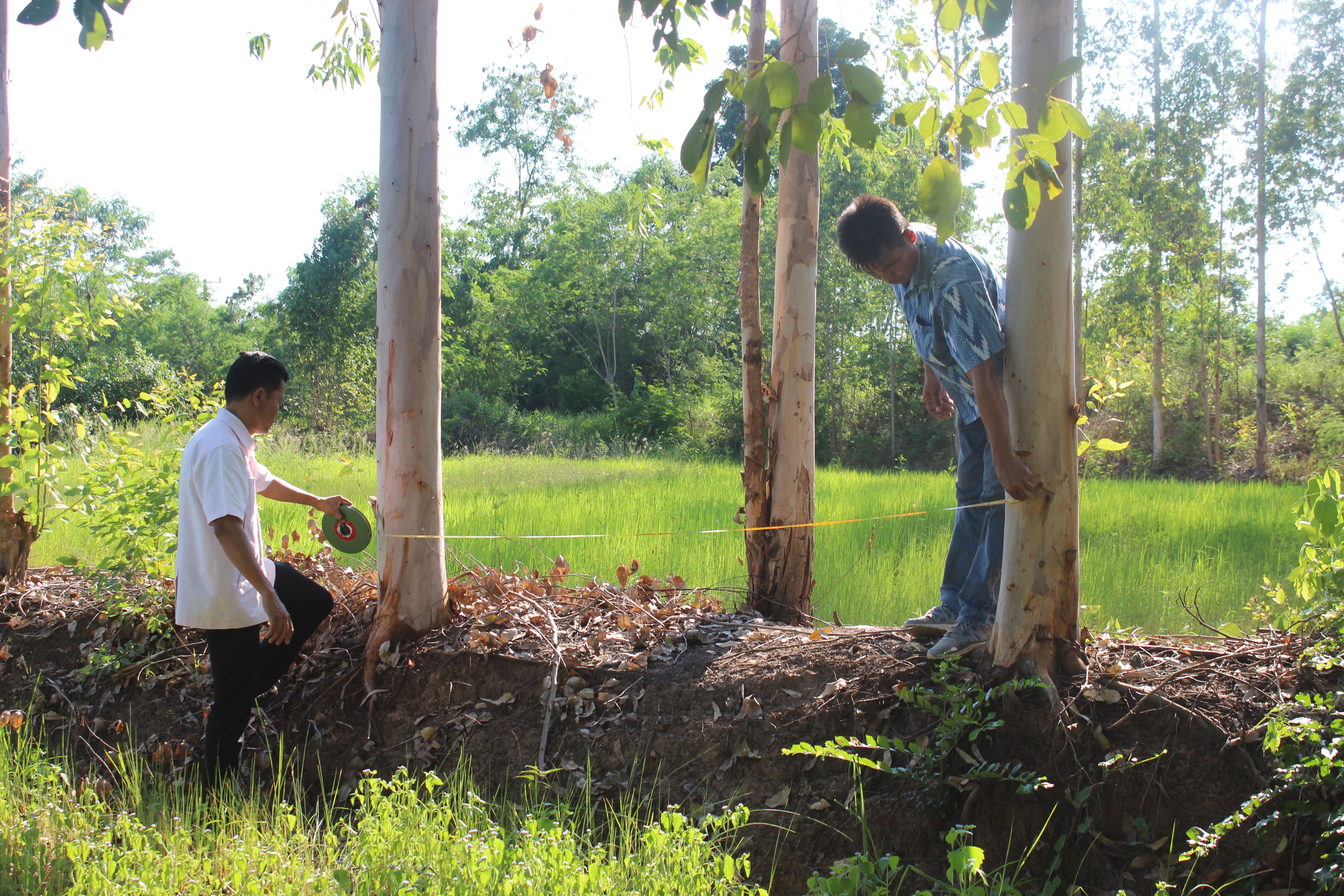
- 📍 Ban Muang Pia
- 📷 Supranee Sritumboon
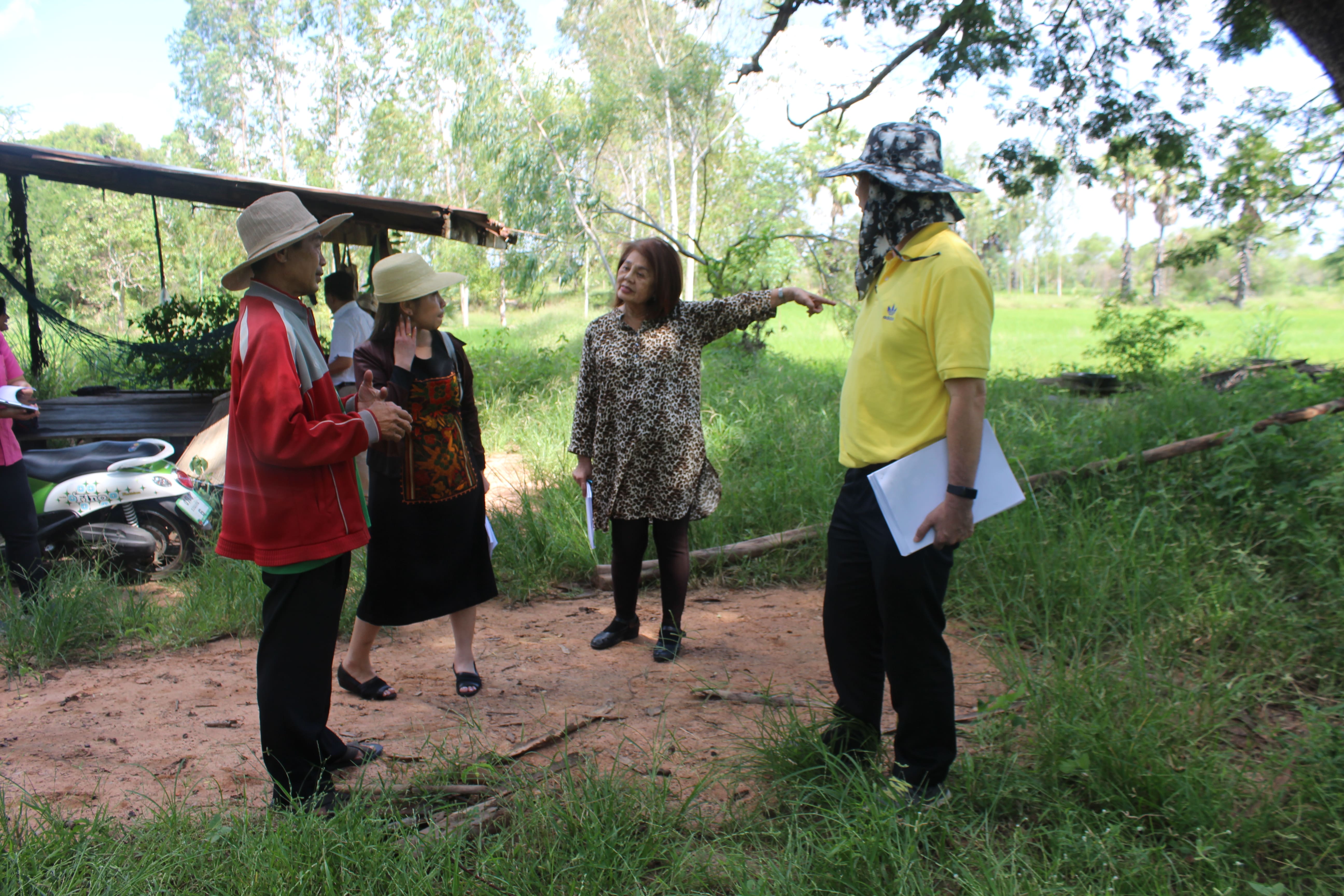
- 📍 Ban Muang Pia
- 📷 Weera Rophandung
- 📍 Ban Muang Pia
- 📷 Supranee Sritumboon