
Promotion of Acacia ampliceps on severely salt-affected soil
Type: Approaches
Creation: 2018-11-16 13:32 Updated: 2021-01-07 12:14
Compilers: Phatranit Chuaysanoi
Reviewers: Samran Sombatpanit, Rima Mekdaschi Studer, William Critchley
Country/ region/ locations where the Approach has been applied
- Country: Thailand
- Region/ State/ Province: Nakhon Ratchasima
- Further specification of location (e.g. municipality, town, etc.), if relevant: Ban Kok Sa-ard, Moo 10 T. Danchang, A. Buayai
- Map: View Map
Description of the SLM Approach
Short description of the Approach
Planting perennial salt-tolerant trees in the severely salt-affected area in Lam Satad of Chi-Mun watershed was introduced by the Land Development Department at A. Buayai, Nakhon Ratchasima. This project aimed at promoting the planting of Acacia ampliceps on an area of up to 4,665 rai (approx. 745 ha).
Detailed description of the Approach
Land rehabilitation through Acacia ampliceps planting on severely salt-affected soils has been a subproject of the LDD project on "Planting Perennial Salt-tolerant Trees in Salt-affected Areas in the Northeast of Thailand", which started in 1996. The area of Acacia ampliceps has extended further than 10,000 rai (approx. 1600 hectares) through public relations, demonstration plots, collaboration of community leaders, the local governmental administration, and community volunteers on soil improvement and land users.
The soil salinity map (LDD, 1995) shows that the severely salt-affected land in Northeast Thailand covers 475,200 rai. One of the technologies to address salinity is to decrease the saline shallow groundwater level by planting salt-tolerant trees - which are low input compared with engineering measures. The LDD has been extensively planting Acacia ampliceps through close collaboration and participation of stakeholders and demonstration plots in many severely salt-affected locations of several sub-watersheds, one of the sites being Lam Satad of Chi-Mun watershed. The objectives of the approach are (1) to extend the area of planting Acacia ampliceps to prevent and decrease salination, (2) to maximize the use of salt-affected land for a better environment and crop production, and (3) to extend the knowledge of vegetative measures for salinity control to land users and laymen.
The methods used are through (1) demonstration plots of Acacia ampliceps - planting 2-month-old seedlings in pits as single rows at 80 trees per rai (500 per hectare); (2) the land users got to know the approach through public relations media, local administration, community soil doctor volunteers on soil improvement, community leaders, SLM specialists, and researchers; (3) selection of interested land users under LDD requirements; (4) training of selected land users after joining the project, and (5) monitoring and evaluation after 1 year of planting.
Stakeholders involved are LDD researchers and SLM specialists responsible for establishing planting methods, preparation of land (land leveling and beds for planting), production of seedlings and carrying out demonstration plots, as well as monitoring and evaluation and training at the beginning of planting in new areas. The local administration and community soil doctor volunteers on soil improvement are involved in public relations, recommendations, and strengthening closer participation among farmers. Land users/farmers are to be trained and instructed to follow the technology by SLM specialists. They also participate in the monitoring and evaluation and persuade other land users/farmers to plant Acacia ampliceps.
The land users/farmers favour the technology because they have observed that salinity could be controlled, and they utilize the trees as shade for cattle and the tree branches for producing charcoal. Besides, the land users are self-organized as a group to watch and protect the young trees from being trampled by cattle. The disadvantage of Acacia ampliceps is its sensitivity to flash floods and forest fires. Furthermore, the direct production from the trees is low.
Photos of the Approach
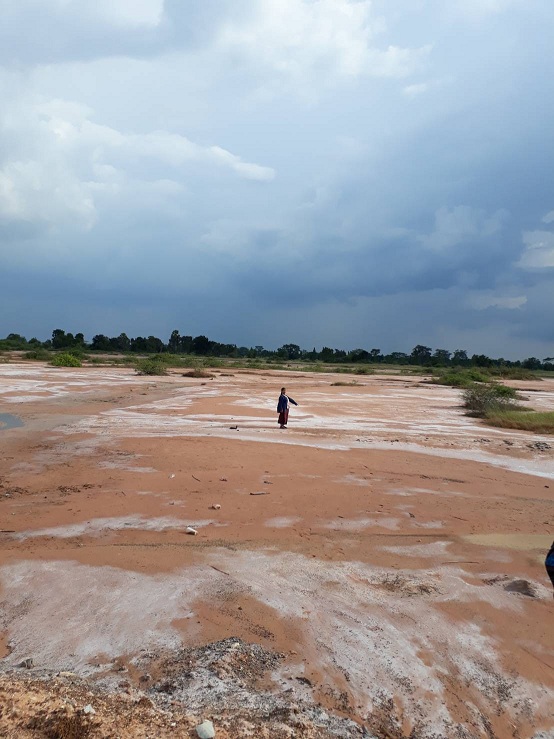
- 📍 Ban Kok Sa-ard, Moo 10 T. Danchang, A. Buayai, Nakhon Ratchasima
- 🗓 2018-09-10
- 📷 Prasit Prawanna
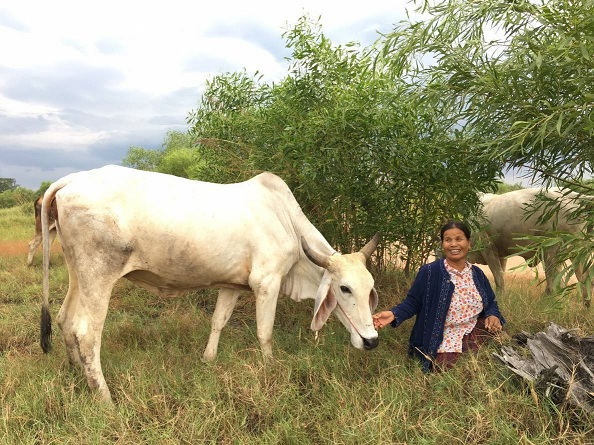
- 📍 Ban Kok Sa-ard, Moo 10 T. Danchang, A. Buayai, Nakhon Ratchasima
- 🗓 2018-09-11
- 📷 Prasit Prawanna