
Vegetative approach of using a halophyte ("Dixie grass", Sporobolus virginicus)) to rehabilitate severely salt-affected land.
Type: Approaches
Creation: 2018-11-19 08:54 Updated: 2020-12-29 11:57
Compilers: Kamontip Sasithorn
Reviewers: Rima Mekdaschi Studer, Samran Sombatpanit, William Critchley
Country/ region/ locations where the Approach has been applied
- Country: Thailand
- Region/ State/ Province: Nakhon Ratchasima Province
- Further specification of location (e.g. municipality, town, etc.), if relevant: 6 Ban Donpae Moo 8, Kut Chok Sub-district, Buayai District
- Map: View Map
Description of the SLM Approach
Short description of the Approach
The government promotes a halophyte (Dixie grass) to control severely salt-affected land, rehabilitate the ecosystem and prevent the spread of salt in soil - with the cooperation of land owners, livestock farmers, the local administration, the local government agency, Land Development Department researchers and with specialists/ technical advisors in various fields.
Detailed description of the Approach
The Ministry of Agriculture and Cooperatives through its Land Development Department (LDD) initiated a project on planting salt-tolerant trees and grasses on severely salt-affected land in the Northeast of Thailand in 1996. The project has facilitated the planting of a halophyte (a salt-loving plant), namely Sporobulus virginicus (Dixie grass) on salt-crusted and barren land. The main objectives of the approach has been to encourage land users to maximize their land area for farming, by preventing the formation of extensive severely saline soil. This is through planting Dixie grass as a cover crop to rehabilitate the land and ecosystem. The activities started with public meetings, then identifying severely salt-affected areas, and setting-up demonstration plots on farmers’ land to act as learning centers. There has also been communication with the local administration to call farmers’ meetings to develop detailed work plans and discuss strengths, weaknesses, opportunities, and threats of planting Dixie grass. The implementing activities consisted of 4 stages; PREPARATION was for seedling preparation, site selection of severely salt-affected soil and land preparation, public meetings and the establishment of the demonstration plot at Dan Chang Sub-district, Buayai District, Nakhon Ratchasima Province. COORDINATION included a joint meeting between farmers and researchers, joint monitoring & evaluation and follow-up and land users' decision-making. PLANTING started with selection of farmers joining the project, facilitating and training, a site visit to the model demonstration plot: this plot is the model for planting salt-tolerant trees and grasses on severely salt-affected land in the Northeast of Thailand. The final activity of SCALING-OUT occured when the land users/ farmers found that after 3 years of planting Dixie grass this barren land became covered by plants and much improved in biodiversity by the evidence of many varieties of wild grasses, flowers, dragonflies, small mammals and birds. Farmers could now grow rice and they used Dixie grass as feed for livestock. Moreover, and attractively, farmers were able to increase their incomes. Migration to big cities was reduced. The stakeholders were land owners, livestock farmers, the local administration, the local government agency, researchers and SLM specialists from LDD - and all worked together to mutual benefit. Nevertheless, although planting halophytes improves severely saline soil with low input costs, the recovery/accomplishment time (in saline soil improvement) cannot be as fast as that of engineering measures with much higher investment.
Photos of the Approach
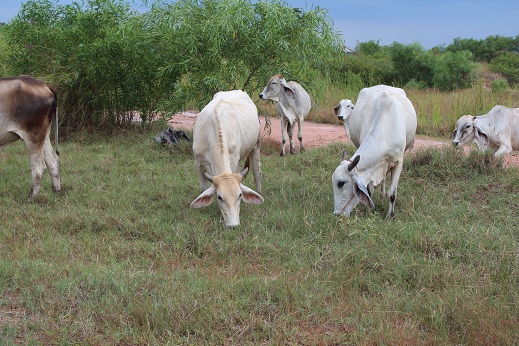
- 📍 6 Ban Donpae Moo 8, Kut Chok Sub-district, Buayai District, Nakhon Ratchasima Province
- 📷 Kamontip Sasithorn
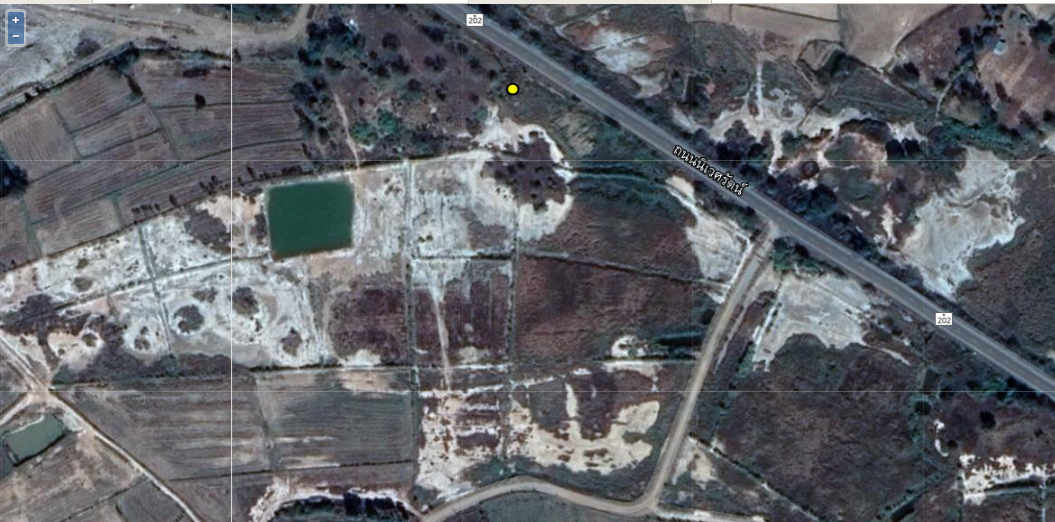
- 📍 6 Ban Donpae Moo 8, Kut Chok Sub-district, Buayai District, Nakhon Ratchasima Province
- 📷 Jutharat Rattanapunya