
Promotion of Organic Tea Production under Bench Terraces
Type: Approaches
Creation: 2018-12-21 10:13 Updated: 2021-10-11 12:12
Compilers: Pitayakon Limtong
Reviewers: Rima Mekdaschi Studer, William Critchley
Country/ region/ locations where the Approach has been applied
- Country: Thailand
- Region/ State/ Province: Chiang Mai Province
- Further specification of location (e.g. municipality, town, etc.), if relevant: Extension area for Chinese tea plantation (Farm 2000) at Angkhang Royal Agricultural Station, Mae Ngon Sub-district, Fang District,Chiang Mai Province
- Map: View Map
Description of the SLM Approach
Short description of the Approach
Promotion of continuous bench terraces for sustainable tea plantations in steep areas of the northern region highlands.
Detailed description of the Approach
The approach is to develop and promote sustainable agriculture on steep slopes by establishing continuous bench terraces. Under this system, hilltribe farmers can produce good quality Chinese tea, and send their product to a processing factory nearby, which will create stable and high incomes and raise the quality of life. This production/ conservation system aims also to reduce deforestation and shifting cultivation problems, which lead to the degradation of soil and land. As such, soil and water conservation in this upstream sloping highland should promote and encourage appropriate sustainable land management to preserve natural resources and the environment.
In the early stage, Angkhang Royal Agricultural Station initiated this project to develop and promote Chinese tea cultivation on steep land, with close cooperation from the Land Development Department (LDD) to design the continuous bench terraces instead of the cold-climate fruit trees, which had greatly deteriorated. Local officers had allocated land (without ownership) to Palaung hilltribe people who were selected and guaranteed by the community leader for their aptitude and ability to cultivate Chinese tea according to the Good Agricultural Practices (GAP) Guidelines, and set up a Chinese tea producers group at Plot 2000. Angkhang Royal Agricultural Station organized this programme and trained them and also arranged for some local officers to advise on soil management, fertilizer use, and disease and pest control. Vetiver grass planting was introduced to maintain the terrace and road edges; compost was produced to use for improving soil properties and reducing their production cost, and cultivation materials were supplied to all land users through disbursement under the management of Doi Angkhang Agricultural Cooperatives. Local officers also supported marketing through purchasing at the guaranteed price according to the quality of the tea, and set up tea processing factories in this area. The project encourages all land users to observe and maintain their tea bushes and the land around them. Currently all land users are aware of how to sustainably use and maintain their land and soil resources. Moreover, local officers advise how to repair bench terraces themselves; however, if the damage is serious, the LDD officers will come in to help them repair.
Photos of the Approach
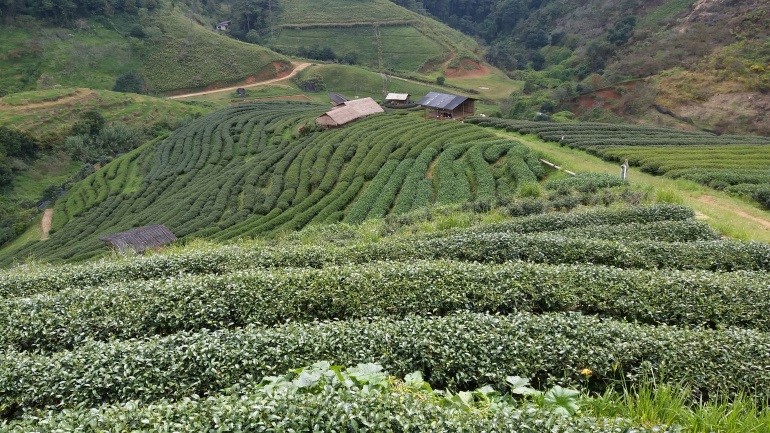
- 📍 Ban Thap Sub-district, Mae Chaem District, Chiang Mai Province, 50270
- 📷 Ms. Tanomkwan Tipvong
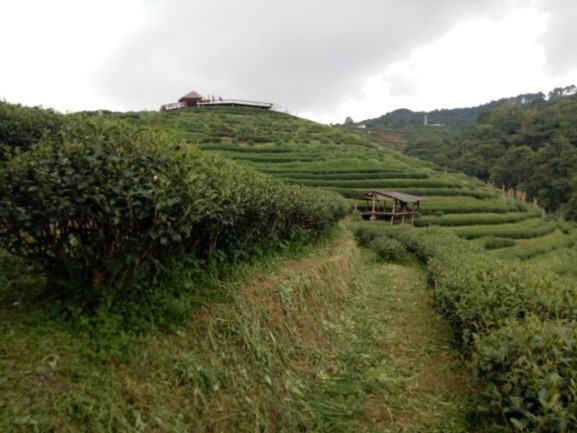
- 📍 Ban Thap Sub-district, Mae Chaem District, Chiang Mai Province, 50270
- 📷 Ms. Tanomkwan Tipvong
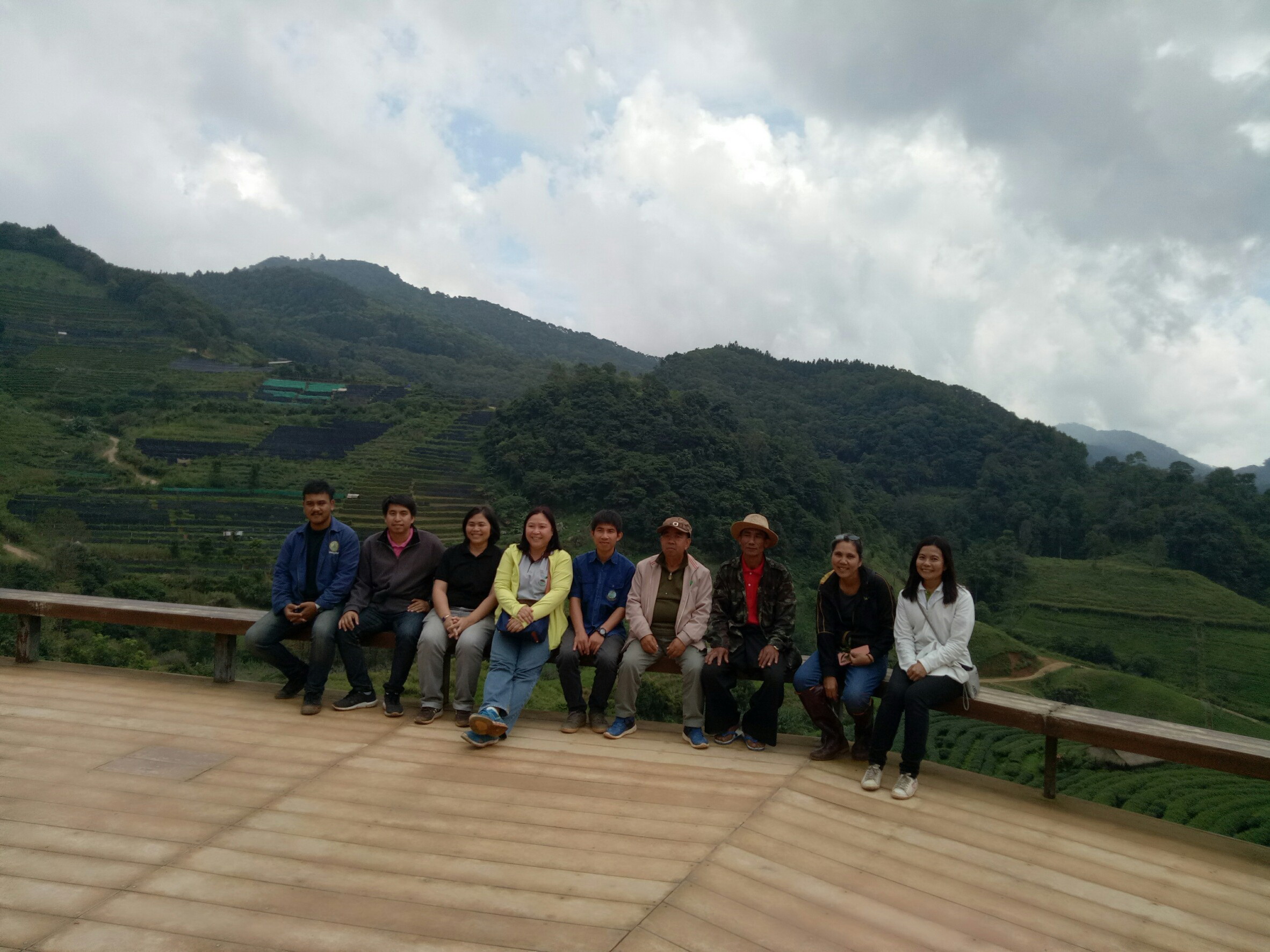
- 📍 Ban Thap Sub-district, Mae Chaem District, Chiang Mai Province, 50270
- 📷 Ms. Tanomkwan Tipvong