
Pumping groundwater for vegetable irrigation to prevent salination
Type: Approaches
Creation: 2019-01-06 07:25 Updated: 2021-01-06 09:18
Compilers: supranee sritumboon
Reviewers: Rima Mekdaschi Studer, Pitayakon Limtong, William Critchley
Country/ region/ locations where the Approach has been applied
- Country: Thailand
- Region/ State/ Province: Khon Kaen
- Further specification of location (e.g. municipality, town, etc.), if relevant: Ban Kaonoi
- Map: View Map
Description of the SLM Approach
Short description of the Approach
The approach is to develop a simple groundwater pumping model for irrigation, on the basis of cooperation and knowledge sharing between government agencies and farmers, that addresses the risk and prevention of off-site salination.
Detailed description of the Approach
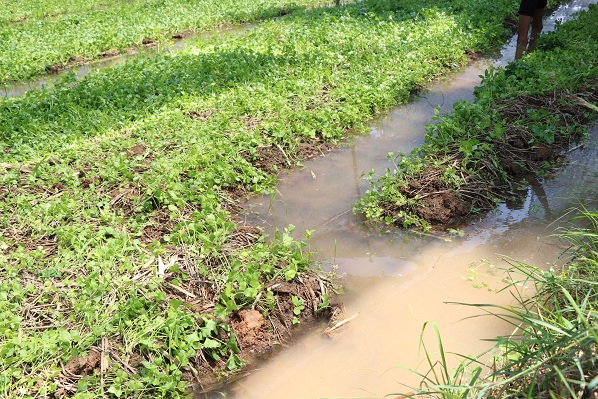
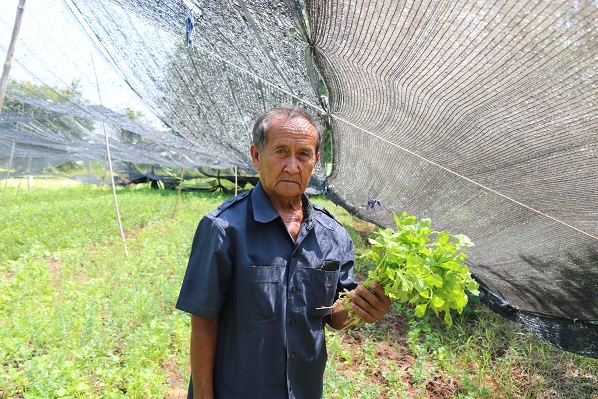
The objective of groundwater pumping for irrigation is to lower the groundwater level in the recharge zone which in turn decreases soil salinity lower down in the discharge area. The extension and promotion of the approach has been done through the learning and training center. The goal is better understanding and public awareness of preventive measure against salinity, through the use of salt-tolerant crops, combined with mechanical measures of accessing groundwater for irrigation. This has been achieved in close cooperation among researchers, SLM specialists, local administration, and community volunteers on soil improvement. A group of farmers started this activity in 1996 under the Land Development Department (LDD)’s Project on Promotion of Integrated Salt-Affected Soil Management of Small Watershed Areas. The approach aims at scaling-out the model to farmers in the recharge areas with the objectives of sharing benefits that are to (a) persuade other land users to change their land use from rice which is a high water-use crop to low water-use crops such as vegetables, (b) prevent further off-site salination, (c) increase land users’ income, and (d) provide knowledge about integrated salinity management. Researchers and SLM specialists work closely with farmers in monitoring and evaluating the recharge area to prevent extensive salination in the discharge zone - as well as the use of groundwater for irrigation. This plan has been formulated to stimulate further promotion and extension to other areas with a similar environment, through training and public relations. The four stages were: first, the expert and agriculturalist of the LDD’s Regional Office 5 (LDDRO5) cooperated with the volunteer soil doctor and farmers in the community to design and plan the project; second, the officers of LDDRO5 set up a forum for exchange of knowledge and experiences between farmers who have been successful in producing vegetables through using shallow groundwater for agriculture, and are not affected by a salinity. Thirdly, the officers of LDDRO5 collaborated with the government office in the district to train farmers who had an interest in vegetable production. Fourthly, LDDRO5 created incentives for farmers to change areas that are not suitable for planting paddy rice to grow vegetables by supporting shallow groundwater well through pumping with solar energy. The stakeholders include the LDD, SLM specialists and researchers, local administrators, and community volunteers on soil improvement and land users. Land users like the project activities because they receive higher incomes – partially because they do not lose land to digging ponds, but instead irrigate from these deep wells from which they can irrigate all year round. The LDD has supported borehole drilling wells – but farmers are not so happy when they have to wait for over a year to get LDD’s borehole drilling due to budget limitations.
Photos of the Approach
- 📍 Ban Kaonoi
- 🗓 2018-02-10
- 📷 Supranee Sritumboon
- 📍 Ban Kaonoi
- 🗓 2018-02-10
- 📷 Supranee Sritumboon