
Community Forest Management in the Nakina Van Panchayat
Type: Approaches
Creation: 2019-07-24 16:34 Updated: 2021-06-27 17:53
Compilers: Jaclyn Bandy
Reviewers: Hanspeter Liniger
Country/ region/ locations where the Approach has been applied
- Country: India
- Region/ State/ Province: Uttarakhand
- Further specification of location (e.g. municipality, town, etc.), if relevant: Nakina Village, Pithoragarh Bloc
- Map: View Map
Description of the SLM Approach
Short description of the Approach
Van Panchayats or village forest councils are a impressive example of grassroots community management of natural resources, where a specific administrative unit is locally elected by community members who are responsible for the management of activities related to the forest.
Detailed description of the Approach
Main Characteristics: the forest council has an odd number administrative committee (9), which allows a majority rule to resolve issues. From each household, one person will have the rights to elect the committee. The administrative committee makes the rules and regulations to manage and collect the fuel wood, fodder and wood to build houses or other structures. It also has the rights to collect the charges of using forest resources or penalize trespassers. The government and other institutions recognize this committee and communities for the protection of the forest, which also make joint plans and programs under the consultation with the forest user group and administrative committee. Van Panchayats are under the administrative control of the District Magistrate, though technical assistance is provided by the Forest Department. Organizations can provide financial and technical support to the administrative committee to implement projects.
Main objectives of this approach are:
•To mobilize the communities for sustainable natural resource management and distribute forest produce in an equitable manner
•To provide the financial and technical support for the communities to protect the forest's natural resources.
•To promote technologies for the conservation of natural resources and to increase the livelihood of people
•To encourage the people to establish tree plantations, fodder nurseries, biological and structural interventions for water conservation and maintain wildlife habitat
Methodology and Implementation:
To achieve the above mentioned objectives, the following methods were adopted: the first steps involved clarifying the status of forest utilization and local peoples' livelihood, activities and demands. Initially there was collaboration with the local people and forest department to demarcate the community forest and establish the Nakina van Panchayat in 1952 (according to the Forest Council Act 1931). Awareness-raising meetings informed the local people that the community forest health is determined by their own collective management. Over 30 years ago, Nakina Van Panchayat established a plantation area designated for the propagation of several broadleaved species. This has since been a growing enterprise, and encompasses an area of 7 hectares today. The Japan International Cooperation Agency (JICA) and Forest Department have assisted Nakina VP with this plantation. Despite these efforts there is still a gap in production. The community expressed this persistent availability gap of their fuelwood/fodder supply, and the necessity of maintaining the oak populations for groundwater recharge and spring rejuvenation.
Under the KSLCDI (Kailash Sacred Landscape Conservation and Development Initiative) and with support from ICIMOD, G.B. Pant Institute of Himalayan Environment and Sustainable Development and Nakina Van Panchayat created a plantation area supporting oak and other broadleaved species over an area of 2 hectares (2014-2016) . The community also established a small oak and fodder nursery with support from the Uttarakhand Forest Department, NGO Swati Gramodyog Sansthan (SGS) and NGO Himalayan Sewa Samiti (HSS).
Stakeholders involved and their role:
1. Broadleaf Plantation (+30 years ago, community initiated)
Japan International Cooperation Agency (JICA), UKFD (Uttarakhand Forest Department)- funding, technical and advisory support
Nakina Van Panchayat and Nakina Community: participatory action in all phases of approach, planting, on-going maintenance
2. Oak Plantation
ICIMOD- funding
G.B Pant: project implementation, on-site advisory and technical support
UKFD (Uttarakhand Forest Department)- technical and advisory support
Nakina Van Panchayat and Nakina Community: participatory action in all phases of approach, planting, on-going maintenance
3. Fodder and Oak Nursery
Fodder Nursery: NGOs SGS, HSS- project implementation, provision of plants, planting techniques, and financial assistance
Oak Nursery- self-initiative by Nakina Van Panchayat and the forest user group (local People)
UKFD: gave technical advice and provided financial support to Nakina Van Panchayat; distributed plants and grasses
G.B Pant: organized a 7-day capacity building training in Nakina Village and supported the plantation establishment; there are ongoing projects with Nakina to develop other parts of the forest
Comments on Approach: Land users are very pleased with the success of these approaches. However they stress the need to strengthen on-going communication between various stakeholders and supporting institutions for project optimization, as well as continual support and auditing post-project. More follow up with technical experts would be highly appreciated by the land users.
Photos of the Approach
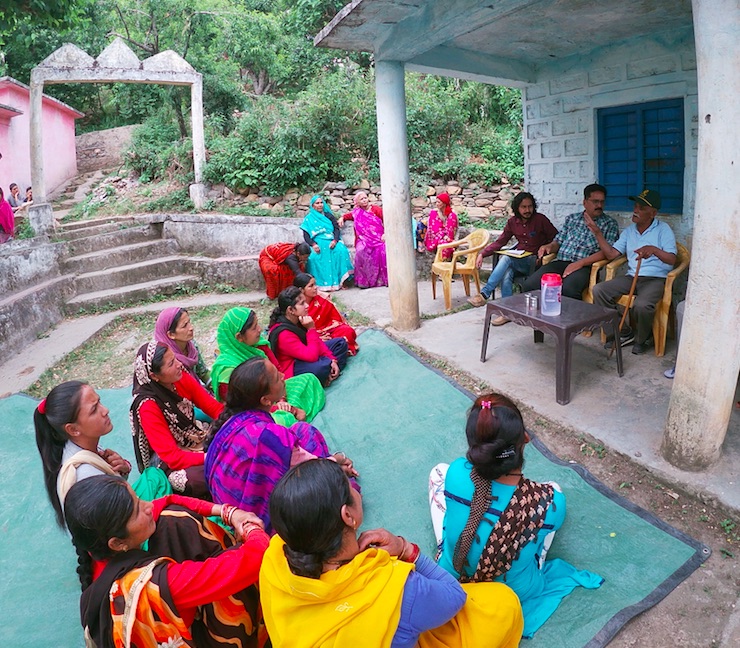
- 📍 Nakina Community Forest, Pithoragarh Bloc, Uttarakhand, India
- 📷 Jaclyn Bandy