
Model Village Approach to Scale out Organic Agriculture
Type: Approaches
Creation: 2023-07-09 15:55 Updated: 2024-06-04 14:20
Compilers: Karma Wangdi
Reviewers: William Critchley, Rima Mekdaschi Studer, Joana Eichenberger
Country/ region/ locations where the Approach has been applied
- Country: Bhutan
- Region/ State/ Province: Wangdue phodrang
- Further specification of location (e.g. municipality, town, etc.), if relevant: Kazhi, Lull village
- Map: View Map
Description of the SLM Approach
Short description of the Approach
Organic agriculture includes a variety of farming systems that advance the sustainable production of food and fibres, prioritizing human health, and environmental, social, and economic aspects. The main objective of the model village approach is to promote the commercialization of organic farm produce.
Detailed description of the Approach
Organic farming is a system of agricultural production based on the use of natural processes and resources. Organic farming is on the rise worldwide. Until 1961, when chemicals were introduced to Bhutanese farmers, Bhutan was 100% organic. There were no chemicals to buy and no chemicals to use. There were no genetically modified seeds to buy and no genetically modified seeds to use. Farmers were required to weed their field by hands instead of spraying butachlor, a powerful pesticide used in paddy fields. According to Dzongkhag agriculture officer (DAO), a farmer in Wangdue, said that organic agriculture is "what we used to do." Traditional farming methods in Bhutan are organic and the departure from that has been a recent movement. But young farmers who started after the introduction of chemicals cannot remember a time when chemicals were not a part of their farming practices. The increase in chemicals is a recent trend, and depending on which chemical is under consideration the trend has either stagnated or grown. According to the national organic program, the use of fertilizer has remained constant over the last thirty years. On the other hand, the use of synthetic herbicides has grown each year. The primary example of herbicides used are butachlor in rice paddy fields and metribeuzin in potatoes (Hokenson, 2014).
The Department of Agriculture in collaboration with Dzongkhag Agriculture Office and Gewog Administration identified Lull village, Lengbi Chiwog of Kazhi gewog as a "Model Organic Village" to improve the livelihoods of people through crop diversification and income generation. Lull village was identified as an organic village in 2018. The main objective of this approach is to promote the commercialization of organic farm produce through post-production and value addition (Dorji, 2022).
In 2013, 51-year-old Tashi Bidha was the only farmer in Lull, a village situated in the Kazhi gewog region, approximately 40 kilometers from Bajo, Wangdue. The village, comprising a mere eight households, was classified as one of the most isolated in the Wangdue region. Lull is presently the first prosperous organic village in Wangdue. This began in 2013 with the initiative of one individual to establish road connectivity. Phub Dorji, a native of Lull, remarked that the village lacked roads and electricity at the time.
The village's application for road connectivity was rejected in 2013 due to its failure to satisfy the minimum threshold of 20 households. Many were apprehensive when Phub Dorji suggested that they make their own road. Following some deliberation, however, six households reached a consensus. Six households contributed more than Nu.500,000 towards the repair of the 8.8 kilometers of road in Lull. Electricity arrived in the village months after the road was constructed. The community consented to transition to organic practices in 2017.
Wangdue’s agriculture extension stated the village received potato seeds, asparagus seedlings, bio-fertiliser, bio-pesticide and vermicomposting among others. The village has five polyhouses, and they have first-hand training in bio-pesticide preparation. They are now technically equipped. Lull previously cultivated wheat, barley, and chili. The village currently produces more than eleven different types of commodities and distributes its goods in Phuentsholing, Thimphu, Punakha, and Wangdue. Potatoes, garlic, and chili peppers are among the principal cash commodities of Lull. Presently, income generation has increased to Nu 770,000 since the transition to organic practices.
Photos of the Approach
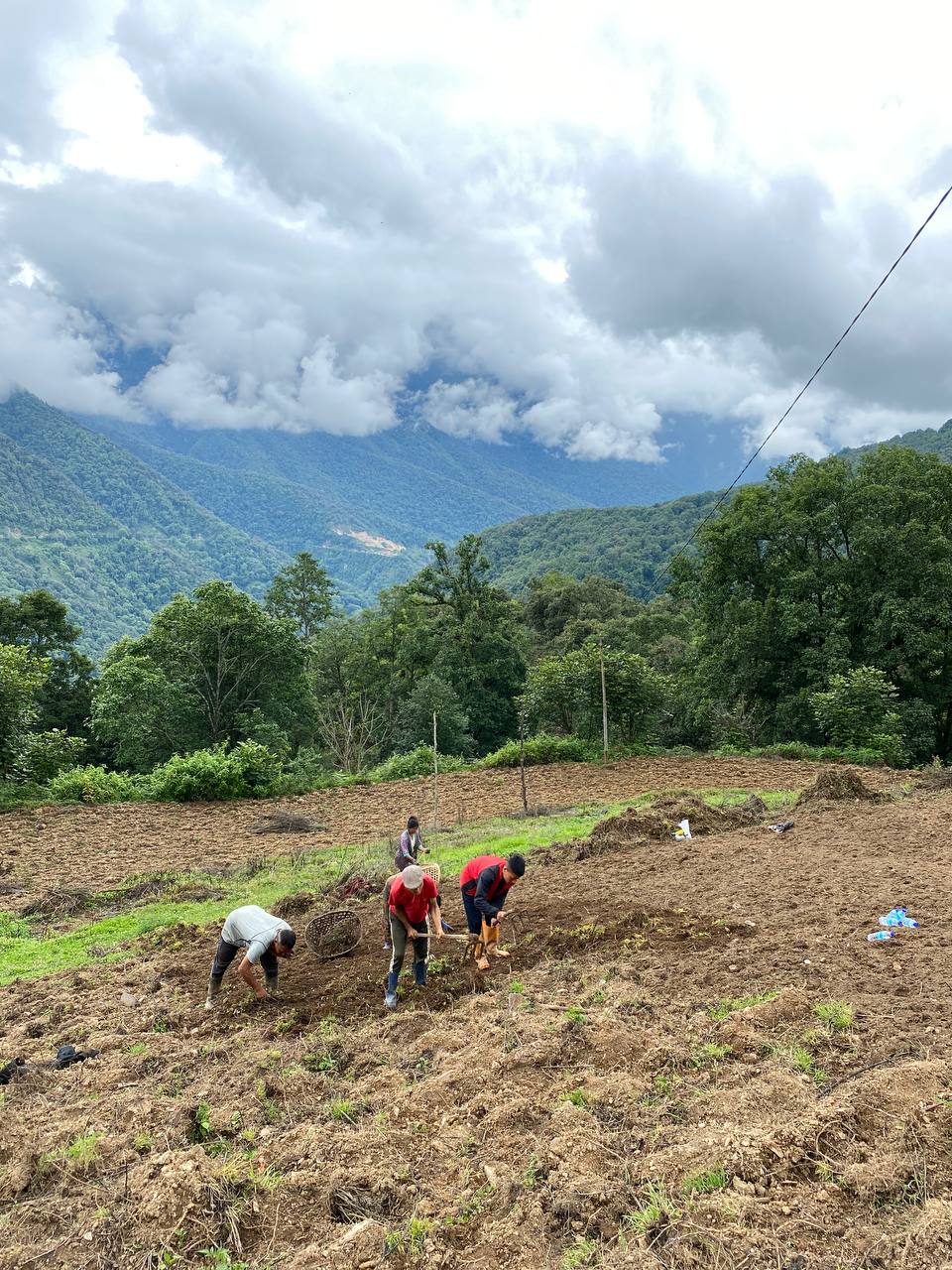
- 📍 Lull Village, Lengbi Chiwog, Kazhi Gewog, Wangdue Phodrang.
- 🗓 2023-10-07
- 📷 Niki Rai
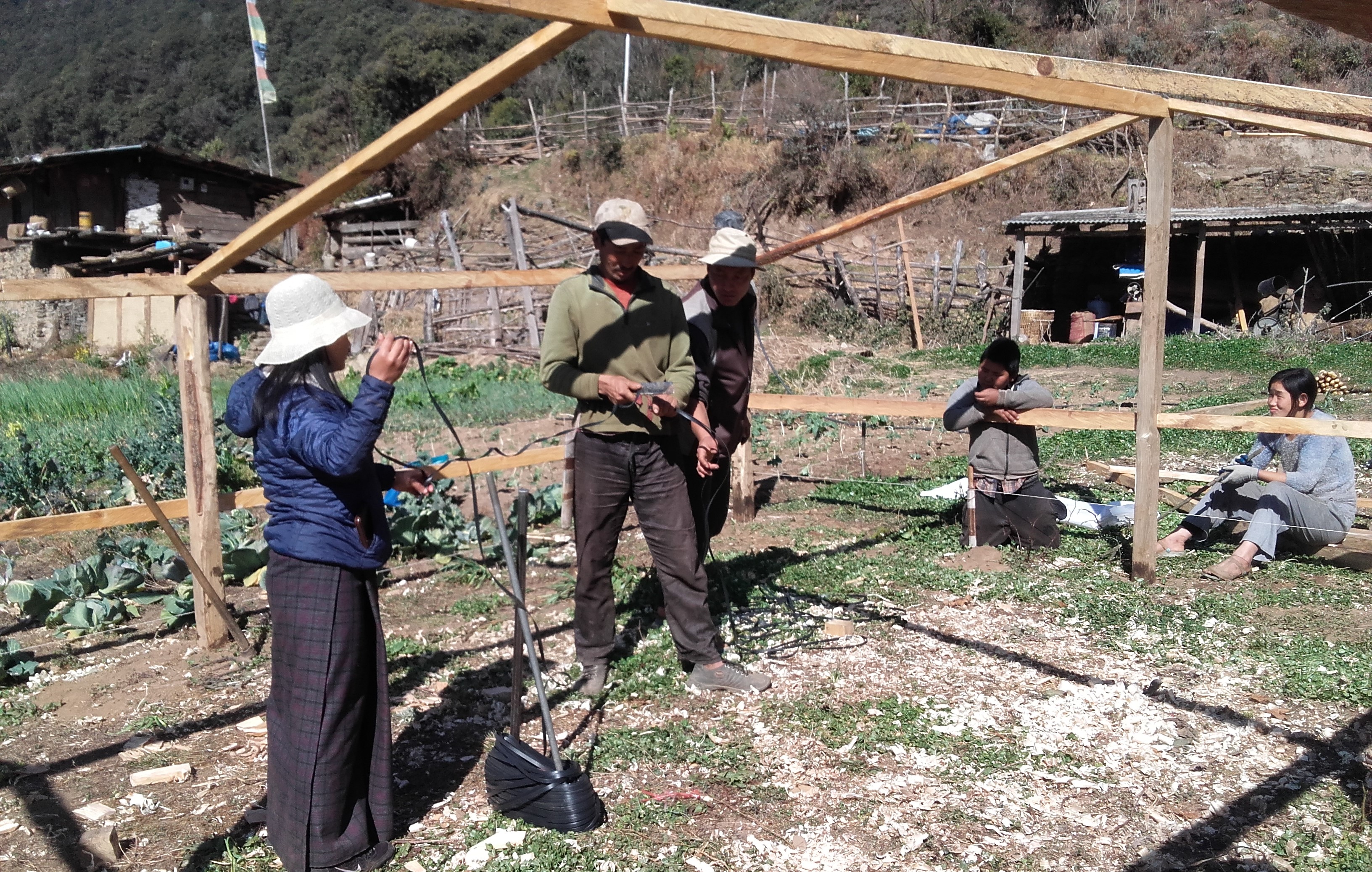
- 📍 Lull village, Lengbi Chiwog, Kazhi Gewog.
- 📷 Mr. Sangay Wangdi, Senior Extension Supervisor, (Dzongkhag Organic Focal)
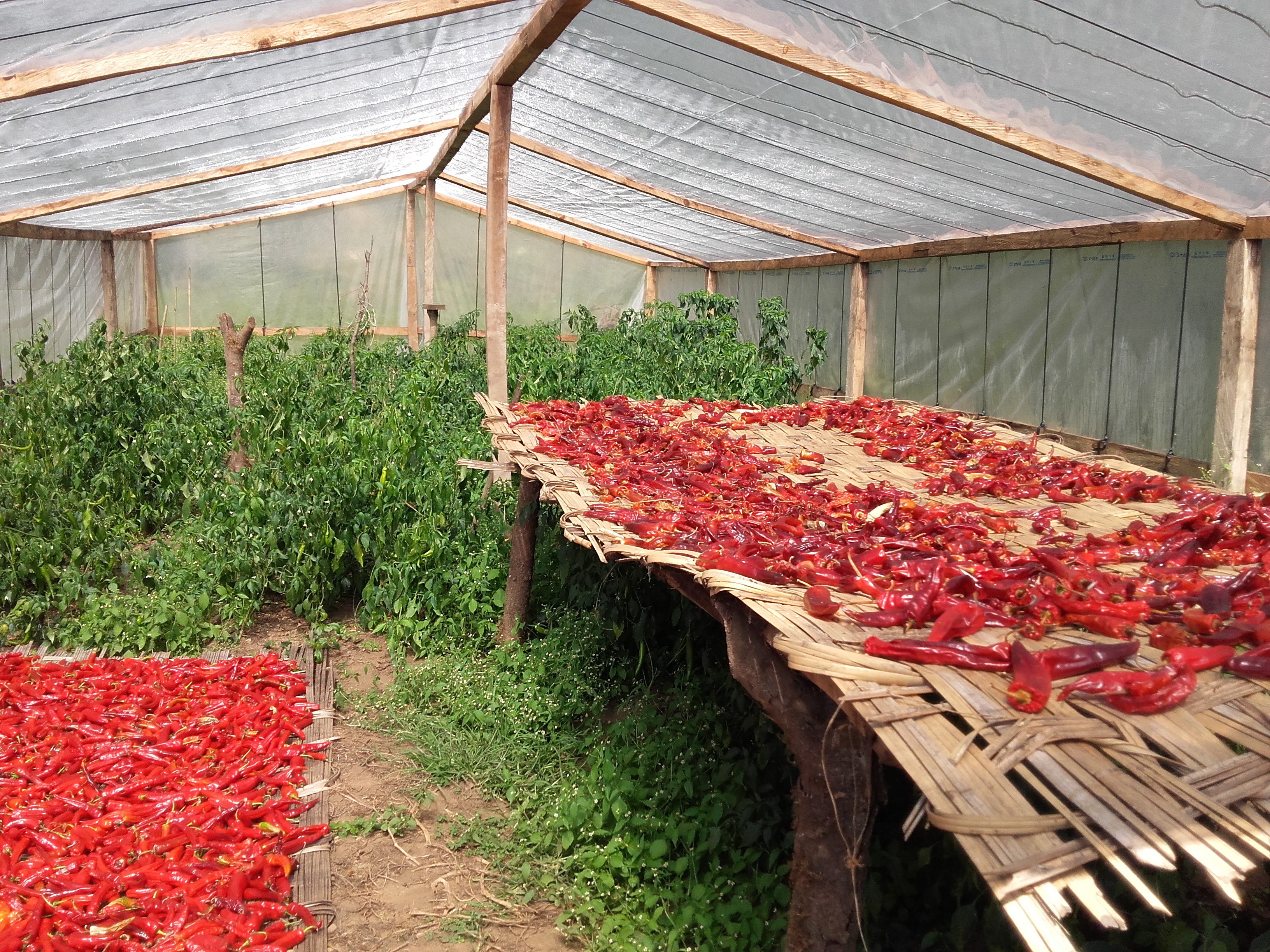
- 📍 Lull village, Lengbi Chiwog, Kazhi Gewog.
- 📷 Mr. Sangay Wangdi, Senior Extension Supervisor,(Dzongkhag Organic Focal)