
Nature-based Solutions for Springshed Revival
Type: Approaches
Creation: 2023-07-12 17:29 Updated: 2024-03-29 16:06
Compilers: Karma Wangdi
Reviewers: Rima Mekdaschi Studer, William Critchley
Country/ region/ locations where the Approach has been applied
- Country: Bhutan
- Region/ State/ Province: Shaba, Paro
- Further specification of location (e.g. municipality, town, etc.), if relevant: Lholing Chiwog, Shaba Geog, Paro Dzongkhag
- Map: View Map
Description of the SLM Approach
Short description of the Approach
Springshed revival can be achieved through Nature-based Solutions (NbS) with a hydrogeological approach, complemented by socio-ecological inputs, and engineering surveys.
Detailed description of the Approach
Springs are natural occurrences where fresh water emerges from the ground through openings known as spring vents. They are outlets from aquifers, water-bearing layers underground, to the surface. The water in springs originates from rainfall during specific seasons, which falls on the springshed, infiltrates the ground and is collected as groundwater. When the groundwater is pressurized and rises, it creates springs, which then contribute to the flow of water into rivers or other water bodies. In mountainous regions like Bhutan, springs serve as the primary water source for rural households (ICIMOD, 2021).
Spring revival through “nature-based solutions” (NbS) in springsheds refers to a comprehensive effort aimed at reviving and restoring the functionality of springs. The primary objectives of spring revival initiatives include ensuring sustainable water supply, mitigating the threat of springs drying, conserving biodiversity, and improving the livelihoods of communities dependent on spring water. To achieve these goals, diverse methods are employed, involving various stakeholders. While spring revival offers numerous advantages, it also presents certain disadvantages that should be considered (Konek & Samanta, 2022).
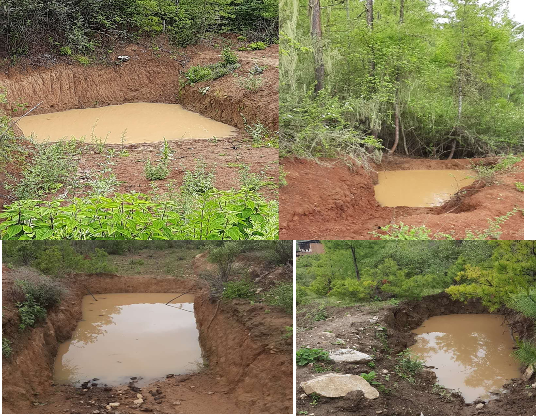
The methods used under NbS to revive springs are multifaceted and typically involve a combination of hydrogeological, ecological, hydrological, and community-based approaches. Hydrogeology can lead to a better understanding of aquifers and the nature of springs and springsheds, thus providing ways for better management. Ecological methods focus on restoring the natural catchment area (the springshed itself) and improving vegetation cover to enhance water infiltration and recharge. Measures such as reforestation, contour trenching, and check dams are implemented to reduce erosion, promote groundwater recharge, and maintain spring flow. Hydrological interventions include the construction of recharge structures, groundwater recharge pits, and percolation tanks to replenish the aquifer and ensure sustained spring flow. Community-based approaches encompass raising awareness, capacity building, and participation in springshed conservation and management activities. These efforts often include the establishment of user groups, water committees, and the adoption of sustainable water use practices (Shrestha et al., 2017).
Stakeholders play vital roles in spring revival initiatives. Local communities living in Lholing areas are key stakeholders as they are directly affected by water availability and are actively involved in the preservation and management of springs. Government agencies such as the Department of Water, Department of Forests and Park Services and Gewog Administration provide technical expertise, funding, and policy support. Academic institutions and research organizations contribute scientific knowledge, monitoring, and evaluation, while international agencies and donor organizations may provide financial assistance and expertise.
According to Tamba et al. (2012) the advantages of spring revival are significant and far-reaching. By restoring spring flow, communities get access to a reliable and sustainable water source, which is crucial for their domestic, agricultural, and livestock needs. Spring revival through NbS also contributes to biodiversity conservation, as the presence of flowing water supports diverse aquatic and terrestrial ecosystems, including endemic species. Moreover, the revival of springs enhances groundwater recharge, which can benefit other water sources in the area. The community involvement and capacity-building aspects of NbS initiatives foster social cohesion, empowerment, and the development of local governance structures. Revived springs have the potential to enhance community resilience to climate change by providing water during periods of drought or erratic rainfall.
However, NbS also come with certain challenges and disadvantages. Adequate financial resources and long-term funding commitments are often required, which can pose a challenge in resource-constrained settings. Technical expertise and knowledge gaps may hinder the effectiveness of revival methods, emphasizing the need for capacity building and technical support. The involvement of multiple stakeholders can lead to coordination issues and conflicts of interest. Furthermore, the success of spring revival initiatives relies heavily on community participation. Thus, lack of community engagement or ownership can hinder sustainability. Environmental and social impacts need to be carefully considered, as inappropriate interventions or changes in hydrological patterns can have unintended consequences on ecosystems and communities (Khadka et al., 2019).
Photos of the Approach

- 📍 Lholing
- 📷 Thinley Tshering
- 📍 Lholing
- 📷 Thinley Tshering