
Improved Pasture Development
Type: Approaches
Creation: 2023-07-17 09:56 Updated: 2024-06-04 14:25
Compilers: ONGPO LEPCHA
Reviewers: William Critchley, Rima Mekdaschi Studer, Joana Eichenberger
Country/ region/ locations where the Approach has been applied
- Country: Bhutan
- Region/ State/ Province: Bumthang Dzongkhag (District)
- Further specification of location (e.g. municipality, town, etc.), if relevant: Thangbi Village, Choekhor Gewog (Block)
- Map: View Map
Description of the SLM Approach
Short description of the Approach
The improved pasture development approach focuses on enhancing pasture productivity, which is managed sustainably for grazing. Livestock productivity depends greatly on improved pastures. It is very important to manage pastures to support the livelihoods of rural communities in Bhutan.
Detailed description of the Approach
The improved pasture development approach in Bhutan started at the beginning of the 5th Five Year Plan (1982-1987). Thangbi village, Bumthang, focuses on enhancing pastureland productivity and sustainability through the cultivation of improved varieties of grasses provided by the project. This initiative not only prevents land degradation and erosion but also enhances fertility by introducing leguminous species like clover. In temperate areas, improved pasture consists of a mixture of white clover, tall fescue, cocksfoot, and Italian ryegrass while in the subtropical areas, green leaf desmodium, molasses grass (Melinis sp.), ruzi grass (Brachiaria sp.), and stylo are grown.
Given the significant role livestock plays in the livelihood of Bhutanese communities, where productivity is strongly influenced by seasonal variations in fodder availability, improved pasture development addresses crucial objectives. These are: 1) Enhancing the resilience of pasture ecosystems to ensure continuous, high-quality fodder production; 2) Increasing forage availability and quality by promoting the cultivation of improved fodder species; and 3) Improving livestock productivity, directly impacting income generation through increased yields of animal products - especially of milk, cheese, and butter.
Implementation involves four stages: 1) Initial assessments of pasture conditions and land suitability, conducted by livestock extension officials; 2) Planning sessions involving officials from the Department of Livestock and land users; 3) Establishment of the identified areas for growing improved fodder species; and 4) Management of improved pasture plots by land users, accompanied by regular monitoring and evaluation to ensure effectiveness.
Key stakeholders in this approach include livestock extension agents and community members. Livestock extension agents act as a liaison between the community and the government. They also procure and distribute fodder grass seeds. Community members establish pastures in their farms, taking on responsibilities such as monitoring the water supply and caring for the grasses throughout their growing seasons.
Land users appreciate the approach because it ensures abundant fodder availability year-round, improving milk production through the cultivation of superior grass species, and reducing the workload associated with foraging in forests or tending grazing cows. However, concerns raised by land users include a reduction in cultivable land due to fodder grass cultivation and a lack of training regarding fodder management for those involved in the approach.
Photos of the Approach
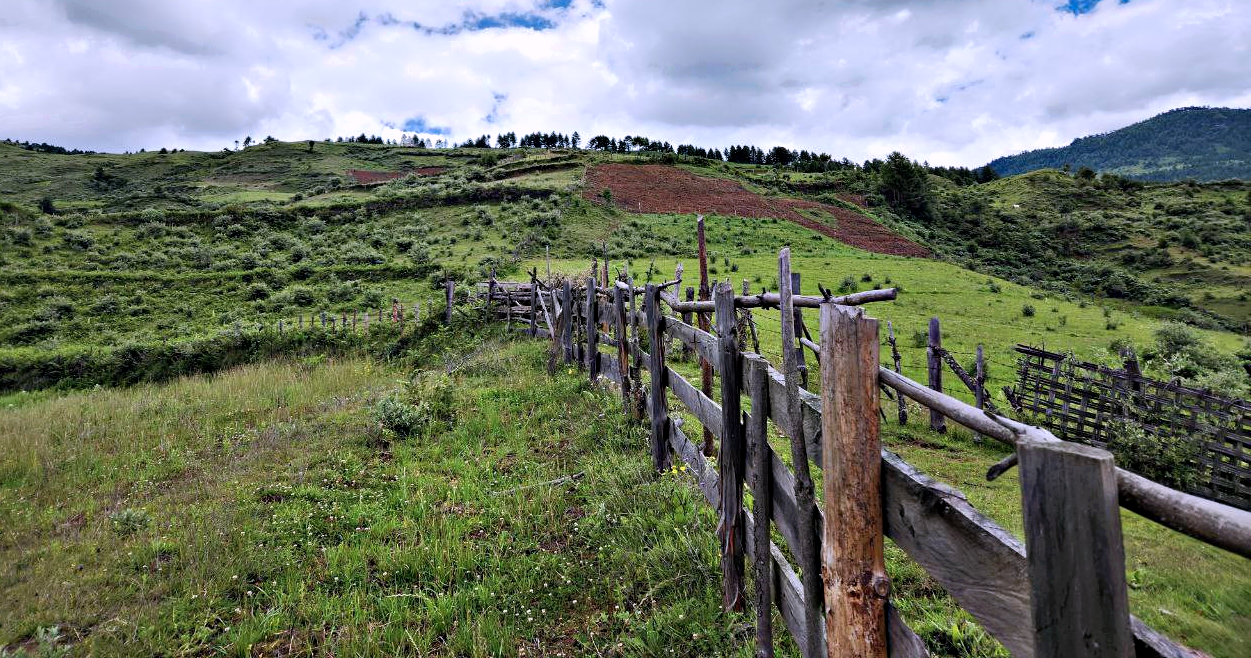
- 📍 Thangb Villagei, Choekhor Gewog (Block), Bumthang Dzongkhag (District), Bhutan
- 📷 Tshewang Phuntsho
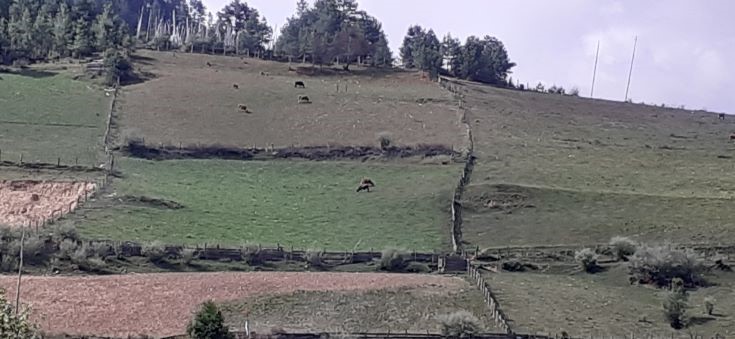
- 📍 Thangbi, Choekhor Gewog (Block), Bumthang Dzongkhag (District), Bhutan
- 🗓 2022-10-11
- 📷 Wangchuk, National Centre for Animal Health, Bumthang