
Sustaining Drinking Water through Payment for Environment Services (PES)
Type: Approaches
Creation: 2023-07-19 10:56 Updated: 2024-05-30 13:16
Compilers: Tshering Yangzom
Reviewers: William Critchley, Rima Mekdaschi Studer, Joana Eichenberger
Country/ region/ locations where the Approach has been applied
- Country: Bhutan
- Region/ State/ Province: Tsirang
- Further specification of location (e.g. municipality, town, etc.), if relevant: Thakorling village
- Map: View Map
Description of the SLM Approach
Short description of the Approach
This approach compensates land users annually for taking care of a water source and its surroundings. The source is being looked after by two groups of environmental service providers and water is supplied to seven gewogs and Damphu Municipality in the Tsirang Dzongkhag.
Detailed description of the Approach
Due to shortages of good quality water, and the need for protection of the watershed to improve quality and quantity, a “Payment for Ecosystem Services” (PES) contractual agreement has been put into place between providers of the services and users. This strategy's primary goal is to maintain the availability of drinking water for places experiencing shortages. The agreement is between the Thakhorling Community Forest Management Group (CFMG) referred to as the "Primary Provider" and Khuchi-Darachhu CFMG as the "Secondary Provider" of environmental services (ES), and the Drinking Water users of Damphu referred to as “Users” of the drinking water source. Official government intermediaries administer the payment for environmental services (PES) mechanism to ensure that it is implemented successfully between the providers and the user.
Under the agreement,
•The ES Providers pledge that a buffer strip of 100 meters shall be maintained on both sides of the stream, where no vegetation or trees can be removed or harvested, and no grazing is permitted. This helps ensure proper recharging of spring sources as well as improving water quality.
•The ES Providers agree to plant native species annually to rehabilitate degraded watersheds.
•The ES Primary Provider commits to guarding the entire watershed from illegal extraction and overgrazing to improve vegetation cover and to ensure the continuous flow of springs.
•The ES Primary Provider promises to clear stream channels every four months to facilitate continuous flow of water.
•The ES Users take responsibility to pay for all the activities undertaken by ES Providers for the protection of the watershed.
•The ES Providers (both primary and secondary) will receive (approx.) US $2700 per year from the Users. The payment is included in the monthly water bill, collected by the Municipal Authority of Damphu, and released to the ES Providers annually. However, in case of increase in water users from current numbers (6000), an additional fee collected will also be released to ES Providers as an additional incentive.
•In the event the ES Provider fails to carry out the activities as agreed, the Dzongkhag Administration has the authority to retain the PES fee of the failed activity and release the fees for other activities.
This agreement is valid for a period of ten years from July 2019 until June 2029 and may be renewed or extended based on the consensus of the parties. To execute the agreement, two water user groups were formed with a chair and committee, and these created tight by-laws. Once every three months, the chairman inspects the water source's cleaning process – for which the workers receive compensation. The land users work in groups to preserve the water source and the surroundings, and they are paid annually. Each year, the groups must plant trees on an acre of land (0.4 ha) close to the water supply.
Monitoring and evaluation of the PES are conducted twice a year - in June and in December- by the officials from Dzongkhag, Municipal, Thromde and Forest Division. After a successful evaluation, they sign a form which is essential to ensure the annual budget for the PES.
Since the water source is in Thakorling, the land users' permission was crucial to supply water to other locations. Many initially opposed the notion of sharing the water source because they believed it would one day result in a water shortage in their own region. But consultations helped them change their minds. Officials gave them assurances that should a water crisis emerge in the Thakorling area, the municipality and Thromde vowed to provide them with water at any cost. Almost everyone accepted the agreement though there are still a small number of people who disagree.
Photos of the Approach
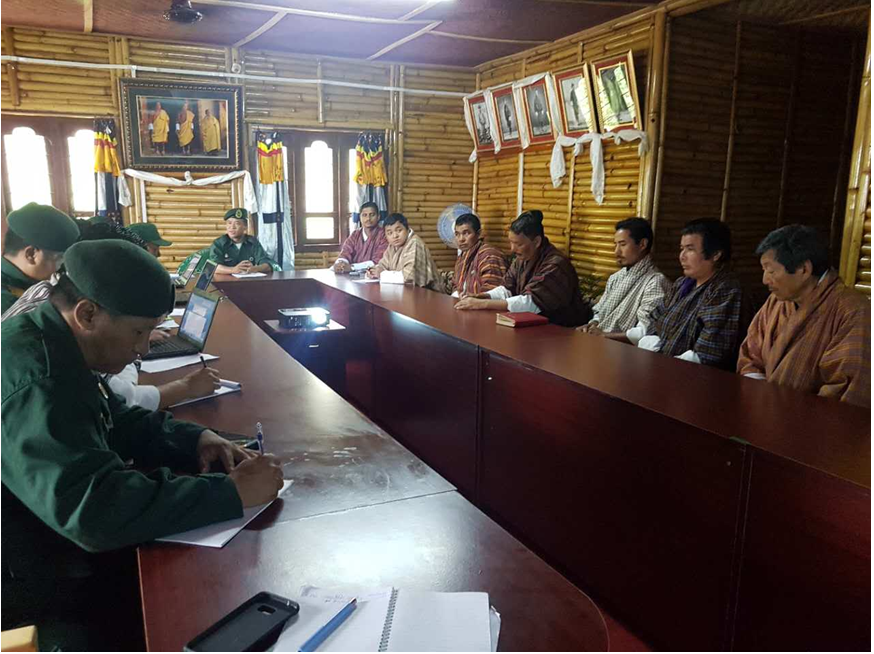
- 📍 Thakorling village, Pathsaling gewog, Tsirang
- 📷 Gem Tshering
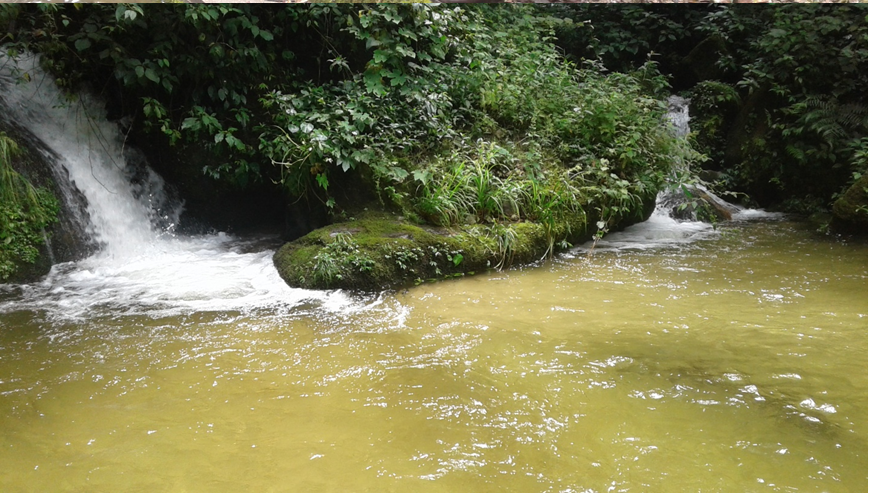
- 📍 Thakorling village, Patshaling gewog, Tsirang Dzongkhag
- 📷 Gem Tshering