Integrated Model Farm to Demonstrate Organic Technologies
Type: Approaches
Creation: 2023-07-19 15:17 Updated: 2024-05-30 13:17
Compilers: Tshering Yangzom
Reviewers: William Critchley, Rima Mekdaschi Studer, Joana Eichenberger
Country/ region/ locations where the Approach has been applied
- Country: Bhutan
- Region/ State/ Province: Tsirang
- Further specification of location (e.g. municipality, town, etc.), if relevant: Mendrelgang
- Map: View Map
Description of the SLM Approach
Short description of the Approach
The integrated model farm approach to organic farming incorporates various agricultural practices and technologies to optimize productivity and maximize sustainability while reducing negative environmental impacts.
Detailed description of the Approach
This integrated model farm incorporates and demonstrates various principles and practices of organic farming. Such a farm utilizes diverse cropping systems, including crop rotation and intercropping, to promote diversity and reduce monoculture. These cropping systems contribute to improved soil health, reduced pests and diseases, and enhanced overall ecosystem resilience. Organic farming places significant emphasis on soil health, with integrated model farms using compost, vermicompost, and farmyard manure (FYM), as well as practices such as green manuring, mulching, and cover cropping. Livestock are also an integral part of these farms, contributing to nutrient cycling, weed control, and soil improvement. Overall, organic integrated model farms aim to reduce negative environmental impacts and promote sustainability.
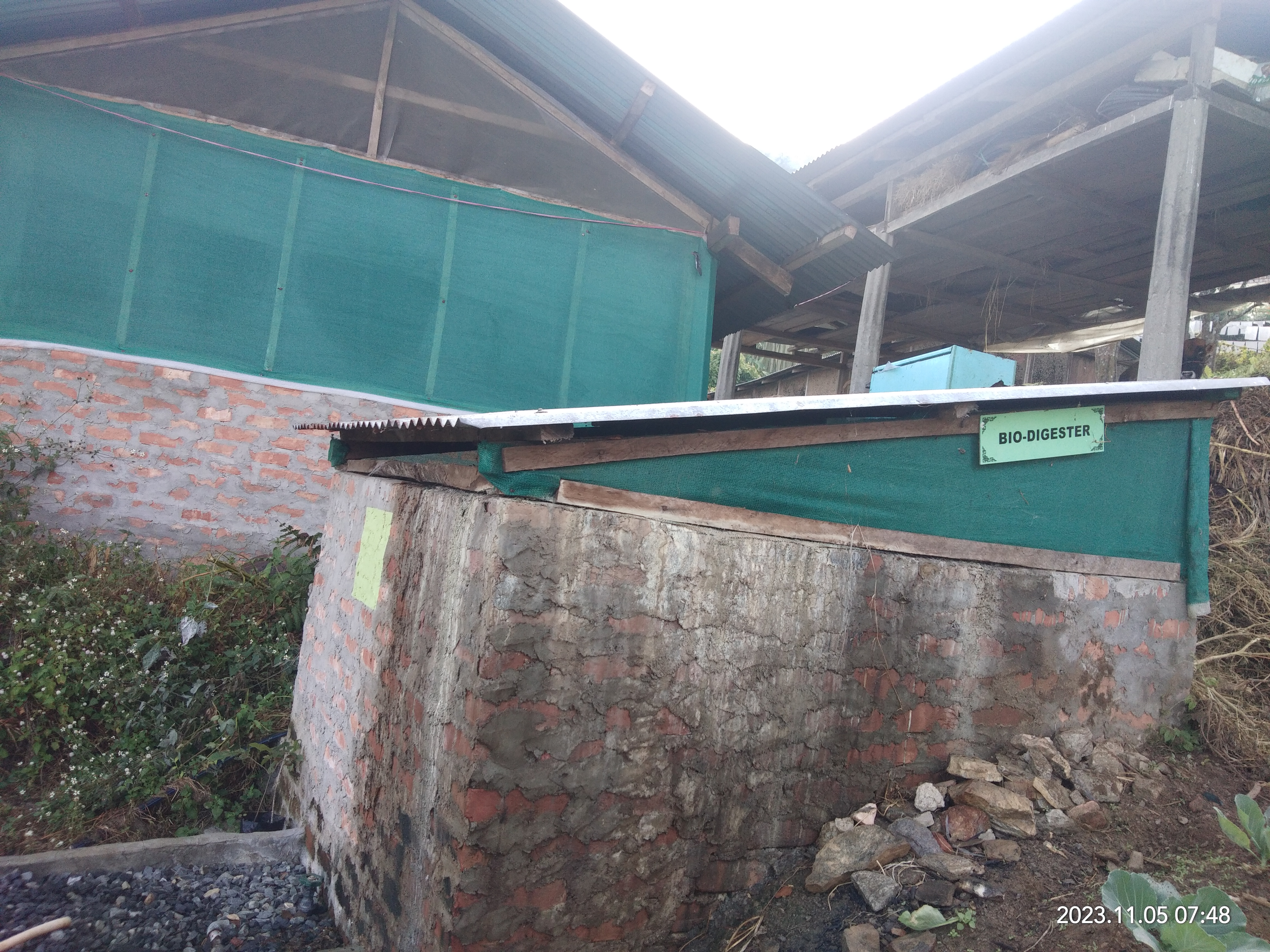
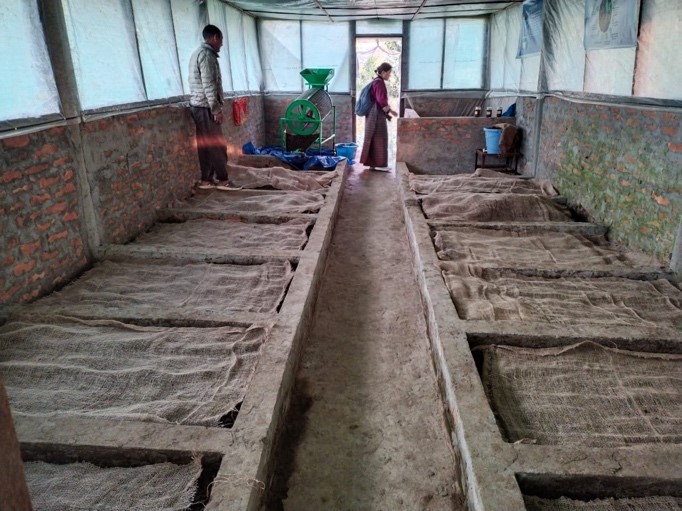
The Organic Agriculture Hub in Mendrelgang Gewog, located in Tsirang Dzongkhag, has been established to support Bhutan's vision of becoming 100% organic. This hub is situated on private farmland spanning 8 acres (3.2 ha) and features various facilities, including a biodigester, azolla (an aquatic fern) and water harvesting tank, greenhouse, zero-energy cooling chamber, compost shed, and a vermiculture production house. Two types of worms, red wigglers and African night crawlers, are used for vermicompost production. Additionally, the hub serves as an educational center for researchers, farmers, and students. It is managed by the landowner, Phurba Moktan.
The establishment of the hub involved multiple stakeholders, including local organizations, the National Organic Flagship Programme, the United Nations Development Programme (UNDP) - and land users. The National Organic Flagship Programme, Green Climate Fund, and Rapid Financing Facility under UNDP provided support for the project, which cost more than US$ 3500. The local administration secured funds, and agriculture and livestock officials offered technical assistance to the land users, who conducted fieldwork related to organic production.
The establishment of the hub followed a systematic approach, starting with the development of a clear vision and objectives centered on sustainability, biodiversity conservation, and the promotion of organic farming principles. Site selection and analysis took into account factors like soil quality, water availability, and proximity to markets. The farm layout was designed to optimize space utilization and support biodiversity, with the inclusion of a biodigester, water harvesting tank, vermiculture facilities, compost pit and a greenhouse.
The benefits of this approach include raising awareness about transitioning to organic farming through the model farm - and learning the associated practices. However, one disadvantage of organic farming is that it can be more labour-intensive than conventional practices.
Photos of the Approach
- 📍 Mendrelgang, Tsirang Dzongkhag
- 📷 Kezang Norbu
- 📍 Mendrelgang, Tsirang Dzongkhag
- 📷 Kezang Norbu