Dairy Cooperatives and KOUFUKU linkage for milk marketing
Type: Approaches
Creation: 2023-08-19 06:30 Updated: 2024-05-30 13:06
Compilers: Nima Dolma Tamang
Reviewers: William Critchley, Rima Mekdaschi Studer, Joana Eichenberger
Country/ region/ locations where the Approach has been applied
- Country: Bhutan
- Region/ State/ Province: Trashigang Dzongkhag
- Further specification of location (e.g. municipality, town, etc.), if relevant: Tshedung Village, Rizor Chiwog, Udzorong Gewog
- Map: View Map
Description of the SLM Approach
Short description of the Approach
This approach links dairy cooperatives with a dairy plant, KOUFUKU International Limited (KIL), for milk marketing. It is an established dairy value chain that addresses milk and dairy product marketing issues and improves the livelihoods of many small dairy farmers in eastern Bhutan.
Detailed description of the Approach
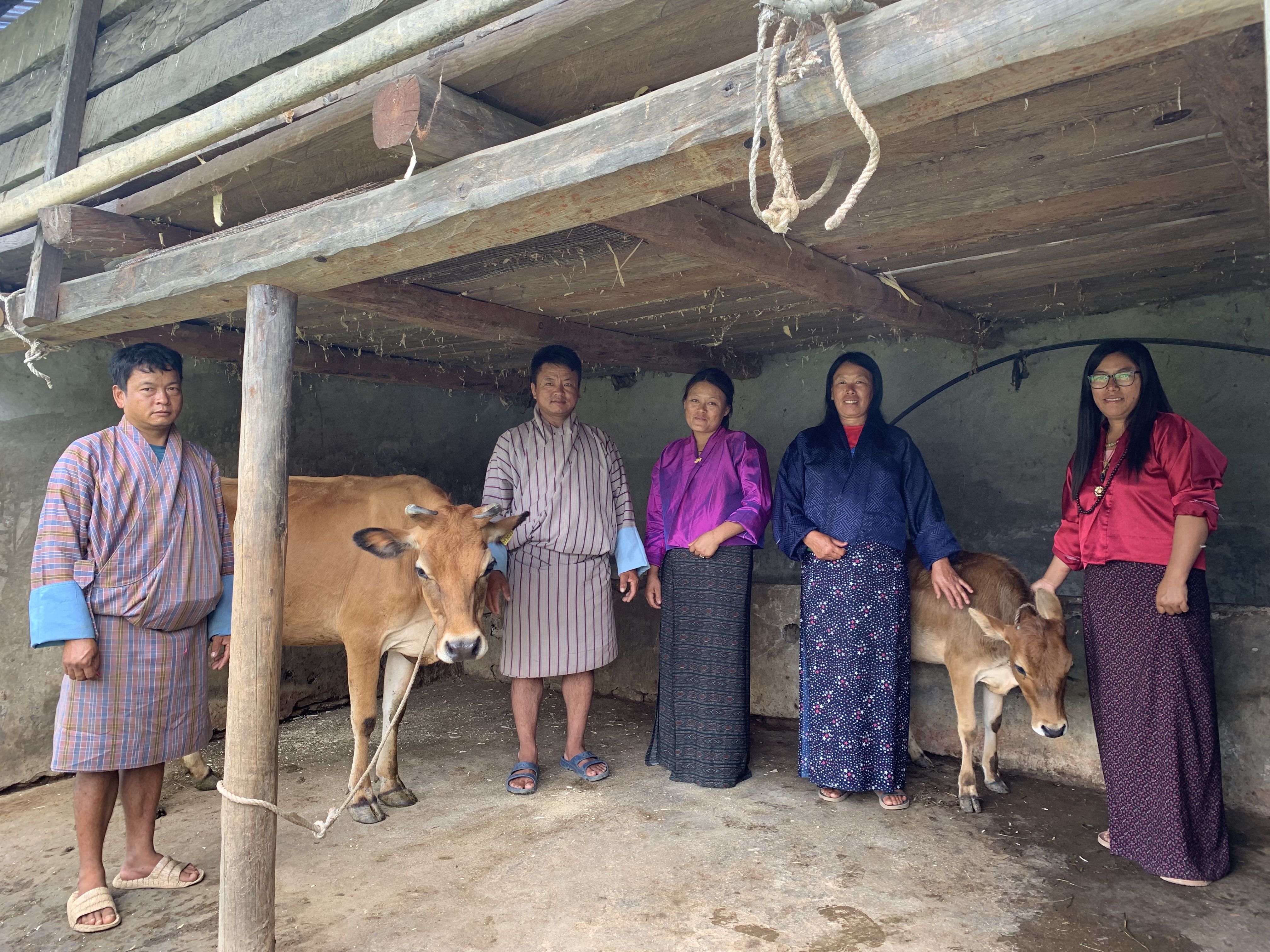
This approach links dairy cooperatives with a dairy plant, KOUFUKU International Limited (KIL), for milk marketing. It is an established dairy value chain that addresses milk and dairy product marketing issues and improves the livelihoods of many small dairy farmers in eastern Bhutan. The approach encompasses milk cooperatives, collection centres, milk transport vans, and the processing unit operated by KIL. Currently, milk is supplied to the company by approximately 22 milk cooperatives, each consisting of land users engaged in dairy farming. This documentation focuses on the linkage between KIL and one such cooperative named Samphel Chirphen Jersey Detshen of Udzorong Gewog in Trashigang Dzongkhag.
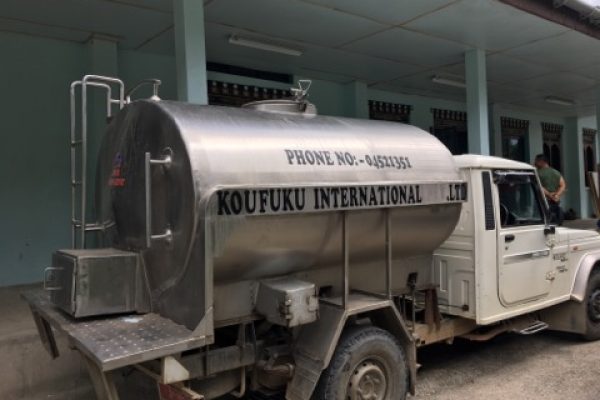
At the heart of the system are collection centres, strategically placed at each dairy cooperative and equipped with chilling machines. Managed by the dairy cooperatives, these centres serve as crucial points for milk collection. A dedicated milk transport van and driver is arranged to facilitate the transportation of milk from individual land users to the collection point, and onward to the processing unit. Designed with insulation, the van ensures the quality of the milk is maintained, preventing deterioration during transit. The pricing structure for land users is influenced by their choice in milk collection and transport: those opting for the company's services receive a lower price per litre.
The KIL processing unit, situated in Chenary, Trashigang Dzongkhag, is a subsidiary of Druk Holding and Investments Limited (DHI). This unit produces a variety of processed milk products, including "Druk Zambala Cheese," salted and non-salted butter, stirred yogurt, gouda cheese, and cottage cheese. This approach improves the livelihoods of land users, encouraging cooperative members to increase milk production which ultimately increases cash income.
For KIL, the company's involvement aims to augment processing capacity. Despite having the potential to process 4000 litres of milk daily, only 44% of this capacity was utilized as of 2021. The approach embraces an inclusive model, involving smallholder land users in cooperative formation and connecting them to the market, making it a successful value chain intervention.
The implementation method of Samphel Chirphen Jersey Detshen employs a consultative approach, engaging various stakeholders such as the Gewog Livestock Extension Officer, Dzongkhag Livestock Officer, CARLEP officials, and a representative from KIL. This collaborative method enables land users to voice their needs, ensuring decisions that benefit the community.
The stages of implementation involve the initiation of cooperative formation driven by awareness created by the Livestock Extension Officer. Group formation facilitates resource-sharing and reduces workload of land user. Further, subsidies and incentives support from the government are directed towards the cooperative rather than individual land users, emphasizing the importance of forming cooperatives to maximize benefits. The dairy cooperative members were supported to construct improved cattle sheds and biogas plants to improved livestock rearing.
Initially, the Samphel Chirphen Jersey Detshen faced marketing challenges, prompting government intervention to connect them with KIL. Consultations resulted in an agreement where land users committed to supplying a minimum of 100 litres per day at a negotiated rate of Nu. 35 per litre, establishing KIL as their end market. Subsequently, improved cattle breeds were acquired, and the cooperatives increased their daily milk supply from 71 to 280-300 litres. Stakeholders, including Gewog Livestock Extension Officer, Dzongkhag Livestock Officer, Gewog Officials, and CARLEP-IFAD, play pivotal roles in providing technical guidance, subsidies, and funding. Regular monitoring ensures the success of the activity.
In summary, this approach benefits land users by enhancing marketing services and providing sustainable sources of household income – and indirectly improves SLM through encouraging better husbandry of dairy cattle and associated biogas plants.
Photos of the Approach
- 📍 Udzorong Gewog, Trashigang Dzongkag
- 📷 Tshering Yangzom
- 🗓 2023-04-12
- 📷 KOFUKU International Ltd.