
Zhasela Community Forest Management Group (CFMG)
Type: Approaches
Creation: 2023-08-21 06:17 Updated: 2024-05-30 13:15
Compilers: Tshering Yangzom
Reviewers: William Critchley, Rima Mekdaschi Studer, Joana Eichenberger
Country/ region/ locations where the Approach has been applied
- Country: Bhutan
- Region/ State/ Province: Bragong village, Jalang chiwog, Minjey gewog, Lhuentse Dzongkhag
- Map: View Map
Description of the SLM Approach
Short description of the Approach
The Zhasela Community Forest (CF) in Lhuentse covers an area of approximately 208 acres (83 ha). The Zhasela CF Management Group (CFMG), consisting of members of 15 households, has been formed for sustainable utilization and management of forest resources, protection of water sources, and income generation through the sale of sustainable forest products to reduce poverty.
Detailed description of the Approach
Zhasela Community Forest (CF) covers an area of approximately 208 acres (83 ha). The community forest name “Zhasela” is derived from the local deity of the forest, Zhasela. The CF is a cool broadleaf forest. The dominant tree species found are the species of the genera Michelia, Persia, Symplocos, Betula, and Cinnamomum. The CF is looked after by the Community Forest Management Group (CFMG) consisting of members of 15 households. The operation of the CFMG is guided by the Community Forest Management Plan (CFMP). The first period of Zhasela CF management was between 2004 and 2014. The CF coverage was around 84 acres (33 ha) with 13 CFMG households. At the end of the first planning period, the CF management was retained and the CFMP revised for the next 10 years. The revised plan period was completed in 2017 with the addition of almost 124 acres (50 ha) resulting in a total 208 acres (83 ha). The CFMG members increased from 13 to 15 households. The CFMG carries out the activities highlighted in the CFMP.
The main objectives of the approach are sustainable utilization and management of forest resources, protection of water sources, and income generation through the sale of sustainable forest products to reduce poverty.
Apart from the CFMG members, the stakeholders involved in the approach are the territorial division office, Gewog Forestry Extension Officer (GFEO), and CFMG members. The territorial division office's roles include training CFMG on a need's basis; providing technical inputs while implementing the CFMP; monitoring and providing feedback on CFMP implementation; providing market information and supporting marketing; providing support for amendment and revision of CFMP; verifying CFMG’s records annually; translating CFMP to a Dzongkha version; coordinating study tours; and disseminating or advertising information related to CF or CFMG.
What the CFMG members like about this approach is that it protects water sources, provides access to forest resources such as timber, fuel wood, and non-timber forest products (NTFPs) such as fodder, fencing/flag poles, and leaf litter. The approach also helps to resolve conflicts regarding access to forest resources, conserves the local forest, reduces erosion and landslides, and thus aids in habitat protection and biodiversity conservation.
In terms of the community, the approach also helps provide loans to members from the CF fund lending scheme with minimal interest. The other advantages of this approach include diversifying income sources by reducing dependency on a single source of income like livestock farming or crop production, strengthening social cohesion by empowering local communities to manage their resources collectively, facilitating collaboration among different stakeholders, sustainably utilizing and managing forest resources, and improving living standards and reducing poverty in rural communities.
Photos of the Approach
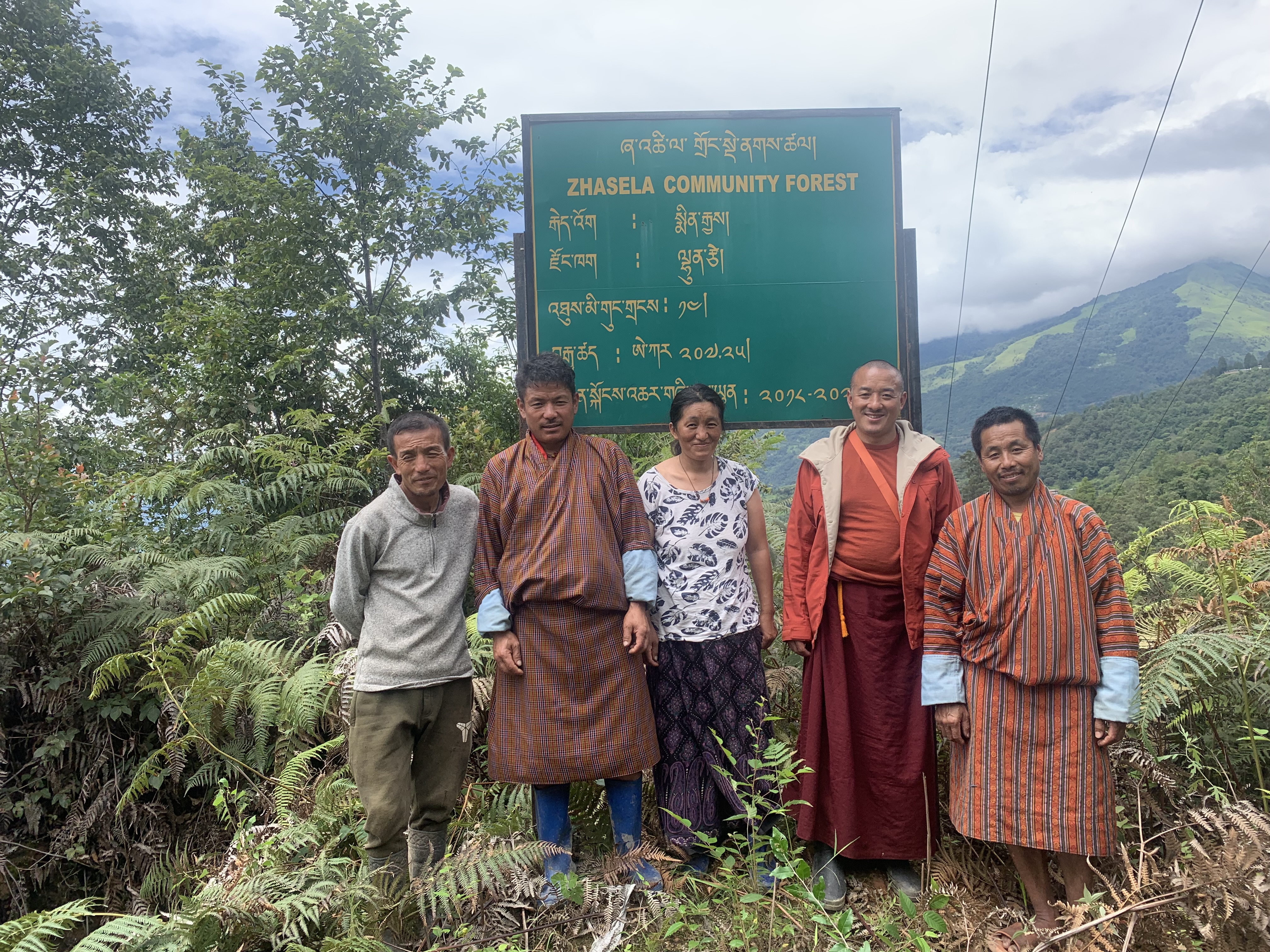
- 📍 Bragong village, Jalang chiwog, Minjey gewog, Lhuentse Dzongkhag
- 📷 Tshering Yangzom