Traditional labour sharing for farming
Type: Approaches
Creation: 2023-08-21 16:23 Updated: 2024-05-30 13:14
Compilers: ONGPO LEPCHA
Reviewers: William Critchley, Rima Mekdaschi Studer, Joana Eichenberger
Country/ region/ locations where the Approach has been applied
- Country: Bhutan
- Region/ State/ Province: Namthrang wog (sub village), Betsamaang(village), Bumdeling(region), Trashi Yangtse(Provience)
- Map: View Map
Description of the SLM Approach
Short description of the Approach
In the past, it was difficult for households to complete seasonal farming activities like ploughing, sowing, and transplanting in time. So, land users came together by adopting 'latsab' or labour sharing. This involves pooling land users, who work on a rotational basis on the plots of the different group members. Labour sharing is a very old approach but is still being practiced throughout the country.
Detailed description of the Approach
In the past, it was difficult for households to complete seasonal farming activities like ploughing, sowing, and transplanting in time. So, land users came together by adopting 'latsab' or labour sharing. This involves pooling land users, who work on a rotational basis on the plots of the different group members. Labour sharing is a very old approach but is still being practiced throughout the country. In addition, land users also come together for any construction work or other activities related to land management. Labour sharing aims to complete seasonal farming activities more efficiently and on time. The approach also helps economically disadvantaged land users who cannot pay wages to employ. Other co-benefits reported are the improved sense of community and enhanced social cohesion because the exchange of experiences and collaboration builds mutual trust. Working in a group eases hard physical work, such as carrying and breaking large boulders, and is perceived to be much more enjoyable than working alone or in a household setting.
Groups are formed at the village and sub-village levels to enable households to take up labour-intensive SLM activities, such as stone bunding, bench terracing, stone check dam construction, water source protection works, or grass hedgerow development. Labour-sharing involves land users coming together to discuss important agricultural activities to be implemented. They also select the land users where the work should start. When it comes to activities related to SLM intervention, the land users are given initial practical training on the SLM intervention, which starts with hands-on work on the land of a group member, preferably that of a vulnerable household. Labour-sharing groups, therefore, facilitate the inclusion of vulnerable households, especially female-headed and small families, in the implementation of labour-intensive SLM interventions. In addition to technical guidance provided by extension staff, support is given to the group formation process, such as drafting informal by-laws and group management.
Any activities through a labour-sharing approach have to undergo specific stages. Initially, the land users will come together to discuss important agricultural or SLM activities to be carried out in a season. Secondly, they identify a 'Blenpa' who is a land user who requests help on his/ her land. Once in the field before they start any activities a supervisor or 'la pon' is appointed. If work involves heavy digging, a 'Nyempa' (preferably a strong man) is appointed, and he will be assisted by four or five women. The labour-sharing group is formed through common interests among different land users in the community. The group members come together and plan and prepare by-laws. They appoint a chairman or 'Trizin', who is the overall manager of the group. The accountant/treasurer or 'Tsezin' is appointed to take care of the finances. Any conflict between land users is solved within the group.
Photos of the Approach
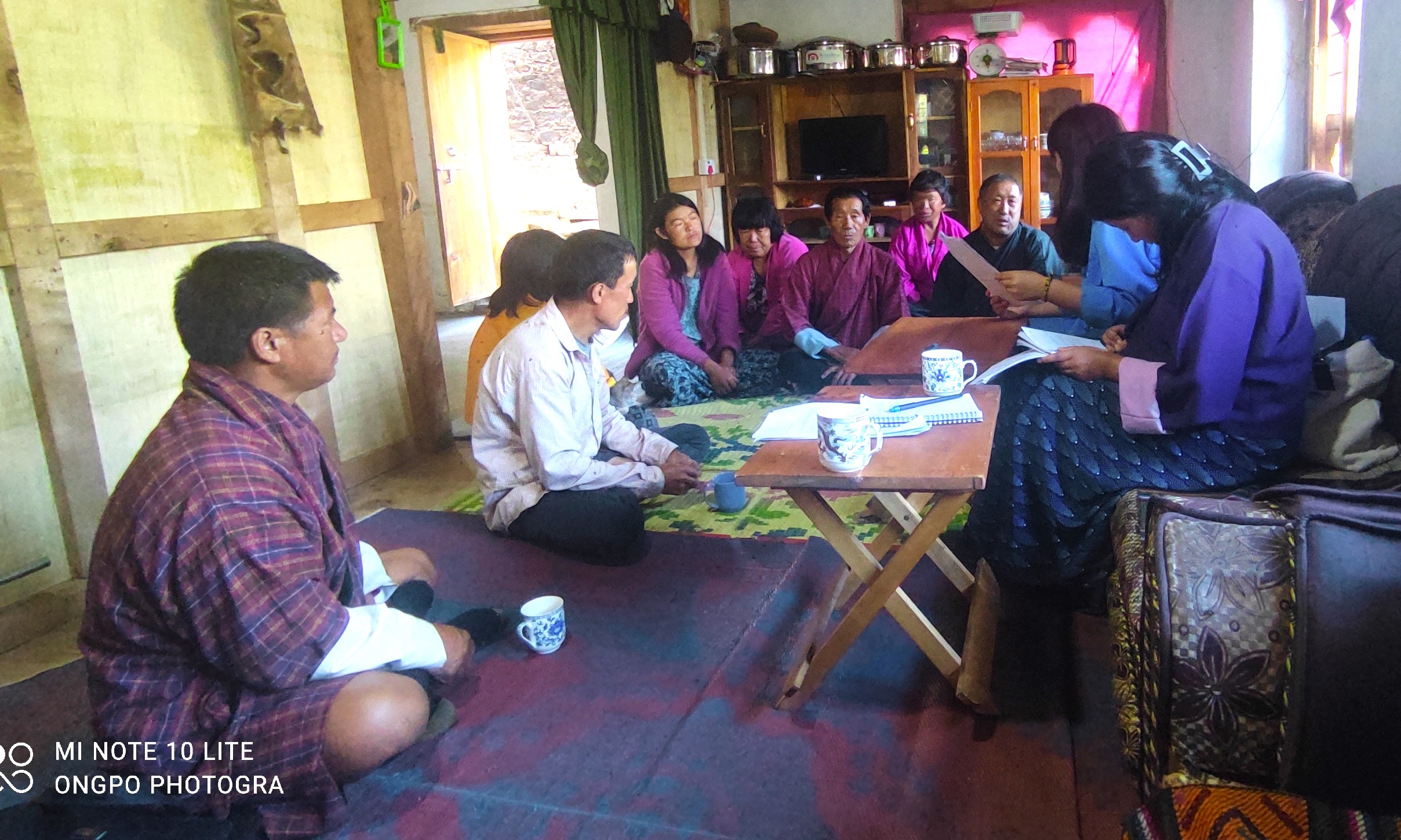
- 📍 Bumdeling, Trashi Yangtse: Bhutan
- 📷 Ongpo Lepcha
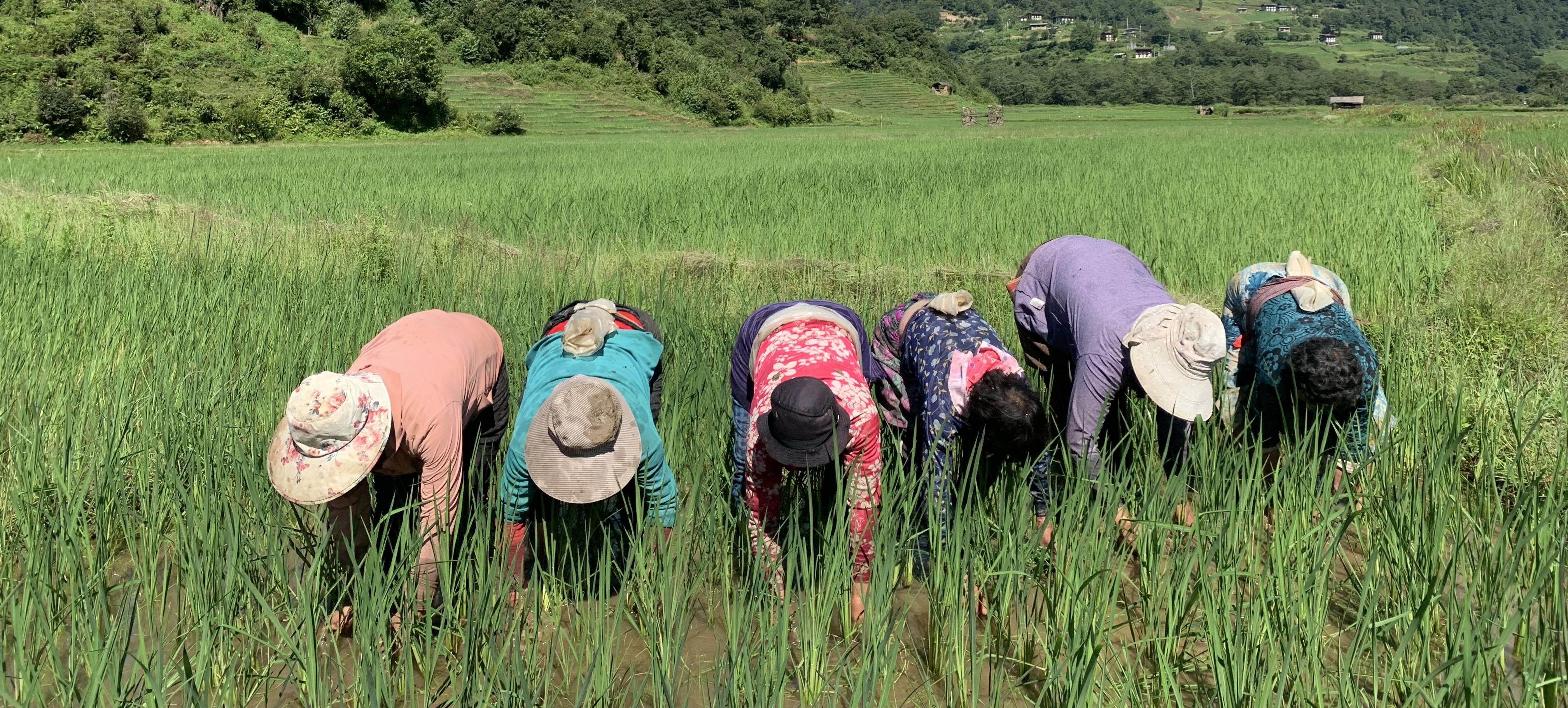
- 📍 Bumdeling, Trashi Yangtse: Bhutan
- 📷 Tshering Yangzom