
Community-led participatory and self sustainable land restoration in India
Type: Approaches
Creation: 2024-04-13 05:04 Updated: 2024-08-20 08:47
Compilers: DIYA BANERJEE
Reviewers: Nicole Harari, William Critchley, Rima Mekdaschi Studer
Country/ region/ locations where the Approach has been applied
- Country: India
- Region/ State/ Province: West Bengal
- Further specification of location (e.g. municipality, town, etc.), if relevant: Bankura, Purulia
- Map: View Map
Description of the SLM Approach
Short description of the Approach
A community-led participatory approach is being implemented in West Bengal to revive and regenerate a broken and degraded landscape through sustainable land management. Local people take the lead in both action and the development of a long-term management plan.
Detailed description of the Approach
Much too long and not written as text. I have summarised and edited the language. One omission was any mention of who “we” are. I have said Uttarayan Wildlife. Is this correct? Please check that and my other edits in the following which I have entered online.
A community-led participatory approach is being implemented in West Bengal to revive and regenerate a broken and degraded landscape through sustainable land management. The approach is facilitated by Uttarayan Wildlife, an NGO. Local people take the lead in both action and the development of a long-term management plan. The identified potential/objective is sustainable and integrated business-driven landscape restoration through community participation. It is hoped to enable local communities to become part of a new generation of business professionals that will take part in integrated landscape management and business-driven landscape restoration.
The direct and indirect stakeholders involved are:
1. Local farmers, and local communities;
2. Local schools and colleges; and
3. Local government authorities
A group of facilitators guide communities in the process of recovery of damaged ecosystems. We try to guide the improvement of land towards its full potential which in our case is a traditional natural forest called Sutan – Bankura – South Bengal. It’s an approach to address a systematic crisis.
The overall goal is to achieve land degradation neutrality (LDN). With landscape restoration, that's more than just the recovery of land because a landscape is also a community. People can revitalize an area, and an economy that restores and uses the landscape with sustainable business.
We work in natural and combined zones in a mosaic restoration pattern and follow basic steps through multi-stakeholder partnerships. The sequence is as follows:
Scout and Initiate:
1. Land condition and potential – analysis and recommendations
2. Biodiversity and native forest reference studies
3. Stakeholder identification and dialogue
Co-design and co-develop:
4. Define and design adaptive planning, work on cost–benefit analyses for transformative change with TEK AND LEK and scientific study strategies/drivers for integrated landscape restoration
5.Develop an ecosystem with all possible community participation in livelihood activities
Implementation:
6. Work on:
a. Soil and water depletion
b. Seeding and plantation through nature-based solutions
c. Unsustainable grazing practices
d. Maintenance
e. Monitoring and evaluation for early learning and to adapt a theory of change
Adapt and Sustain:
7. Link livelihood activities with ecological benefits so that the community starts keeping financial capital/business in mind – and create a business case
8. A period of 20 years is minimum to see all the ‘returns’ which can be added with carbon credit benefits to make it permanent.
9. Cultural, spiritual, and recreational services
10. Adaptation to climate change
Scaling up and replication is the ultimate objective – and we will hand-over to the local community using “exit policies”, allowing entrepreneurs/farmers to develop the right skills and knowledge to independently run successful restoration businesses. We hope to scale this model beyond state boundaries with similar issues and potentials. Throughout, we will practice a public – private - partnership (PPP) to strike the right collaborations and partnerships for an efficient Business Model Canvas in order to achieve successful sustainable ecosystem restoration with the community.
In the initial stage local stakeholders were very wary in terms of trust and faith since they were voluntarily pledging their land, time and resources. With time as the model was tested successfully there has been participation from all quarters.
Photos of the Approach
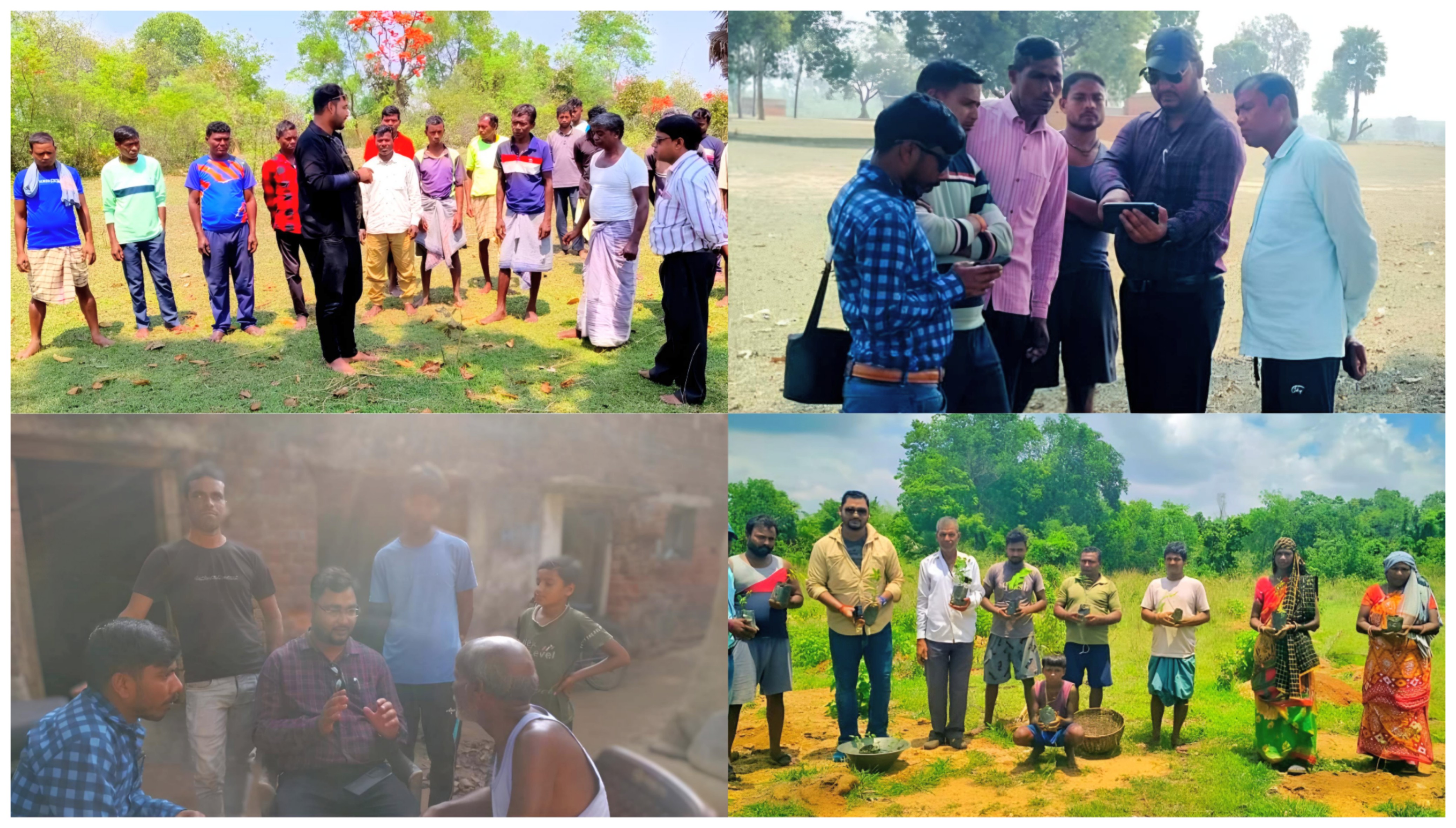
- 📍 Bankura - Purulia
- 🗓 2022-02-01
- 📷 Abhishek Ghosh
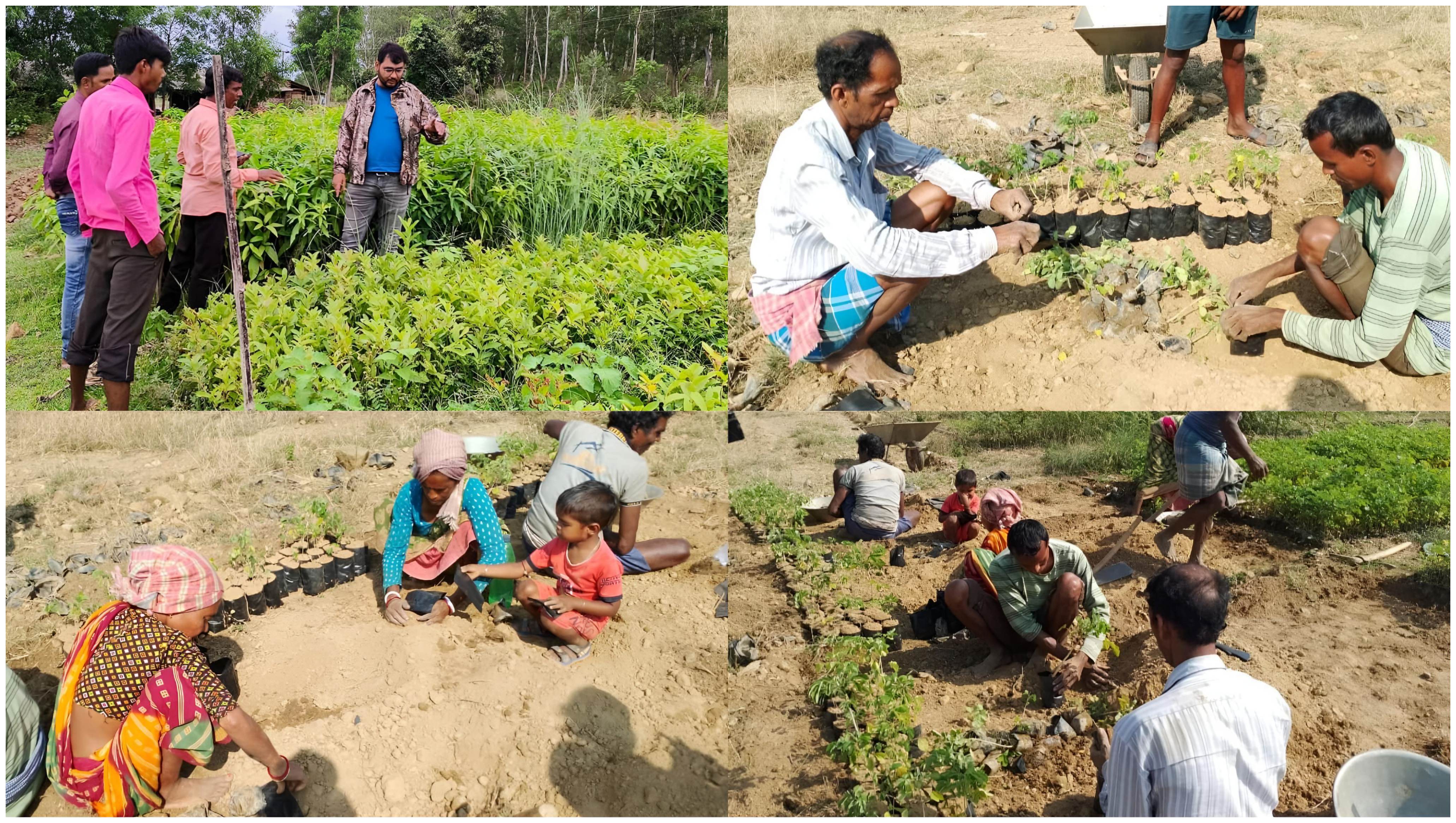
- 📍 Ranibund - Tungchar village - Bankura
- 🗓 2022-02-01
- 📷 Bapi Mahato
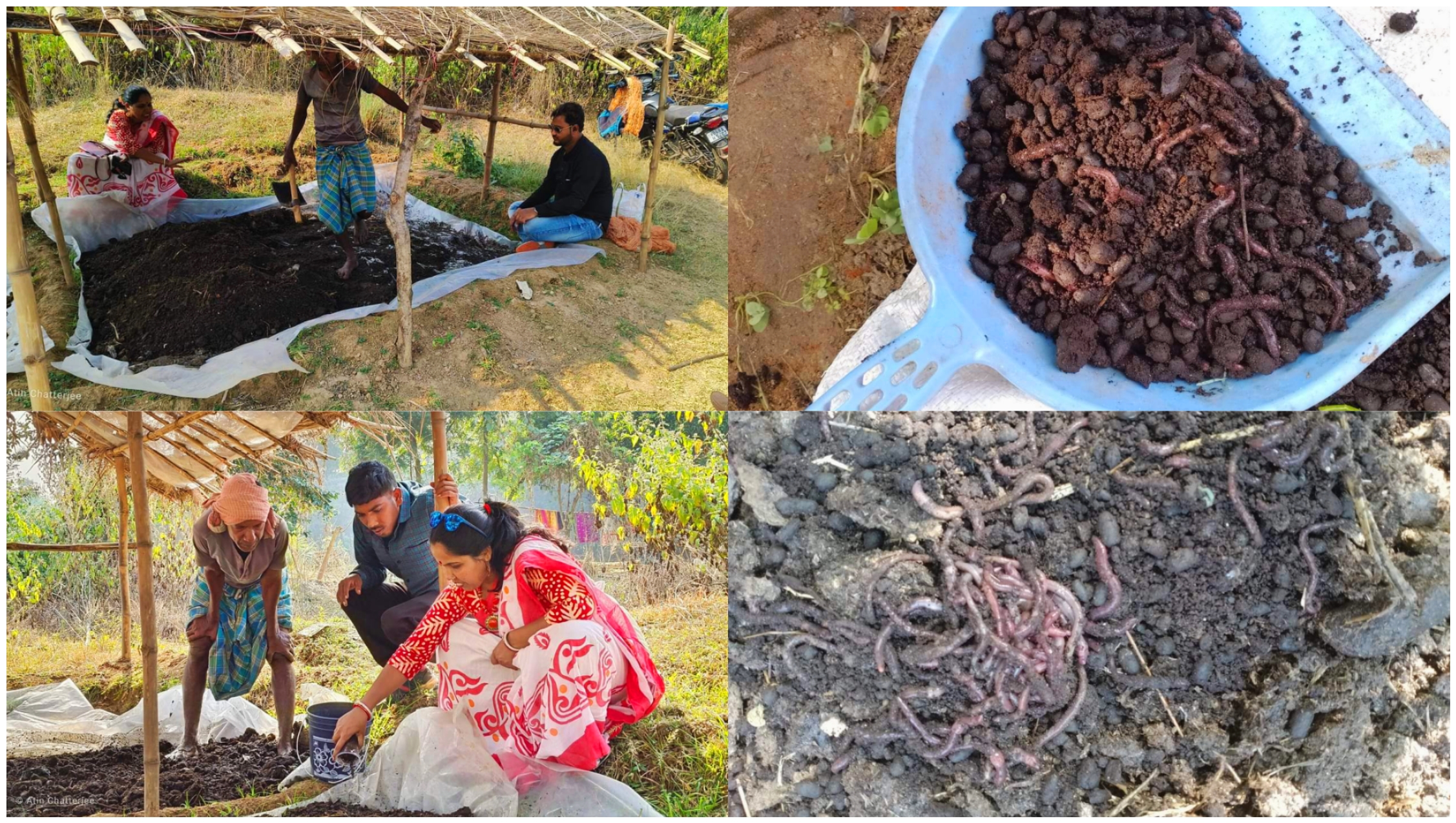
- 📍 Ranibund - Bankura, Gorshika - Purulia
- 🗓 2023-07-04
- 📷 Atin Chatterjee