Experiential Learning Tools for Sustainable Water Management
Type: Approaches
Creation: 2024-08-19 10:48 Updated: 2025-10-17 13:23
Compilers: Vishwambhar Duche
Reviewers: Udo Höggel, Rima Mekdaschi Studer
Country/ region/ locations where the Approach has been applied
- Country: India
- Region/ State/ Province: Andhra Pradesh, Rajasthan, Karnataka, Odisha, Maharashtra, and Madhya Pradesh States of India
- Further specification of location (e.g. municipality, town, etc.), if relevant: Chittoor and Anantpur District of Andhra Pradesh, Bhilwara district of Rajasthan, Mandala District of Madhya Pradesh, Anugul and Koraput district of Odisha, Chikbalapur district of Karnataka, Yavatmal and Amaravati District of Maharashtra
- Map: View Map
Description of the SLM Approach
Short description of the Approach
The project “Scaling up experiential learning tools for sustainable water governance in India” aimed at enhancing sustainable water management at scale by improving the capacities of 1,500 rural communities covering 105,000 households directly and 2,000 communities covering 140,000 households indirectly in six Indian states to manage water more sustainably. This was achieved through experiential learning from collective action games, structured community debriefings, and participatory water planning tools that contribute to greater awareness and improved governance, inducing behavioural change toward more sustainable water governance and management.
The work was jointly conducted by the Foundation for Ecological Security, India (FES), the International Food Policy Research Institute (IFPRI) and the International Crops Research Institute for the Semi-Arid Tropics (ICRISAT).
Detailed description of the Approach
The project team adopted a holistic approach to water governance, considering the complex interconnections between water, land, livelihoods, people, and institutions. Rather than viewing groundwater in isolation, the team promoted the conjunctive use of surface and groundwater for irrigation, integrating both supply- and demand-side strategies to water management. Their approach included harnessing data, experiential learning, capacity building, participatory planning, and strategic communication to initiate behavioural change among actors at both community and broader levels.
At the community level, the team focused on shifting behaviour towards sustainable water use by farmers and local communities. They employ tools like the Groundwater Monitoring Tool (GWMT) for collective resource monitoring, experiential learning games and debriefing for social learning, and Crop Water Budgeting (CWB) for participatory water management, sensitization to leveraging funds of the Mahatma Gandhi National Rural Employment Guarantee Scheme (MGNREGS), scientific and participatory planning through the Composite Landscape Assessment and Restoration Tool (CLART). These tools aim at enhancing the understanding of water as a shared resource, at developing the capacity of community resource persons, at fostering collective decision-making, and at encouraging the adoption of water-efficient practices.
Aiming to influence higher-level actors, the project engaged in multi-actor platforms (MAPs) and built coalitions to promote collaborative water governance. These platforms facilitated discussions among various stakeholders, aiming to bridge governance gaps and encourage coordinated actions. The project also provided training to civil society, government, and private sector actors on water governance, equipping them with the knowledge and tools necessary to adopt sustainable practices.
Overall, the project aimed at creating a web of interconnected interventions that influence the behaviour of stakeholders across different levels, ultimately leading to improved water governance and sustainable resource management.
Photos of the Approach
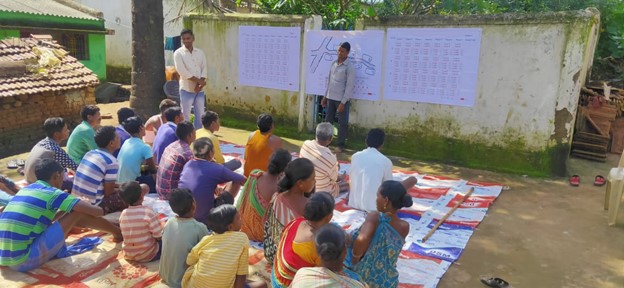
- 📍 Angul, Odisha, India
- 🗓 2021-01-09
- 📷 Dron C
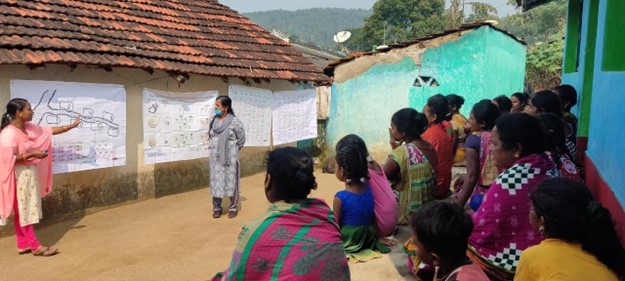
- 📍 Angul, Odisha, India
- 🗓 2021-07-09
- 📷 Dron C
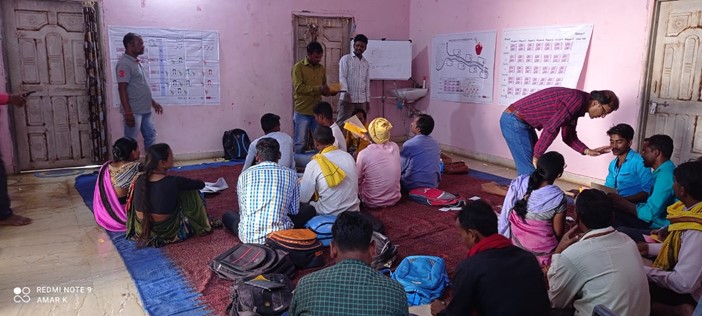
- 📍 Mandla, Madhya Pradesh, India
- 📷 Amar K