A Decision Support Tool for integrating stakeholder perspectives through WEFE Nexus
Type: Approaches
Creation: 2024-10-17 19:08 Updated: 2025-08-08 22:04
Compilers: Joren Verbist
Reviewers: William Critchley, Rima Mekdaschi Studer
Country/ region/ locations where the Approach has been applied
- Country: Uzbekistan
- Further specification of location (e.g. municipality, town, etc.), if relevant: Tashkent (Uzbekistan)
- Map: View Map
Description of the SLM Approach
Short description of the Approach
The Decision Support Tool helps decision-makers prioritize sustainable land management practices using the Water-Energy-Food-Ecosystem Nexus, fostering collaboration, facilitating social learning, and balancing diverse stakeholder interests.
Detailed description of the Approach
Land management and agricultural production often face diverse and conflicting interests from various stakeholders. The Water-Energy-Food-Ecosystem (WEFE) Nexus offers a framework for addressing these challenges. Under the CGIAR Nexus Gains Initiative, the International Center for Agricultural Research in the Dry Areas (ICARDA) developed a Decision Support Tool (DST) designed to help decision-makers balance stakeholder interests within the WEFE Nexus. The DST’s main objective is to enable comparison and thus prioritization of sustainable land management (SLM) technologies based on specific criteria and stakeholder-assigned weights.
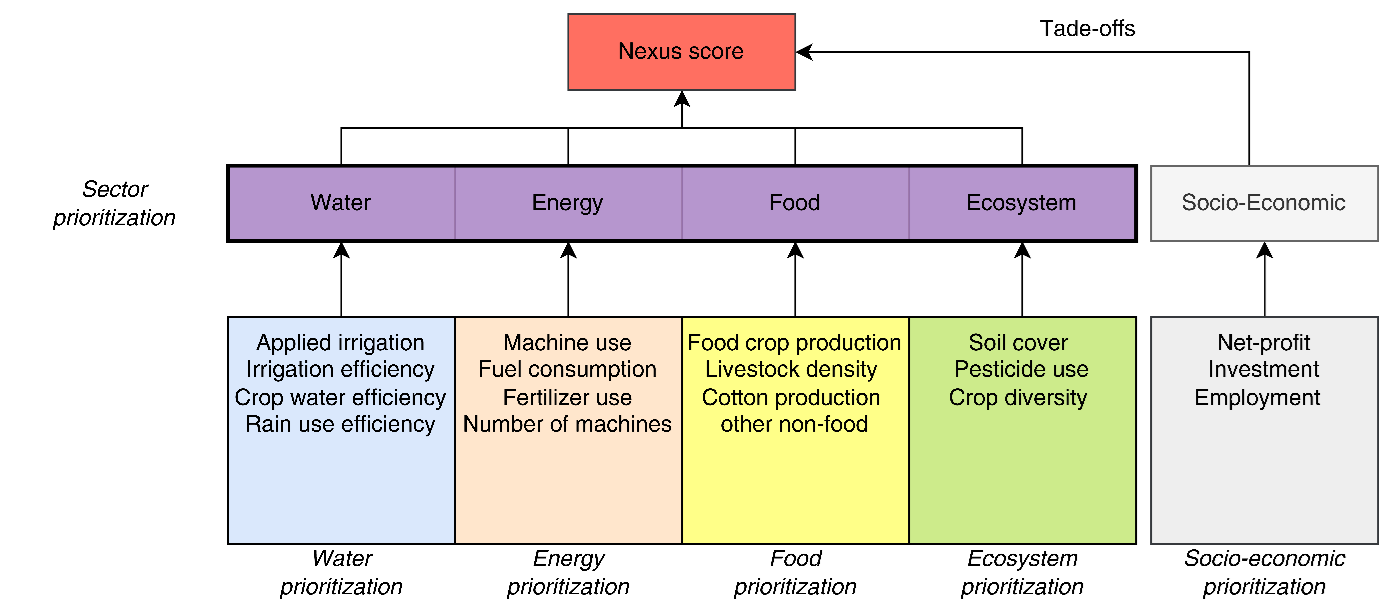
The DST applies a multi-criteria analysis (MCA) framework combined with the Best-Worst Method (BWM) to capture stakeholder preferences and assign weights to different criteria. The MCA follows a hierarchical structure: the overarching goal of SLM is divided into sector-specific objectives for water, energy, food, and ecosystem health. Each is assessed through specific indicators, with stakeholder interviews used to derive weights and calculate a "Nexus Score"—a weighted average reflecting preferences for different SLM practices.
The tool’s development involved two field campaigns:
* The 2023 campaign gathered indicator values for SLM practices through field visits and interviews with farmers, ensuring data reflected field-level conditions. It concluded with a validation workshop leading to adjustments in the ranking system.
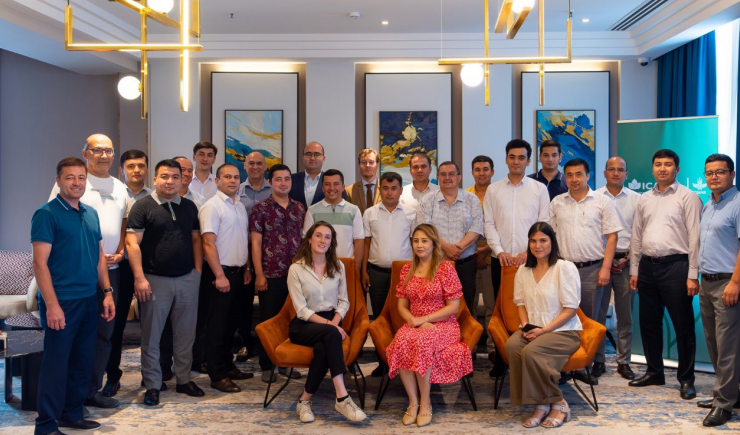
* The 2024 campaign focused on collecting stakeholder weights for indicators within the WEFE Nexus through key informant interviews. A workshop gathered stakeholders from ministries and research institutions, and updated participants on the DST’s development and preliminary findings, while collecting feedback.
Using the DST involves the following steps:
Identify Area: Define geographic boundaries, consult local SLM experts for technical validation, and engage stakeholders at local and regional levels.
Use the Tool: Download the DST, compile an inventory of local SLM practices, gather stakeholder weights, review and complete indicator values, generate results, and refine inputs.
Social Learning: Hold validation workshops with stakeholders to review DST outputs, foster knowledge sharing, and address concerns to build consensus.
Implementation: Based on validated DST outcomes and stakeholder input, implement agreed SLM practices.
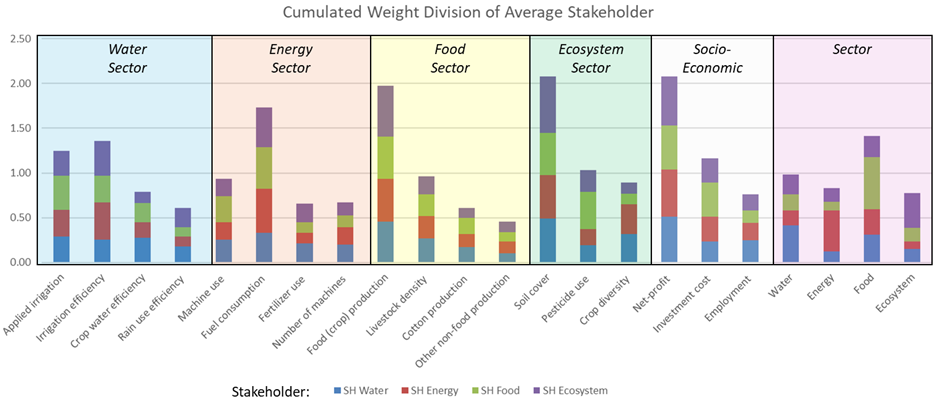
Overall, the DST aims to unite stakeholders in a shared understanding of land management decisions while addressing conflicting interests and policies. Findings reveal that departments often weigh indicators differently. Cross-departmental weight comparisons indicate shared priorities for certain criteria and highlight gaps in others, paving the way for interdepartmental collaboration.
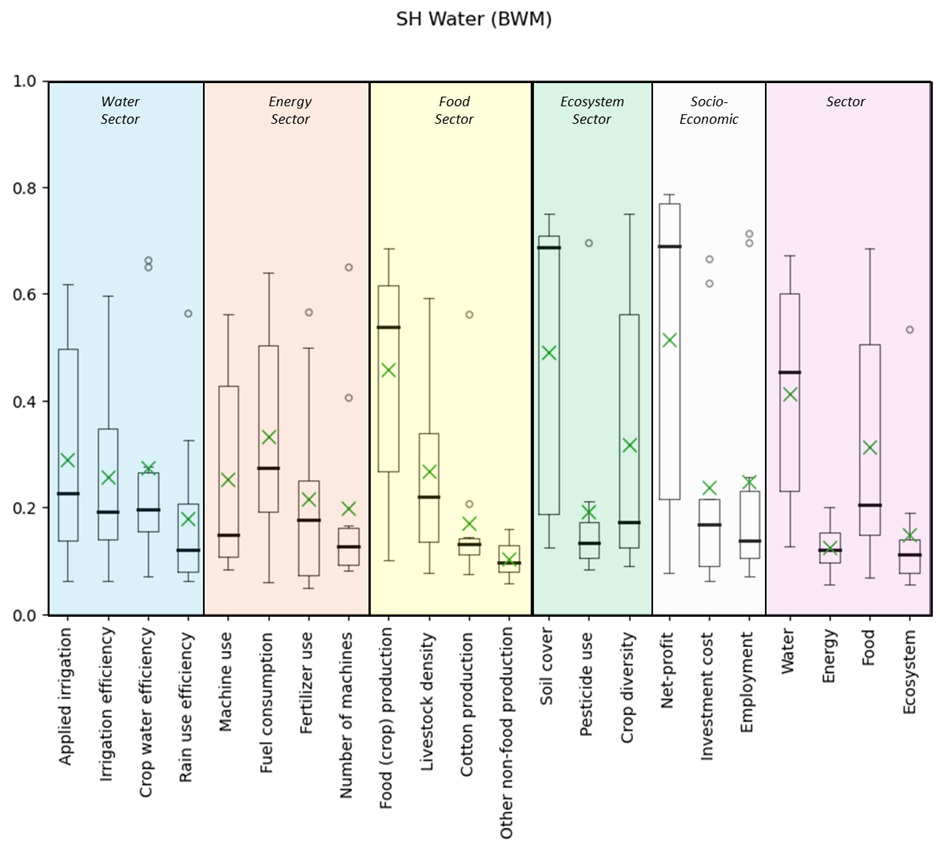
The results of the weight survey provided notable insights. Within departments, responses exhibit a wide spread, indicating no collective priority. Across departments, certain criteria—such as reducing fuel consumption, food production, and net profit—are prioritized by all. Conversely, criteria like rain use efficiency, non-food production, and employment opportunities are collectively deprioritized.
This work was conducted under the CGIAR Initiative on Nexus Gains, with gratitude to the CGIAR Trust Fund contributors (www.cgiar.org/funders). The DST and approach are inspired by the thesis of J. Verbist, titled “Perspectives on the Economic Feasibility of Increasing Soil-Based Ecosystem Services on Arable Farms in The Netherlands” (2022), conducted at the Business Economics (BEC) Group of Wageningen University under the supervision of Professors H. Saatkamp and M. Kik.
Photos of the Approach
- 🗓 2026-06-04
- 🗓 2026-06-04
- 🗓 2026-06-04
- 🗓 2026-06-04
- 📷 Joren Verbist