
Group micro-irrigation (GMI)
Type: Approaches
Creation: 2024-11-18 05:45 Updated: 2024-11-29 08:47
Compilers: Pratik Ramteke
Reviewers: William Critchley, Joana Eichenberger
Country/ region/ locations where the Approach has been applied
- Country: India
- Region/ State/ Province: Tigalkheda, Bhokardan Block, state: Maharashtra
- Map: View Map
Description of the SLM Approach
Short description of the Approach
The group micro-irrigation (GMI) approach encourages farmers to share water more sustainably by facilitating cooperative management of irrigation resources. The aim is to improve water security and agricultural productivity by promoting climate-resilient agricultural practices and addressing the behavioural factors that influence water resource sharing.
Detailed description of the Approach
The group micro-irrigation (GMI) approach encourages farmers to share water more sustainably by facilitating cooperative management of irrigation resources in semi-arid regions. The aim is to improve water security and agricultural productivity by promoting climate-resilient agricultural (CRA) practices and addressing the behavioural factors that influence water resource sharing. By treating water as a shared community resource rather than private property, GMI promotes equitable distribution and sustainable use of limited water resources among farmers by organizing farmer groups and utilizing shared water management infrastructure.
The GMI approach is divided into four major components: (1) supply-side groundwater management to recharge and conserve water sources, (2) demand-side management via efficient micro-irrigation systems, (3) promotion of CRA practices to improve soil health, and (4) integration of applied research to develop tools that allow farmers to assess and improve their agricultural practices. These components aim to optimize water use, reduce crop production costs, and encourage farmer collaboration for shared resources and access to advanced agricultural technologies.
The primary objectives of the GMI approach are to improve water productivity, enhance crop yield, and reduce dependency on groundwater for irrigation, especially in regions facing water scarcity. Through group collaboration, the approach also aims to reduce individual investment costs for farmers, facilitate access to subsidies, and increase resilience to climate fluctuations. Additionally, by integrating CRA practices, GMI supports sustainable agricultural practices that contribute to long-term soil health and ecosystem stability.
The GMI approach involves several methods, including:
•Groundwater Management: rainwater harvesting and construction of soil and water conservation structures to replenish groundwater levels.
•Micro-Irrigation Systems: installation of shared drip and sprinkler irrigation systems that optimize water use and are accessible to all group members.
•CRA Practices: seed treatment, crop spacing, intercropping & trap cropping, applying farmyard manure (FYM), vermicompost, and organic waste compost, and making use of organic inputs, Bio-pest management practices including the use of pheromone traps, light traps, and bio-pesticides.
•Applied Research: use of tools like crop water budgeting, groundwater testing, and field book record-keeping, enabling farmers to make data-driven decisions.
The implementation of GMI involves four stages:
•Planning and Assessment: identifying suitable villages, farmer groups, and available water resources. Farmers with similar irrigation needs are grouped based on geographic proximity and water source access.
•Infrastructure Development: establishing common irrigation systems and water conservation structures, including dug wells, check dams, and pipelines.
•Training and Capacity Building: educating farmers on CRA practices, irrigation management, and using applied research tools for decision-making.
•Monitoring and Evaluation: regular assessment of crop and water productivity, adjustment of practices based on field data, and continuous training to ensure sustainability.
The GMI approach involves a range of stakeholders:
•Farmers: key participants who manage day-to-day operations, share resources, and implement CRA practices.
•Watershed Organisation Trust (WOTR): the primary implementing organization, providing technical support, training, and ongoing assessment.
•Local Government: supports funding for infrastructure, provides access to subsidies, and helps promote CRA practices.
•Agricultural Experts and Researchers: developing tools for applied research and supporting data analysis to improve productivity and water efficiency.
Farmers value the GMI approach for a variety of reasons, including lower individual investment, access to reliable water resources, and increased crop productivity. The cooperative aspect has strengthened community bonds and ensured equal access to resources. However, some farmers were initially hesitant to share water resources and bear the upfront costs of micro-irrigation systems. These concerns faded as the benefits of increased productivity and resource efficiency became clear.
Photos of the Approach
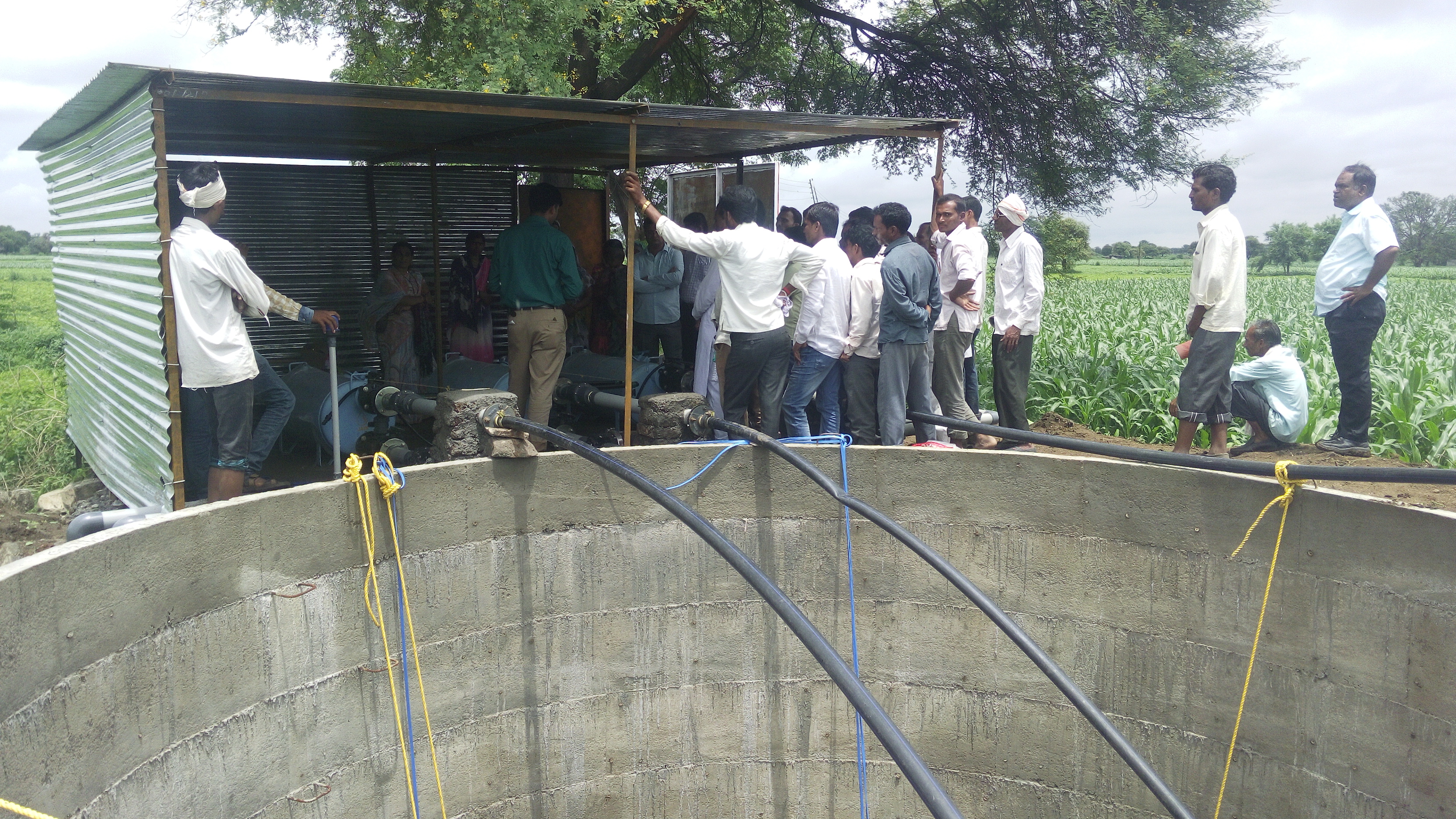
- 📍 Longitude:75.866839, Latitude: 20.118005
- 📷 Dr. Arun Bhagat
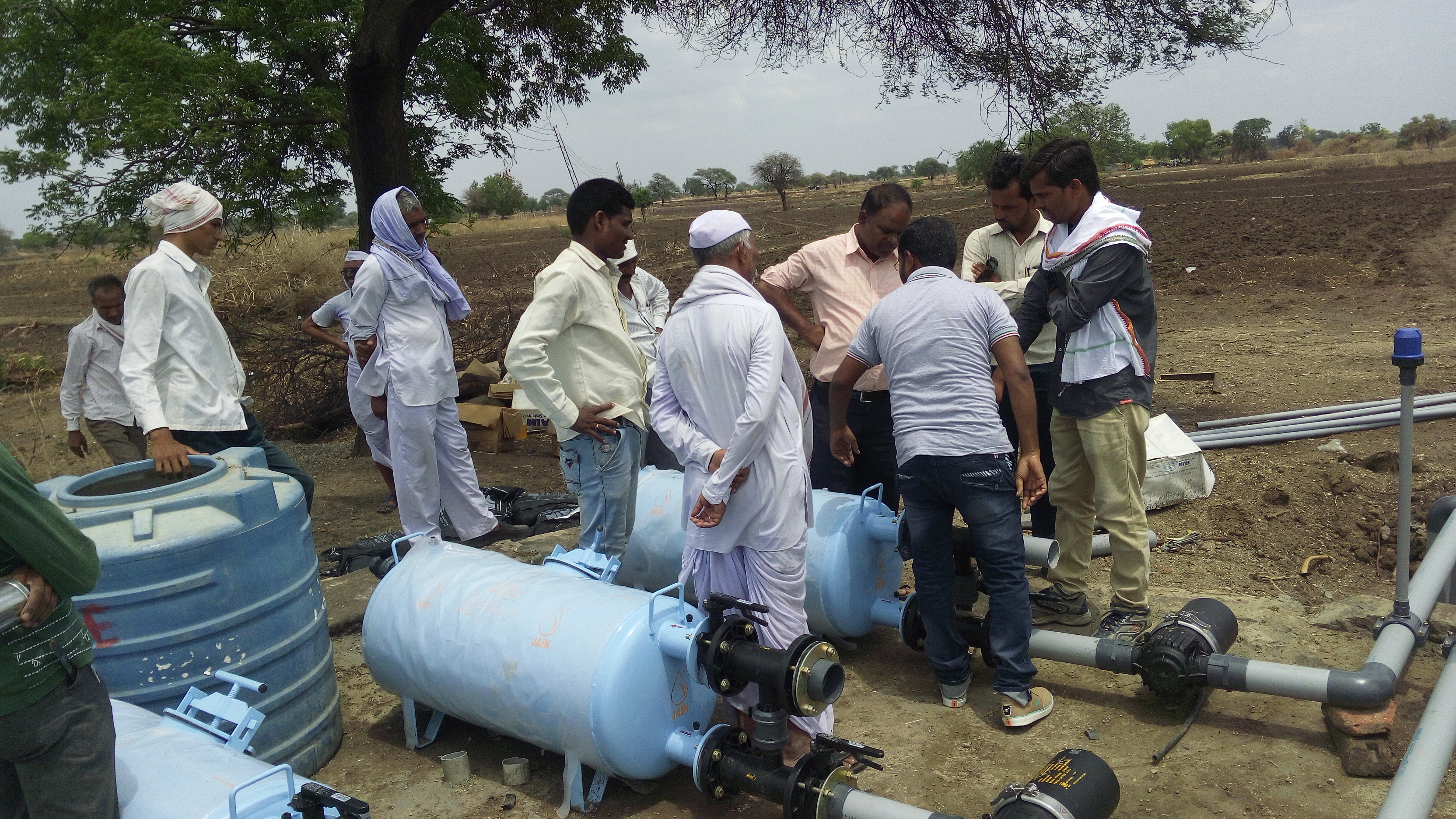
- 📍 Longitude:75.866839, Latitude: 20.118005
- 📷 Dr. Arun Bhagat