Capacity Building Process for Participatory Watershed Development
Type: Approaches
Creation: 2025-10-09 11:35 Updated: 2025-11-21 17:53
Compilers: Arun Bhagat
Reviewers: Udo Höggel
Country/ region/ locations where the Approach has been applied
- Country: India
- Region/ State/ Province: Maharashtra, MadhyaPradesh, Telangana, Karnataka, Jharkhand, Odisha, Chhattisgarh states
- Further specification of location (e.g. municipality, town, etc.), if relevant: Ahilyanagar, Jalna, Hyderabad, Sanga Reddy, Mandala, Gajapati, Rayagada, and more, etc.
- Map: View Map
Description of the SLM Approach
Short description of the Approach
The Capacity Building Process for Participatory Watershed Development is a structured approach to strengthen the technical, managerial, and social skills of Non-Governmental Organizations (NGOs), Partner Implementation Agencies (PIAs), and Village-level Institutions (VIs). It includes orientation, training, participatory tools, mentoring, exposure visits, monitoring, and institutionalization. The process enhances competencies, fosters creativity and confidence, promotes community ownership, and ensures effective, sustainable planning, implementation, and management of watershed-based natural resource management and climate-resilient interventions.
Detailed description of the Approach
Capacity Building Process for Participatory Watershed Development:
Many Non-Governmental Organizations (NGOs), Partner Implementation Agencies (PIAs), and Village-level Institutions (VIs) aspire to implement participatory natural resource management (NRM) using a watershed approach. However, they often lack the technical expertise, practical skills, and experience needed for effective implementation. To address this gap, a structured capacity-building and induction strategy is essential. Such a strategy strengthen the technical and managerial competencies, nurtures creativity, and enhances their confidence to plan, implement, and sustain watershed interventions. In turn, it transforms their approach to resource mobilization, management, and sustainability. A common environmental challenge—such as water scarcity, land degradation, and climate change—creates opportunities to unite communities around shared needs. The Watershed Organisation Trust (WOTR) has effectively used watershed development as a unifying framework to bring people together, encouraging collective action for improving livelihoods and building resilience—especially among the poor and vulnerable.
Purpose of Capacity Building:
The overarching goal of the capacity-building process is to develop the knowledge, skills, attitudes, and confidence of NGOs, PIAs, and VIs in designing, implementing, and sustaining participatory, watershed-based NRM and climate-resilient development interventions.
Expected Outcomes:
•Improved competence in managing watershed-based NRM and climate change adaptation.
•Strengthened community ownership and participation.
•Effective and sustainable implementation of interventions.
•Positive transformation in approaches to resource mobilization and local governance.
Methodology and Key Steps:
The capacity-building approach comprises a series of interlinked steps, each reinforcing the others. Together, they form a comprehensive and adaptive learning process.
Step 1: Orientation and Sensitization
Objective: Build a common understanding and motivation among all project stakeholders.
Approach:
•Conduct orientation sessions explaining linkages between natural resources, livelihoods, and resilience.
•Share success stories and best practices to inspire commitment.
•Define roles and responsibilities of community-based organizations and NGOs.
Step 2: Capacity-Building Training Modules
Objective: Strengthen technical and managerial skills, especially among field-level stakeholders.
Core Modules:
•Technical Skills: Soil and water conservation, water budgeting, sustainable agriculture, climate resilience, and ecosystem-based adaptation.
•Social & Institutional Development: Social mobilization, gender inclusion, facilitation, group dynamics, and strengthening local institutions.
•Project Management: Planning, budgeting, reporting, and monitoring for effective implementation.
Step 3: Participatory Tools and Methodologies
Objective: Equip local groups with practical tools for participatory planning and action.
Tools and Methods:
•Participatory Rural Appraisal (PRA) tools such as resource mapping, seasonal calendars, and wealth ranking.
•Participatory Net Planning (PNP) for micro-level watershed planning.
•Use of digital tools and simple MIS platforms for data management and progress tracking.
Step 4: Mentoring and Handholding Support
Objective: Ensure continued learning, quality implementation, and motivation.
Approach:
•On-site technical and managerial guidance by experienced facilitators or resource NGOs.
•Regular review and feedback meetings to troubleshoot challenges.
•Peer learning and cross-visits among different project sites for shared learning.
Step 5: Exposure Visits and Learning Exchanges
Objective: Promote experiential and peer-to-peer learning.
Approach:
•Organize visits to successful watershed and NRM sites.
•Facilitate interactions with experienced community institutions and farmer groups.
•Encourage farmer-to-farmer extension to build local confidence and innovation.
Step 6: Monitoring, Evaluation, and Learning (MEL)
Objective: Foster accountability, reflection, and adaptive learning.
Approach:
•Train partners in participatory monitoring, data collection, documentation, and reporting.
•Develop and use simple, participatory monitoring tools to track outcomes and learning.
•WOTR’s existing participatory MEL tools are adapted for partners to ensure consistent data and insights.
Step 7: Institutionalizing Knowledge and Ensuring Sustainability
Objective: Build long-term local ownership and reduce dependence on external support.
Approach:
•Develop local resource persons, for example para-professionals.
•Establish local training and resource centers for continuous on-the-ground support.
•Document best practices, lessons learned, and local innovations for knowledge sharing.
•Gradually transfer leadership and responsibility to community institutions.
Photos of the Approach
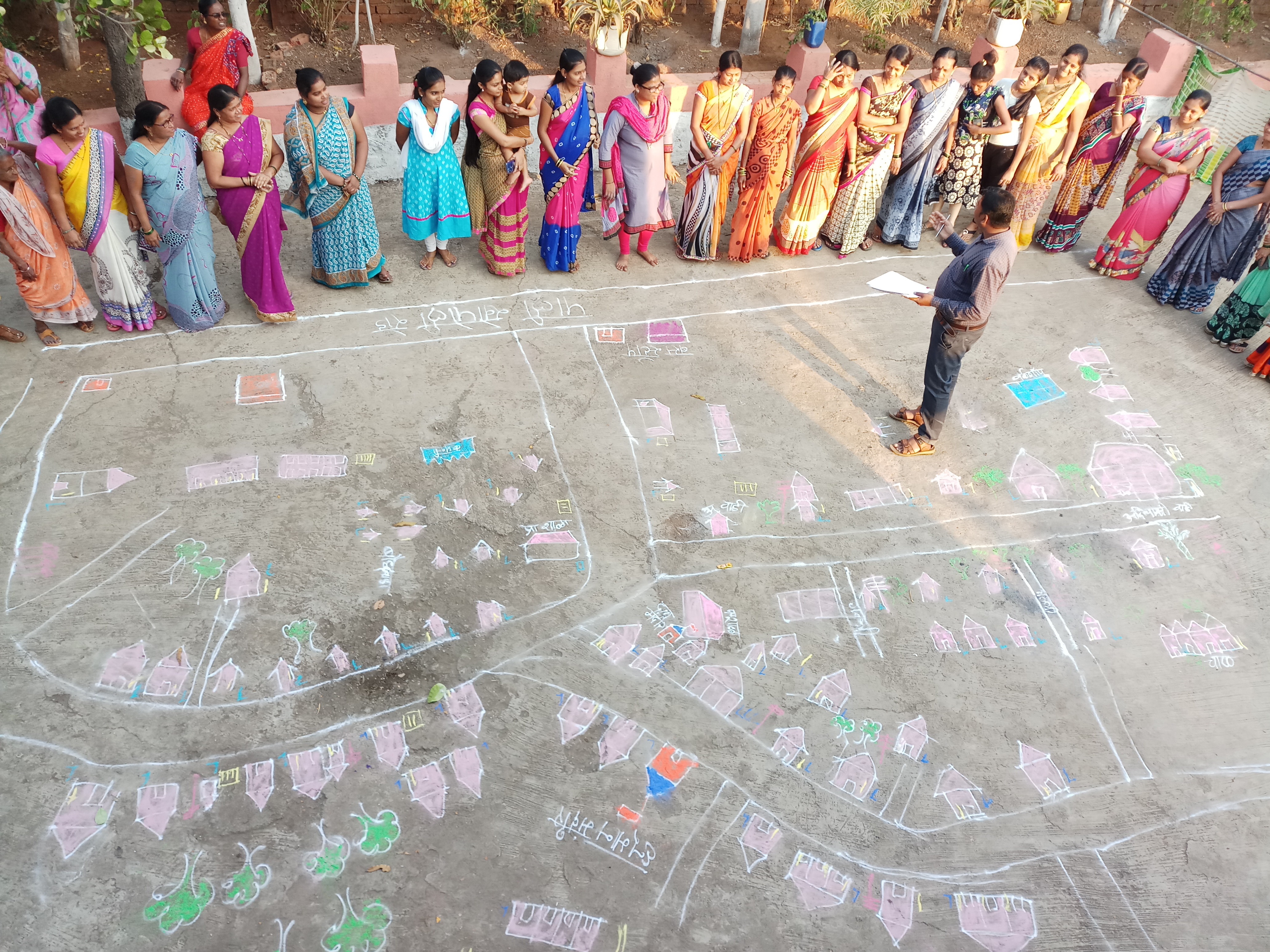
- 📍 Khopoli Pali Road, Village Nanose, Taluka Sudhagad, Distirct- Raigad, Maharashtra, India - 410205
- 🗓 2023-04-10
- 📷 Ganesh Rajapure (WOTR)
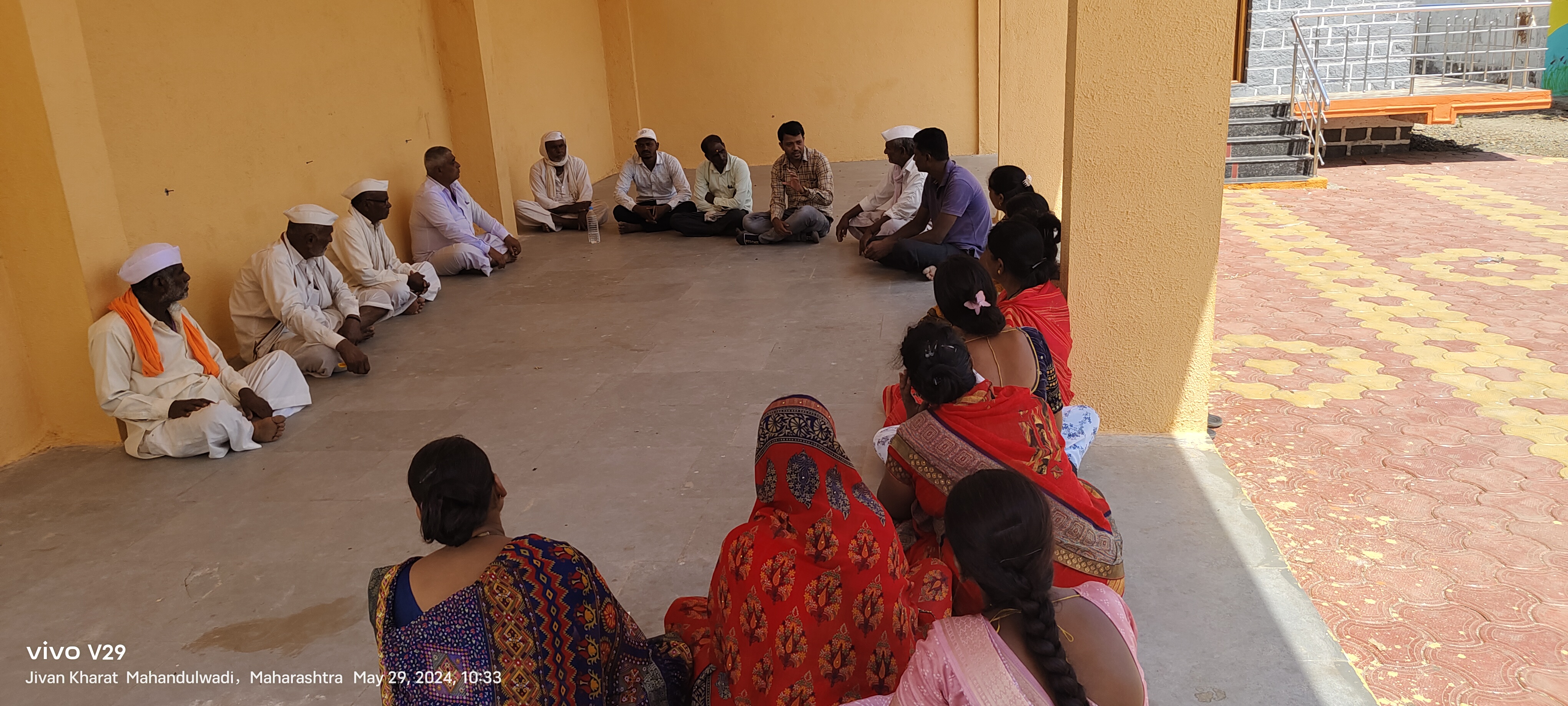
- 📍 Darewadi, Post. Kauthe Malkapur Tal. Sangamner, Dist. Ahilyanagar, Maharashtra, Maharashtra, India
- 📷 Ganesh Rajapure