
Drip irrigation
Type: Technologies
Creation: 2011-03-01 09:45 Updated: 2019-08-07 13:28
Compilers: Faruk Ocakoglu
Reviewers: Deborah Niggli, Alexandra Gavilano
Country/ region/ locations where the Technology has been applied and which are covered by this assessment
- Country: Türkiye
- Region/ State/ Province: Konya
- Further specification of location (e.g. municipality, town, etc.), if relevant: Karapınar
- Map: View Map
Description of the SLM Technology
Short description of the Technology
Drip irrigation is a method designed for minimum use of water and labour for the optimum irrigation of plants in arid and semi-arid regions.
Detailed description of the Technology
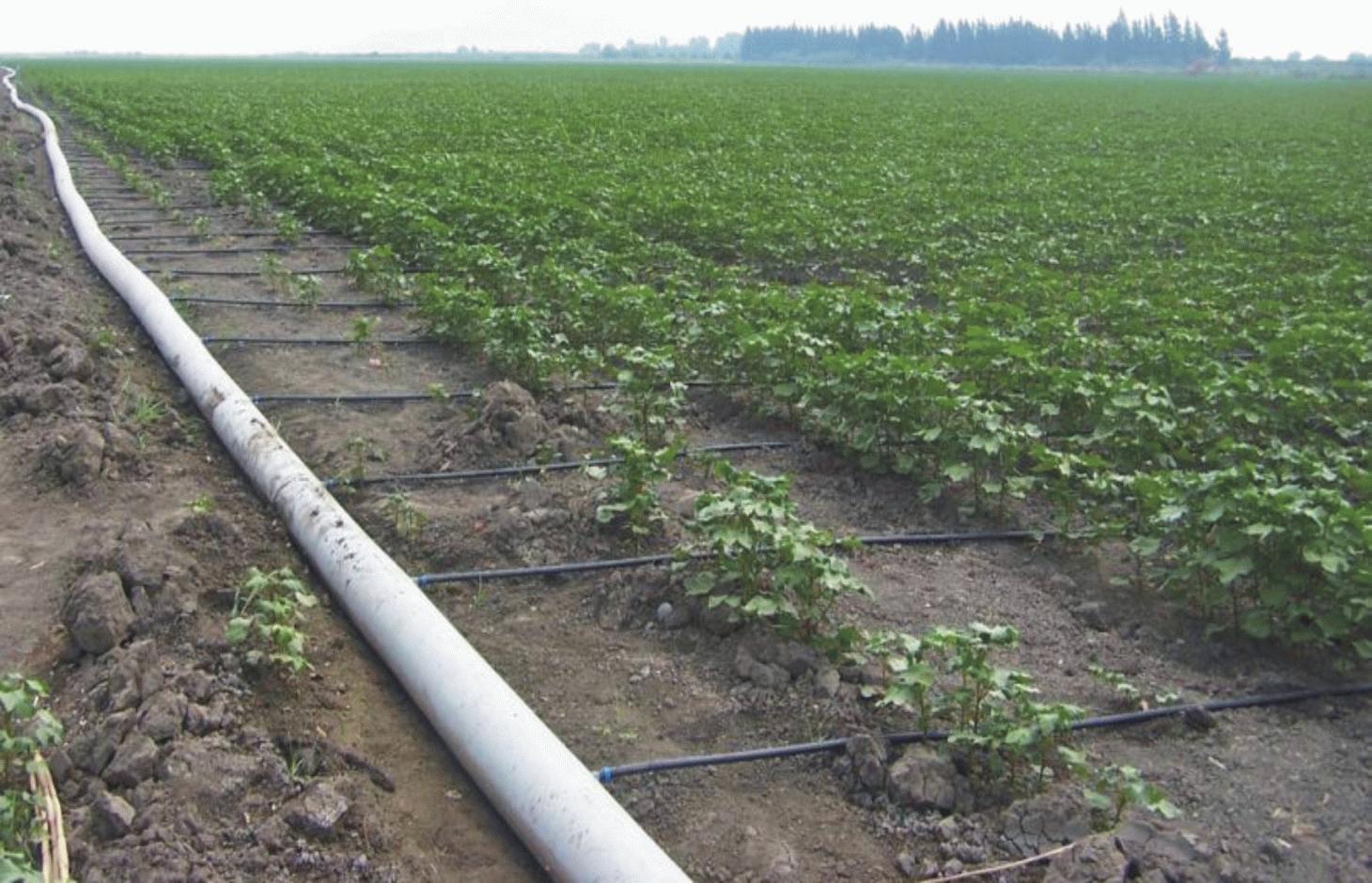
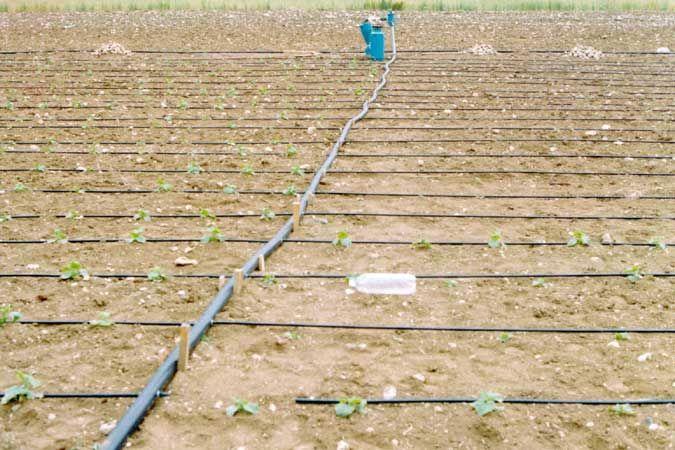
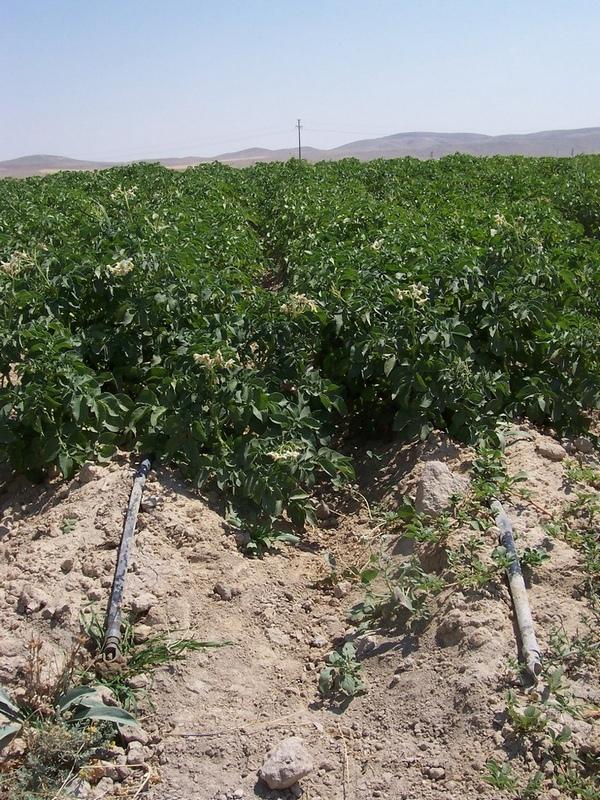
In drought–affected regions, fruit trees, vineyards, vegetables and other field crops such as maize, sugarbeet, potatoes, onion, etc. are watered by drip-irrigation using pipes with dripfeed points. This saves water and maximum benefit is achieved with a minimum of water. In this system, plant roots receive water at the right time and in sufficient quantities. Labour expenses with the system are low, but the first investment expenses are high. At current prices, it costs about 2000 US$ per ha, which varies with the density of the network required for the specific crop.
Purpose of the Technology: Depending on the size of the field to be watered, a main network of PVC pipes able to cope with the pressure necessary to convey water to secondary/lateral pipe systems is established. These pipes are mostly 2.5cm in diameter and have dripfeed points at their ends. The system is suitable for water conservation, because it enables watering to be focused where required, i.e. close to the root zone of the crops, but without wasting water. However, increased use in rainfed areas will increase the overall water demand. From the viewpoint of surface sealing of the soil, it has advantages since it causes wetting only in limited areas. Problems such as salinization and leaching of nutrients are also reduced by limiting the watering. At the same time, the method considerably increases farm income as excessive watering is avoided.
Establishment / maintenance activities and inputs: The basic land use types targeted with the technology are perennial tree crops (i.e. orchard and stony fruit crops) and annual crops with individual plant stems such as potato, maize and sunflower. Maize is used as fodder. It is particularly useful in arid and semi-arid regions where evapotranspiration is high, surface waters are scarce and groundwater is threatened due to high exploitation. It grows under all topographic conditions.
Natural / human environment: From the viewpoint of human environment, the technology is profitable for farmers who have a pressurized pumping system connected to a groundwater source. The basic costs are for the planning of the irrigation system, the hard PVC pipes and its set-up in the field. These services are provided by specialized companies, while the maintenance of the system can be done by the farmers themselves. The volume of the crops produced in this system is high and intended for commercial use.
Photos of the Technology
- 📷 http://www.netafim.com.tr
- 📍 Konya Plain
- 📷 Anonymous, Konya, Turkey
- 📷 Dr. Mehmet Zengin