
Conservation Tillage Practices for Corn Production
Type: Technologies
Creation: 2011-03-16 12:25 Updated: 2019-06-13 16:50
Compilers: Philippine Overview of Conservation Approaches and Technologies
Reviewers: David Streiff, Alexandra Gavilano
Country/ region/ locations where the Technology has been applied and which are covered by this assessment
- Country: Philippines
- Region/ State/ Province: Laguna
- Further specification of location (e.g. municipality, town, etc.), if relevant: San Jose, Abra de Ilog, Sta. Cruz, Sablayan
- Map: View Map
Description of the SLM Technology
Short description of the Technology
Conservation Tillage Technology (Zero Tillage) or "Tipid Saka" - A crop production system which focuses on soil conservation and reducing excessive tillage operations, reduces labor and farm inputs while increasing productivity and profitability
Detailed description of the Technology
Brief Description about Conservation Tillage Technology
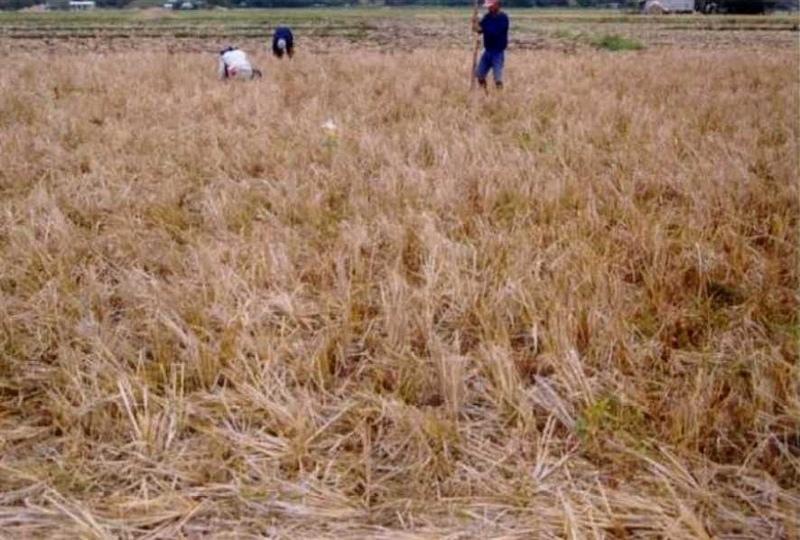
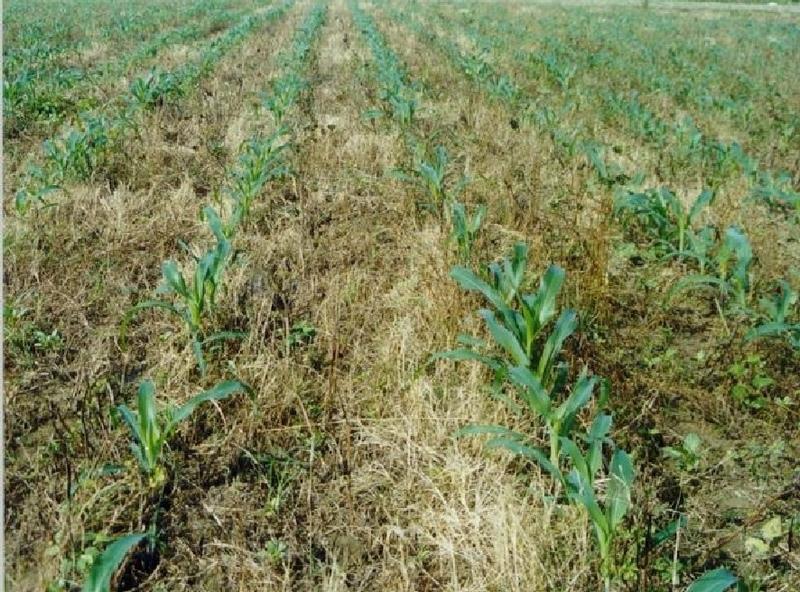
Conservation tillage is the practice of planting seeds through the stubble of last season’s crop, rather than plowing and disking the field. The stubble protects topsoil against loss to wind and rain and reduces chemical run-off to streams. By not plowing, farmers also conserve soil moisture, which can reduce irrigation demands. Farmers can save fuel by reducing the number of farm machinery passes across their fields. In simple terms, Conservation Tillage can be said to lie along a continuum of two other techniques:
Minimum Tillage - mouldboard plowing is replaced by light tillage with tined implements, with or without a low toxicity non-residual herbicide to eliminate both perennial and annual weeds. 30% or more of the soil surface is kept covered by soil residues until final seedbed preparation. Conventional planting equipment can normally be used. Zero Tillage - planting is normally conducted without any preparatory tillage, or seedbed preparation. Normally, this technique requires specialized machinery for planting which can displace residues from the previous crop. A low toxicity non-residual herbicide application is recommended where growing weeds are present. There are numerous potential advantages of conservation tillage:
Farming Benefits
For farmers the primary benefits of CT, achieved with any loss of yields, include:
- More sustainable farming due to dramatic reductions in soil erosion caused by water or wind
- More efficient conservation and utilization of water under dryland conditions
- Improved energy efficiency as a result of reduced fuel requirements associated with fewer field operations
- Greater crop and farm profitability through reduced direct and indirect costs for chemicals, fuel and labor.
Environmental Benefits
At the same time, CT offers a number of significant benefits to the environment, these include:
- Greater biodiversity than with standard cultivation practices where the surface has no crop residues
- Reduces the build-up of soil sediments in reservoirs, drainage, ditches, etc. caused by soil erosion
- Less pollution of drinking water sources caused by run-off of soil, fertilizers and pesticides
- Reduced CO2 emissions due to increased soil organic matter level
Furthermore, crops grown without tillage use water more efficiently, the water-holding capacity of the soil increases, and water losses from runoff and evaporation are reduced. For crops grown without irrigation in drought-prone soils, this more efficient water use can translate into higher yields. In addition, soil organic matter and populations of beneficial insects are maintained, soil and nutrients are less likely to be lost from the field and less time and labor is required to prepare the field for planting. In general, the greatest advantages of reduced tillage are realized on soils prone to erosion and drought. Also achieved are greater water-stability of surface soil aggregates, higher microbial activity and earthworm populations and higher total carbon. Soil loss is less from sprinkler irrigation than in the plow treatment.
Photos of the Technology
- 📍 San Jose, Mindoro Occidental
- 📷 Romeo V. Labios
- 📍 San Ildefonso, San Jose, Mindoro Occidental
- 📷 Romeo V. Labios