
Establishment of living seabuckthorn fences for the protection of reforestation sites (CACILM)
Type: Technologies
Creation: 2011-05-03 08:27 Updated: 2019-08-14 20:23
Compilers: Roziya Kirgizbekova
Reviewers: Fabian Ottiger, Alexandra Gavilano
Country/ region/ locations where the Technology has been applied and which are covered by this assessment
- Country: Tajikistan
- Region/ State/ Province: Tajikistan, Gorno Badakhshan Autonomous Region (GBAO)
- Further specification of location (e.g. municipality, town, etc.), if relevant: Ishkashim, Roshtkala and Shugnan Districts
- Map: View Map
Description of the SLM Technology
Short description of the Technology
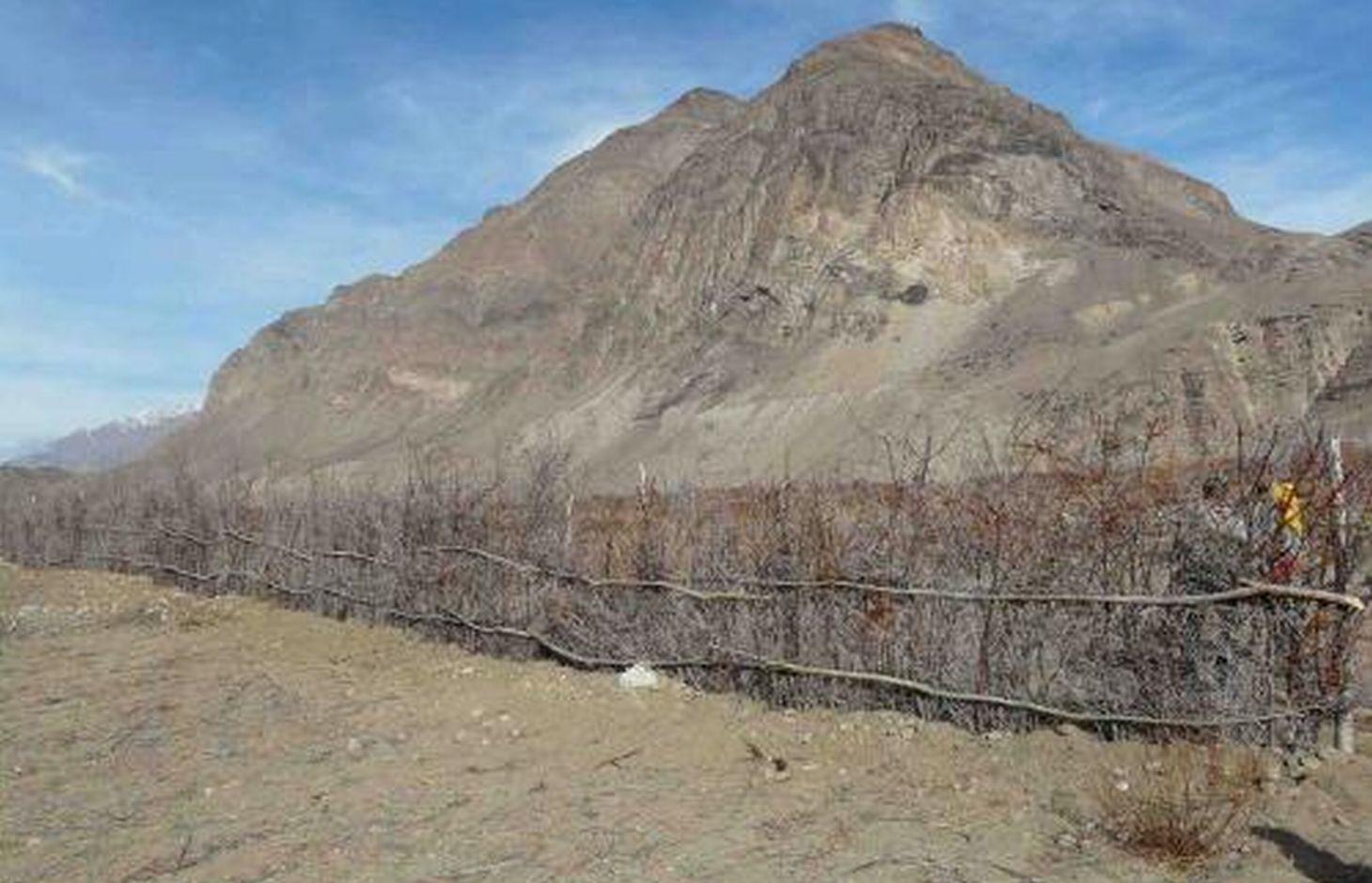
Protection of reforestation sites (willow, poplar and fruit trees) through living seabuckthorn perimeter fencing on Joint Forestry Management plots.
Detailed description of the Technology
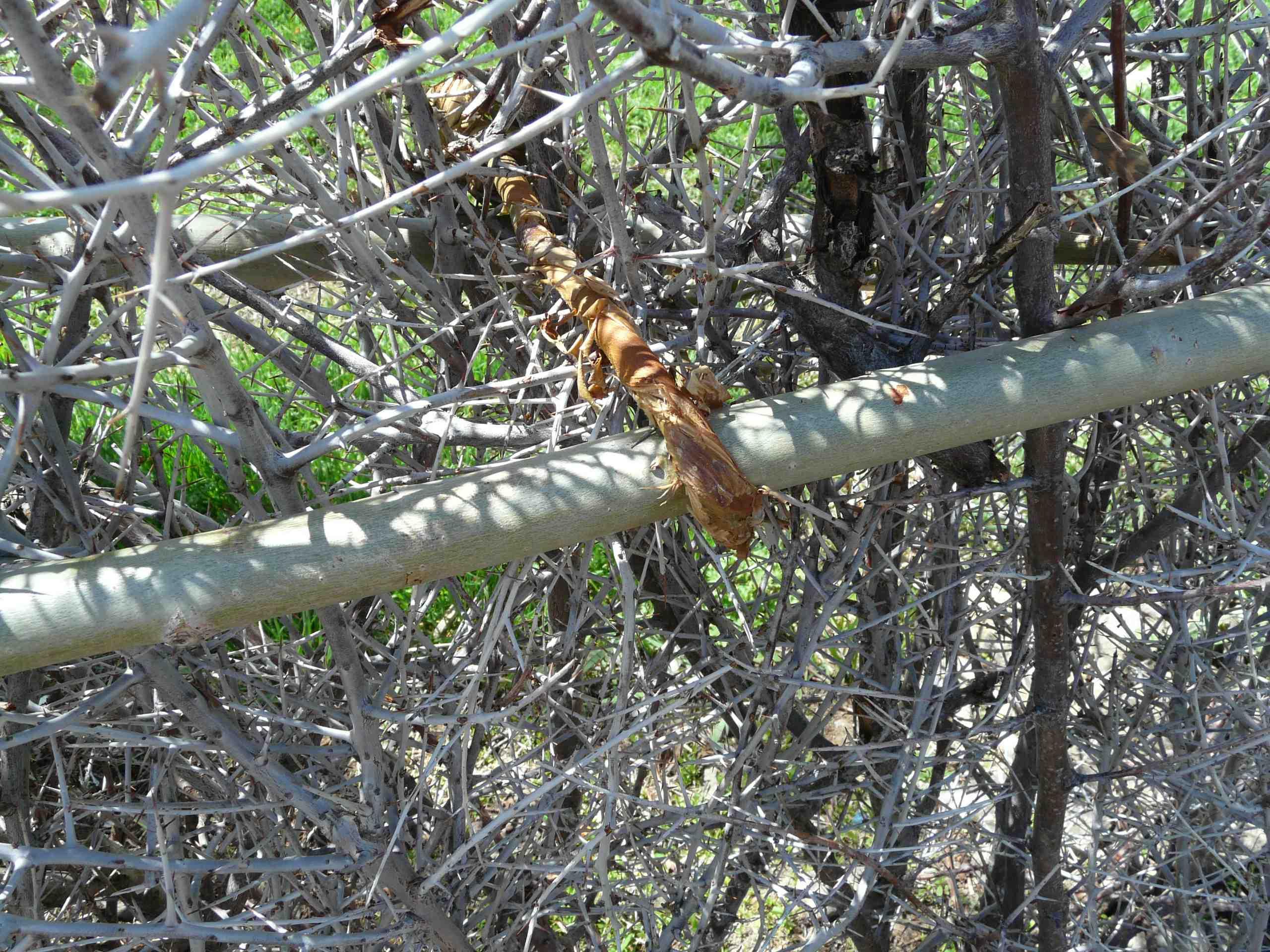
In the heavily degraded flood plain forests of the Pamirs in eastern Tajikistan, living fences made out of seabuckthorn are protecting reforestation and Joint Forestry Management (JFM) sites. A living seabuckthorn fence consists of two layers. The outer layer is an instant fence made of thorny seabuсkthorn branches. The purpose of the outer layer is to immediately restrict animal and human access to the reafforestation site. The outer layer also buffers the inner layer of seabuckthorn, which is planted from seabuckthorn seedlings. The inner layer will establish itself over a number of seasons, eventually growing to a height of 1.5-2m. Once established, the seabuckthorn bush provides a low cost sustainable perimeter fence to protect reforestation activities. The bush also produces fruits for processing (in the frame of CACILM)
Purpose of the Technology: The purpose of this technology is to improve heavily degraded forest areas and establish new areas by restricting open access to the human population and preventing uncontrolled livestock grazing. As part of the Joint Forestry Management approach, these reforested areas are leased to the land user providing long-term legal control, as well as income opportunities for the tenants and the State Forestry Agency.
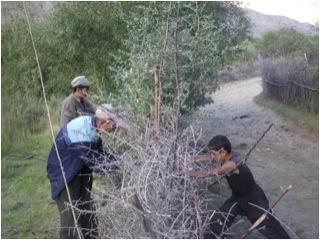
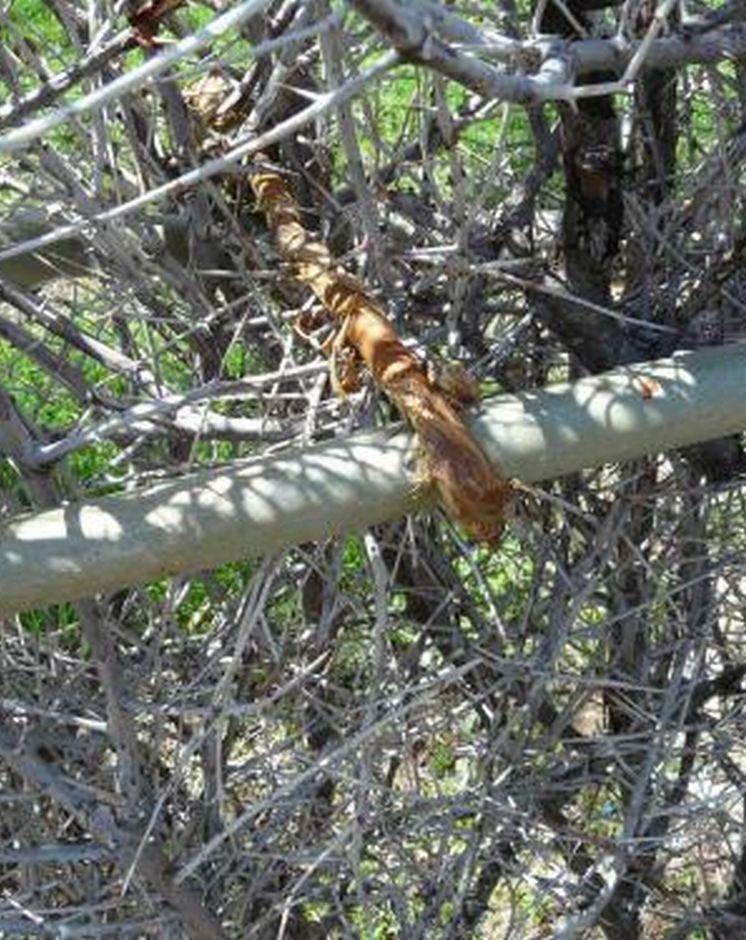
Establishment / maintenance activities and inputs: As part of the Joint Forestry Management approach (TAJ015), land is allocated by the State Forestry Agency to a designated land user. Once the size of the plot is established, a solid fence constructed of off-cuts of seabuckthorn and supported by willow poles is established around the perimeter of the JFM reforestation area. The seabuckthorn branches are fixed together with willow twigs, willow branches or wire and are attached to wooden poles. Once completed, seabuckthorn seedlings are planted at 0.5m intervals along a small irrigation channel on the inner side of the perimeter fence. After a few seasons these seedlings will grow into a natural living fence, which will take over the protection role from the perimeter fence constructed from off-cuts. The reforestion area is planted with branches of willow and poplar and interspersed with fruit trees. Reforestation planting materials are readily available in most parts of GBAO, and the Forestry Agency facilitates free access to seabuckthorn branches, willow branches and wooden poles. If required, wire and tools are provided by the JFM project.
Natural / human environment: The natural forest cover and biological diversity in many areas of GBAO has been significantly degraded. While population density in GBAO is low, natural resources are scarce due to the high altitude mountain environment and the pressure on these resources is great. In Soviet times, the Pamir region was highly dependent on subsidized coal from other parts of the Soviet Union. After independence, coal was no longer available and other fuel had to be sourced. Population pressure, poverty, and the lack of established local level institutions to manage forest lands have rendered forest areas an open access resource where the local population harvests forest products and grazes livestock without regulation. The local Forestry Agencies do not have the capacity to control overuse or to implement sustainable forestry management. As a part of the Joint Forestry Management approach (TAJ015) this SLM technology is a reintroduction of a traditional method for the protection of reforestation sites against livestock and, additionally, it clearly demarcates forest plot ownership and boundaries.
Photos of the Technology
- 📍 Apkharv, Ishkashim, Gorno Badakhshan, Tajikistan
- 📷 Anke Gaude
- 📍 Barvoz, Roshtkala, Gorno Badakhshan, Tajikistan
- 📷 Anke Gaude
- 📍 Barvoz, Roshtkala, Gorno Badakhshan, Tajikistan
- 📷 Anke Gaude
- 📍 Barvoz, Roshtkala, Gorno Badakhshan, Tajikistan
- 📷 Anke Gaude