
Rehabilitation of poor soils through agroforestry
Type: Technologies
Creation: 2011-04-26 11:50 Updated: 2021-11-02 15:08
Compilers: Natalia Mityakova
Reviewers: Alexandra Gavilano, David Streiff, Joana Eichenberger
Country/ region/ locations where the Technology has been applied and which are covered by this assessment
- Country: Tajikistan
- Region/ State/ Province: Khatlon, Kabodion
- Further specification of location (e.g. municipality, town, etc.), if relevant: Khudokulov Jamoat
- Map: View Map
Description of the SLM Technology
Short description of the Technology
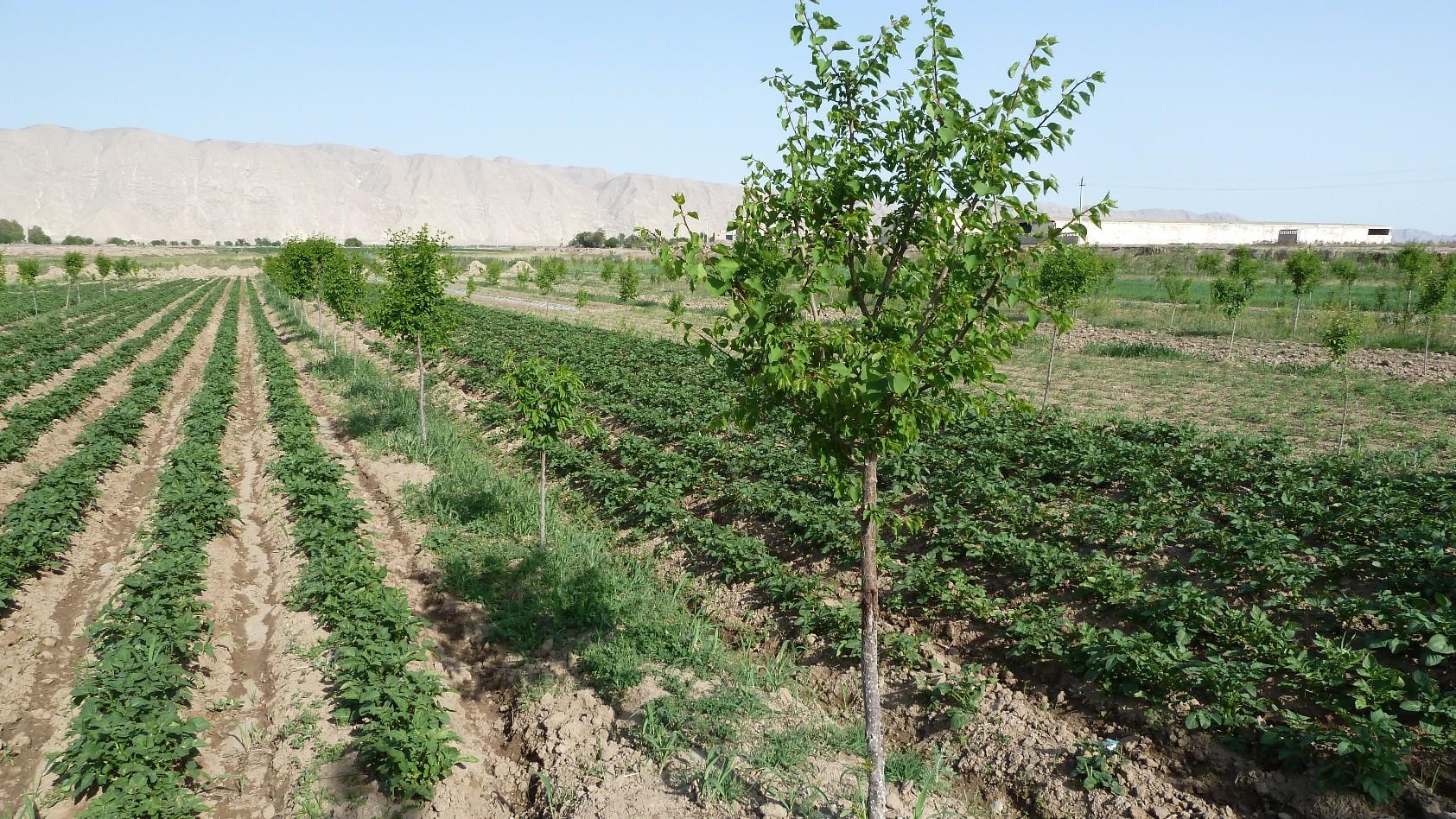
An agroforestry system with peach, plum, sweet cherry and persimmon trees was established on a plot of land, with poor soil quality.
Detailed description of the Technology
In the arid environment of Kabodion, large areas that had been irrigated during the Soviet times were abandoned after independence, and the irrigation facilities were neglected. Soils were highly degraded due to the long periods they had been without proper irrigation. On an area of poor quality soil, and previously abandoned plot of land covering about 6 ha, UNDP supported one family (Dehkan)to establish an agroforestry system by covering the costs of tree seedlings.
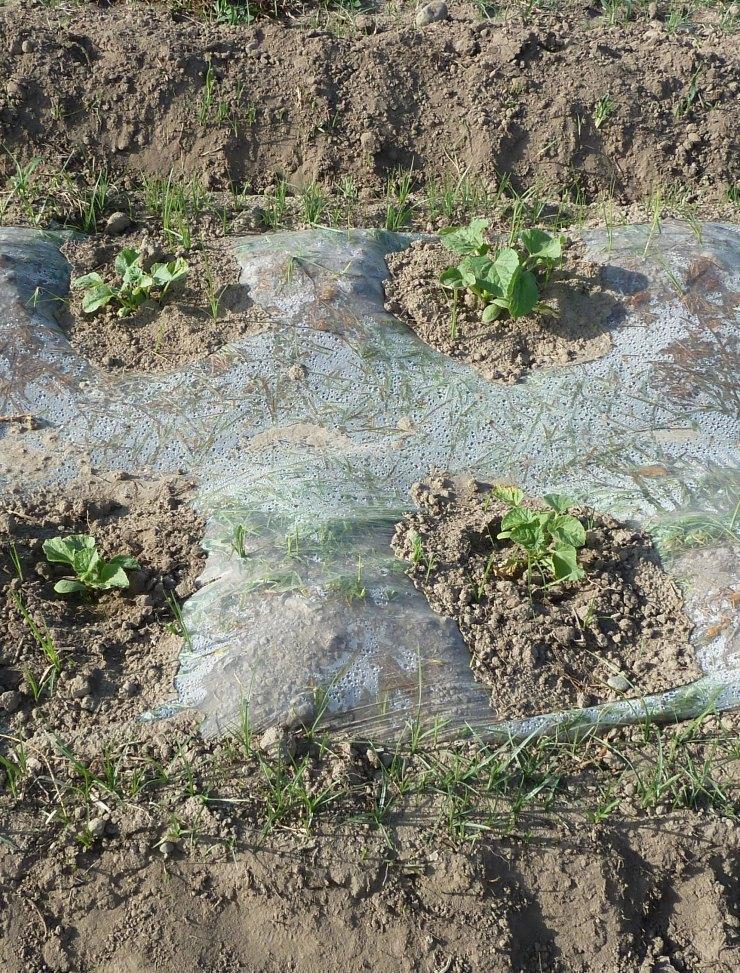
Purpose of the Technology: The aim of the technology was to improve agricultural production through a combination of measures such as improving soil fertility, increasing soil humidity through covering the soil with plastic sheets and preventing excess water drainage, and protection through a shelterbelt. Resilience to adverse climatic events is enhanced by increasing product diversification with a number of different tree, vegetable and crop species being planted.
Establishment / maintenance activities and inputs: First, the soil had to be washed to reduce the high salt content. Plum, peach, sweet cherry and persimmon tree seedlings were planted in lines with intercropping of potatoes, watermelon, beans and wheat inbetween. The seedlings were purchased from the Kabodion nursery. Labour was provided in the form of "hashar" or voluntary neighbourhood help. On the windward side of the field, a shelterbelt consisting of White Poplar (Populus alba) trees was established to protect the field from wind erosion, and to reduce evapotranspiration. In order to improve soil structure annual crop rotations were practiced. Every 4 years 40 tones of cow dung are spread out per ha of land. The application of organic manure constitutes an important cost factor for the farmer, as 40 tons of manure costs about 180 to 220 USD. To improve soil humidity and to enable early planting for watermelons, cultivation seeds are planted under a tight plastic film with irrigation water filled underneath the sheet. As soon as the seedlings emerge a hole is made in the plastic to create space for the plants. Irrigation is applied only sparingly to prevent the soil from a new rise in salinity. The plot is situated on a gentle slope which facilitated the establishment of a drainage system by digging a trench at the foot of the field to absorb excess water. The farmer was able to cover the costs of this initial investment himself using the revenues from the first harvest. At the foot of this field, salt tolerant Russian Silverberry (Elaeagnus angustifolia) trees were planted to promote biodrainage to help prepare the adjacent land for conversion to agroforestry at a later stage. The farmer gained the knowledge that was necessary for the establishment of the system through attending the farmer field schools (see approach TAJ018).
Natural / human environment: This technology is suitable for other arid environments, and the economic benefits are high compared to the establishment and maintenance costs. When this was realised by the neighbouring farmers they adopted the technology on an area of land that was actually three times larger.
Photos of the Technology
- 📍 Khudokulov Jamoat, Shaartuz, Khatlon
- 📷 Julie Zähringer (PPCR Component A5, 131 Rudaki Avenue, Dushanbe, Tajikistan)
- 📍 Khudokulov Jamoat, Shaartuz, Khatlon
- 📷 Julie Zähringer (PPCR Component A5, 131 Rudaki Avenue, Dushanbe, Tajikistan)