
Integrated Technologies for Household Plots
Type: Technologies
Creation: 2011-05-03 08:44 Updated: 2021-11-02 15:11
Compilers: Habib Kamolidinov
Reviewers: Alexandra Gavilano, David Streiff, Joana Eichenberger
Country/ region/ locations where the Technology has been applied and which are covered by this assessment
- Country: Tajikistan
- Region/ State/ Province: Central District of Tajikistan
- Further specification of location (e.g. municipality, town, etc.), if relevant: Varzob
- Map: View Map
Description of the SLM Technology
Short description of the Technology
A fenced enclosure transformed with stone clearing and a small scale irrigation system, to grow a wide range of perennial, annual and orchard crops, beekeeping and small scale animal production.
Detailed description of the Technology
A small area of previously severely eroded and almost devoid of vegetation area of land that was transformed through the building a perimeter fence, supplying a simple irrigation system and the planting of a diverse range of crops to provide a rich, integrated farming system. Activities then completed on this area included: orchard planting, perennial fodder crops (lucerne), garden vegetables, bee keeping for honey production and small scale animal rearing.
Purpose of the Technology: The farmer clearly stated that his prime, initial purpose in taking over this “ruined and abandoned land” was to improve and better guarantee the quality of his family’s lifestyle through enhanced and assured food and fodder production. He also recognised the potential for future profit through sale of his excess produce to market. Currently, the family has almost no need to buy food (and fodder) from nearby markets, apart from flour for bread making. This is a large cost saving. In hindsight, the farmer sees that he has dramatically improved land quality within the enclosure through mitigating erosion and increasing year-round vegetation cover.
Establishment / maintenance activities and inputs: The family (Enomali is the family name) first occupied this land in 1984. The first task was tree planting – a variety of orchard trees – on 0.1 ha of the current enclosure. This was fenced using abandoned wire and metal supports from old Russian factories. After nine family members left (to work in Dushanbe) the land user expanded the fence to the current 0.2 ha and continued to plant trees. He continued the stone removal through the 1990s and even up until the present day. Lucerne and vegetable gardens were initiated in the 1990s and continue to be enriched as required. Fodder, tree and vegetable production includes an ongoing set of tasks, as does the animal feeding with the home-grown fodder. Bee keeping is seasonal and the honey kept for home consumption. The land user continues to plant orchard trees every year and currently has more than 100. He gained a “certificate” of ownership” in 2008.
Natural / human environment: Before the family occupied this land, the land user stated that it was “totally ruined and abandoned”. That is why it was unoccupied. The family were prepared to work extremely hard to convert this ruined land to the green and productive “island” that it now is. The people in the area are dependent upon the produce of the land, however suitable land is in short supply and subject to population pressures.
Photos of the Technology
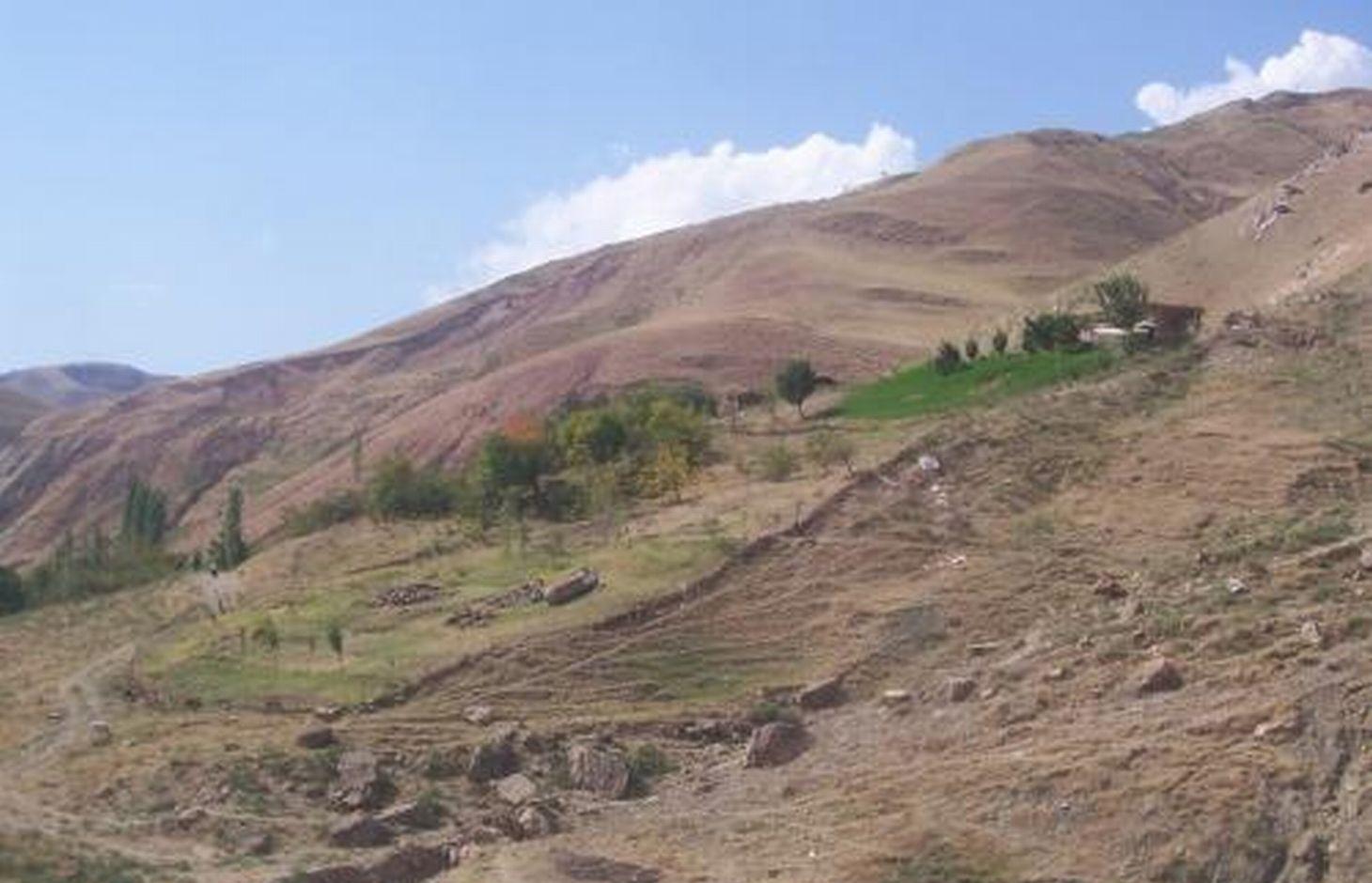
- 📍 Tajikistan, Varzob
- 🗓 2009-07-09
- 📷 Des McGarry and Habib Kamolidi (Land Management Institute, Giprozem 15, Dushanbe, Tajikistan)
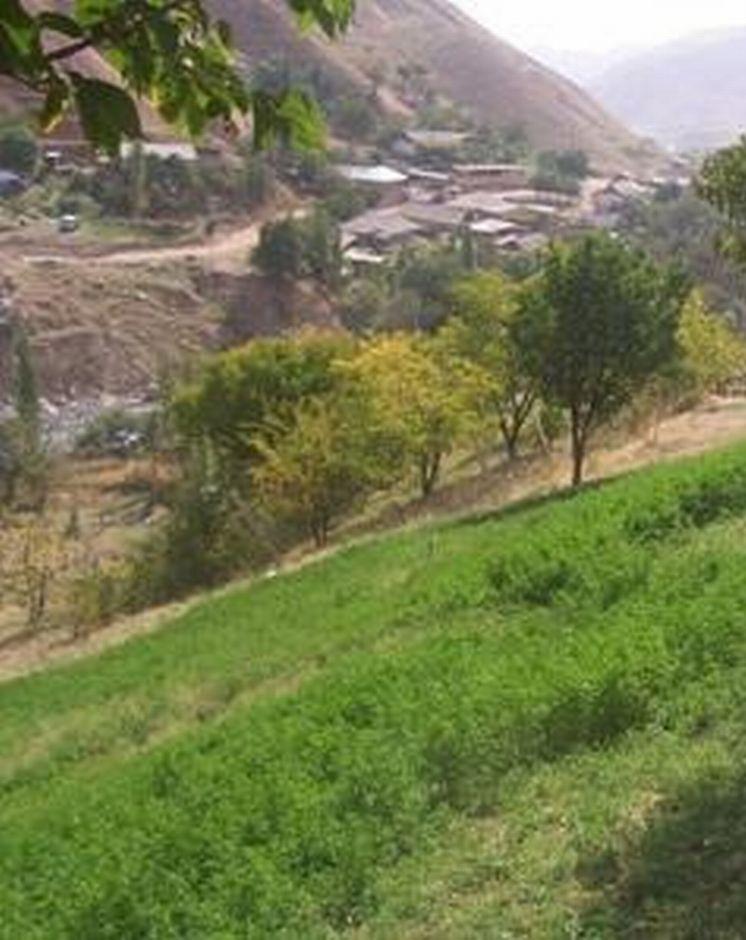
- 📍 Tajikistan, Varzob, Luchob
- 🗓 2010-07-09
- 📷 Des McGarry (Land Management Institute, Giprozem 15, Dushanbe, Tajikistan)
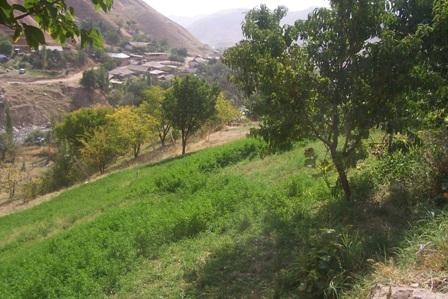
- 📍 Tajikistan, Varzob, Luchob
- 🗓 2010-07-09
- 📷 Des McGarry (Land Management Institute, Giprozem 15, Dushanbe, Tajikistan)