Technology of fastening Aral sea's drained bottom' s soil
Type: Technologies
Creation: 2011-06-05 15:50 Updated: 2025-09-01 13:37
Compilers: Vladimir Kaverin
Reviewers: David Streiff, Alexandra Gavilano, Rima Mekdaschi Studer
Country/ region/ locations where the Technology has been applied and which are covered by this assessment
- Country: Kazakhstan
- Region/ State/ Province: Kyzylorda
- Further specification of location (e.g. municipality, town, etc.), if relevant: Kazalinsk state
- Map: View Map
Description of the SLM Technology
Short description of the Technology
Technology of fastening Aral Sea's drained bottom's soil
Detailed description of the Technology
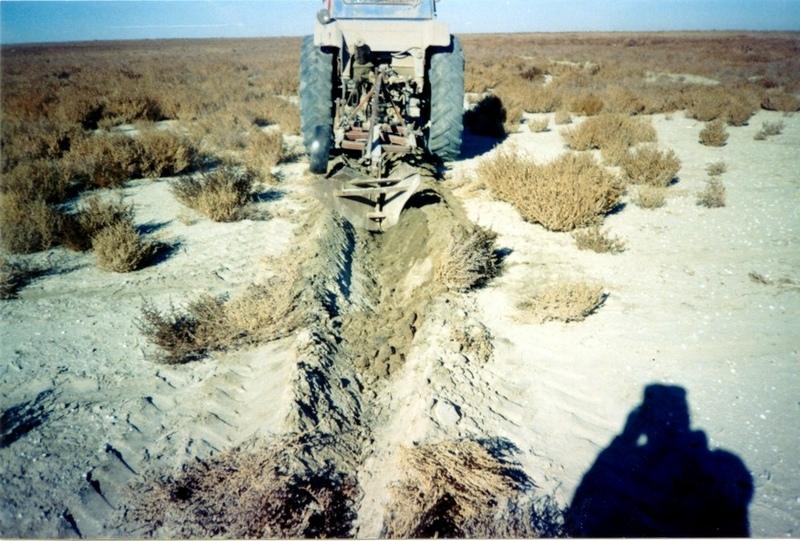
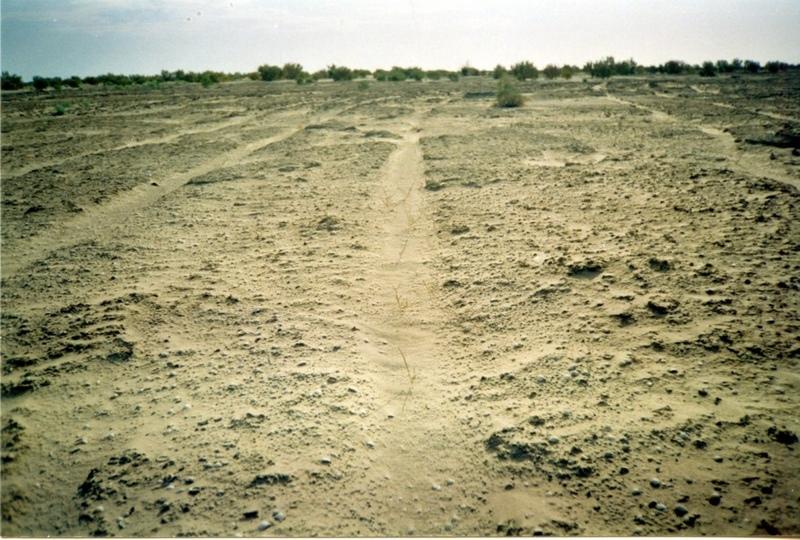
Planting of the saplings on the lots of the dried seabed of the Aral Sea was done in holes and uninterrupted furrows, which were formed by hands or cultivated KON – 2.8 PM . Depth of holes and furrows is 20-25 cm. Distance between holes was 1.5-2 m. Furrows were perpendicular to the prevailing winds (west-east) and placing mould in several options: 1 – moulds on both sides; 2 – the same from the southern side of a furrow; 3 – the same from the northern side. Furrows alternated with holes rows. Length of rows variants in repetition was 100 m. Saplings were filled up by hands or in rows in 1-2 meters, distance between rows was 2-2.5 meters. For the last 30 years Aral Sea level is falling and in 2001 it fell by 20 meters. More over 35 thousands sq. km of sea bottom came to the surface. Pace of falling during the last ten years is 0.9-0.8 meters per year according to the instrumental observations, that’s why area of dry land increases by 3-4 thousand sq. km annually.
Formation of moving sand dunes with the height of 2-5 meters, which move at the speed 20-30 meters per year in the southern and south-eastern direction, occurs on the area of more over 10 thousand sq. km. Width of dune ridges and ranges achieves 10-15 km and length up to 40-60 km. Ecosystems of brackish waste grounds lacking flora, difficult to traverse and dangerous were formed non the area 20 thousand sq. km of the former sea bottom. They are the source of dust-salt material to the major oasis agriculture in the delta of Syrdaria River.
Photos of the Technology