
Multi-Storey Cropping
Type: Technologies
Creation: 2011-06-14 18:46 Updated: 2019-06-14 10:50
Compilers: Philippine Overview of Conservation Approaches and Technologies
Reviewers: Deborah Niggli, Alexandra Gavilano
Country/ region/ locations where the Technology has been applied and which are covered by this assessment
- Country: Philippines
- Region/ State/ Province: Philippines, Cavite
- Further specification of location (e.g. municipality, town, etc.), if relevant: Cavite
- Map: View Map
Description of the SLM Technology
Short description of the Technology
Cultivating a mixture of crops with different heights (multi-storey) and growth characteristics which together optimise the use of soil, moisture and space.
Detailed description of the Technology
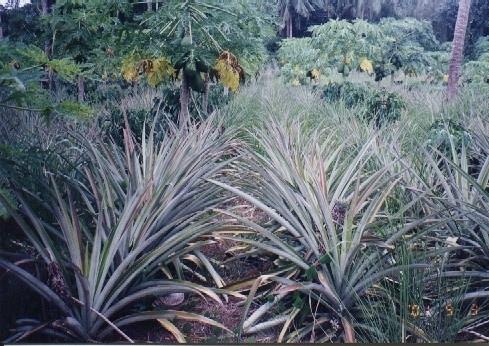
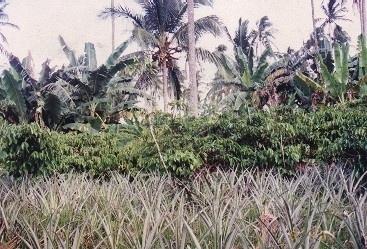
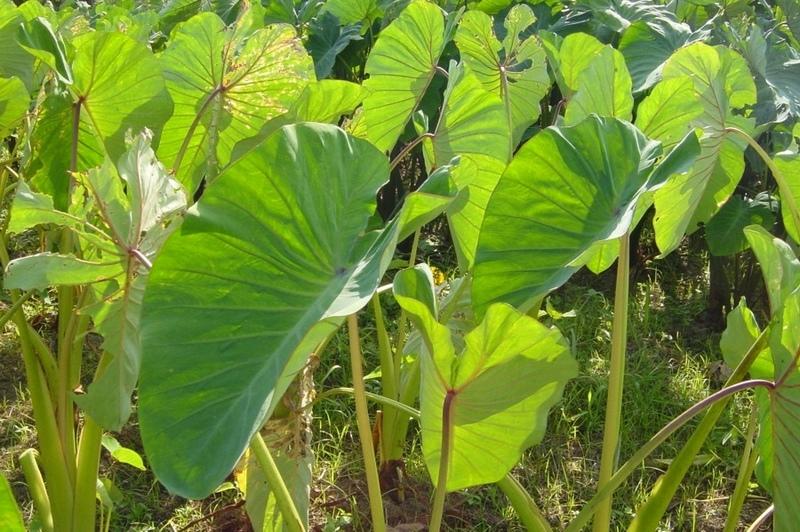
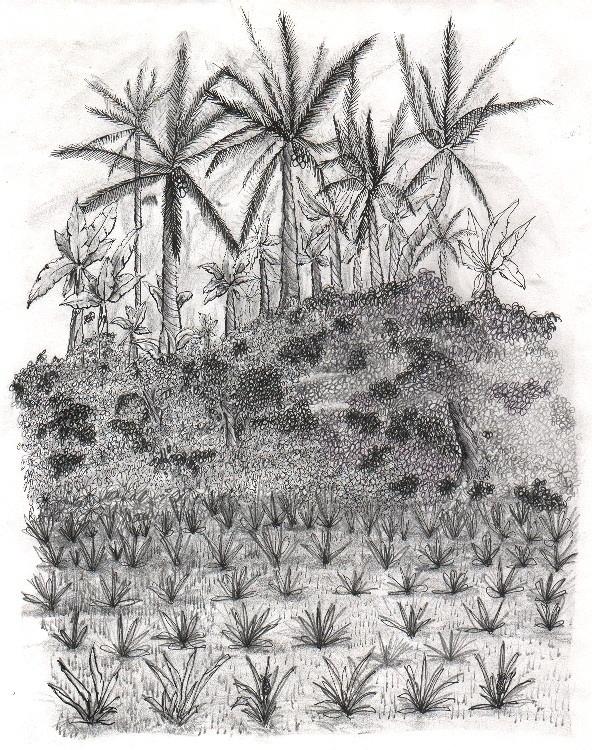
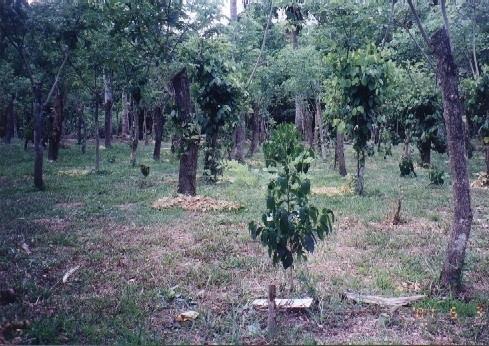
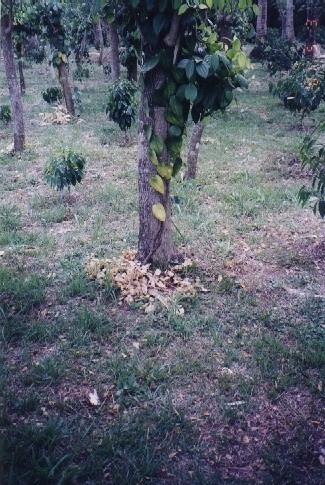
Under the maramihang pagtatanim multi-storey cropping system, perennial crops (coconut, banana, coffee, papaya, pineapple) and annuals/biennials (root crops: taro, yam, sweet potato etc) are interplanted to maximise productivity and income. This is most applicable where farms are small and the system needs to be intensive. In this particular area, Cavite, coconuts are usually planted first. When they reach a height of 4.5 meters (after 3-4 years), bananas, coffee and/or papaya are planted underneath. Black pepper may also be part of the system. After sufficient space has developed at ground level in about three to four years, root crops are planted. At full establishment, the system develops different layers: coconut (tallest) followed by banana, coffee, papaya (middle), root crops and pineapple (lowest). In recent years, because of its relatively low productivity and decreasing price, coconut has tended to be replaced in the system with higher value crops like the fruit tree santol (Sandoricum koetjape), papaya and sometimes black pepper. However most multi-storey farms adhere to no specific planting layout. The multi-storey agroforestry system is intended to make the best use of resources (soil, moisture and space) for increased farm income. It is also very effective against soil erosion. Previously, continuous monocropping of annual crops resulted in erosion and serious soil fertility decline. Even though the land is sloping and rainfall during the monsoon is extremely intensive, multi-storey cropping provides adequate soil cover throughout the year, protecting the land from erosion.
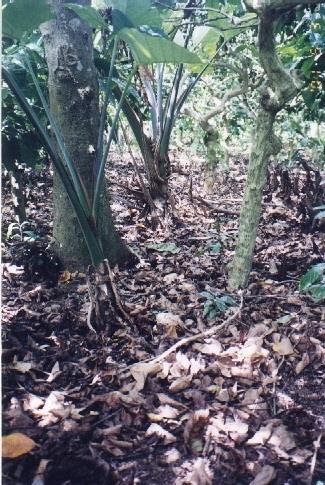
Fertilization, weeding and pruning are necessary elements of maintenance. ‘Natural’ mulching through fallen leaves from leguminous trees helps restore and maintain soil fertility The system is applied in a volcanic-derived soil with distinct wet and dry periods (6 months wet season, 6 months dry season). There is the risk of a destructive typhoon every 10 years. Farm income is relatively high, but labour and input costs are also high - and the technology is mostly used by relatively wealthy landowners. There is strong spontaneous adoption, as maramihang pagtatanim has been proven to be effective and remunerative. This technology has been practiced in Cavite since the 1970s. Implementation is by individual farmers with strong extension support from the Local Government Units (LGUs), NGOs and the Cavite State University.
Photos of the Technology
- 📍 Cavite, Philippines
- 📷 Jose D. Rondal (Quezon City, Philippines)
- 📍 Cavite, Philippines
- 📷 Jose D. Rondal (Quezon City, Philippines)
- 📍 Cavite, Philippines
- 📷 Jose D. Rondal (Quezon City, Philippines)
- 📍 Cavite, Philippines
- 📷 Jose D. Rondal (Quezon City, Philippines)
- 📍 Cavite, Philippines
- 📷 Jose D. Rondal (Quezon City, Philippines)
- 📍 Cavite, Philippines
- 📷 Jose D. Rondal (Quezon City, Philippines)